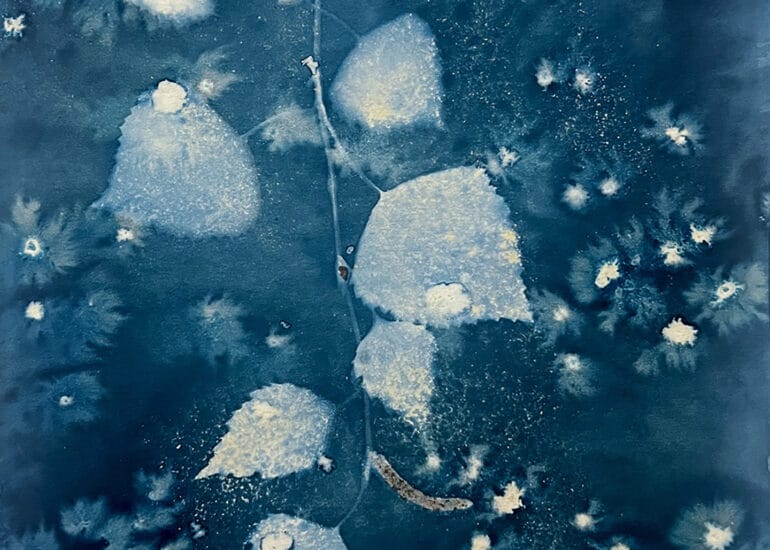
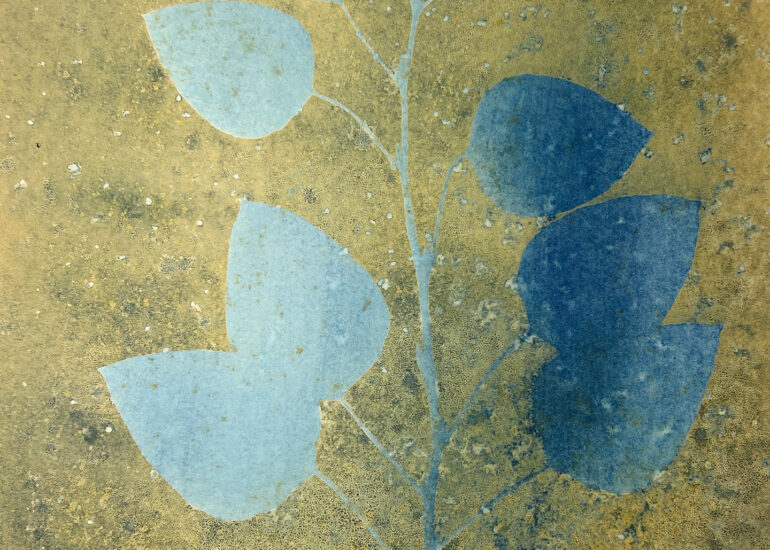
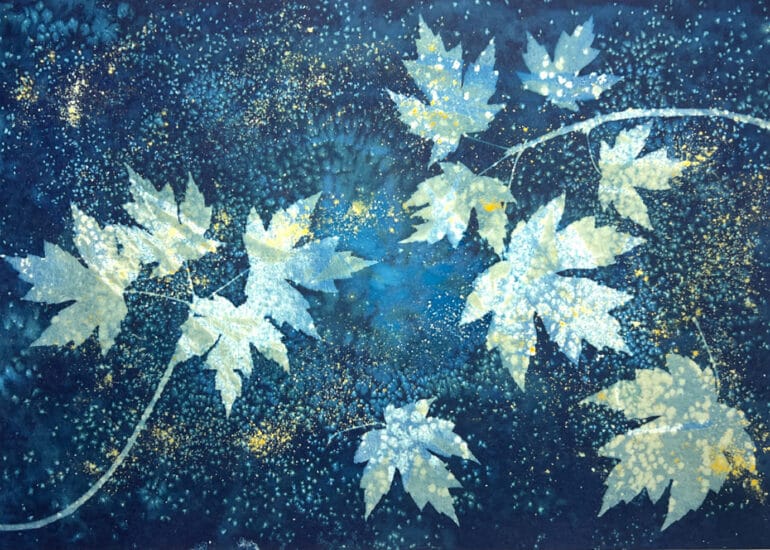
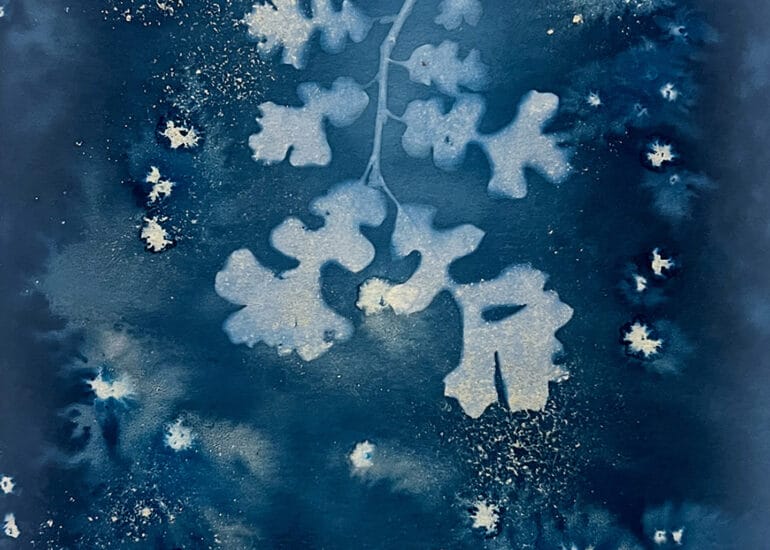
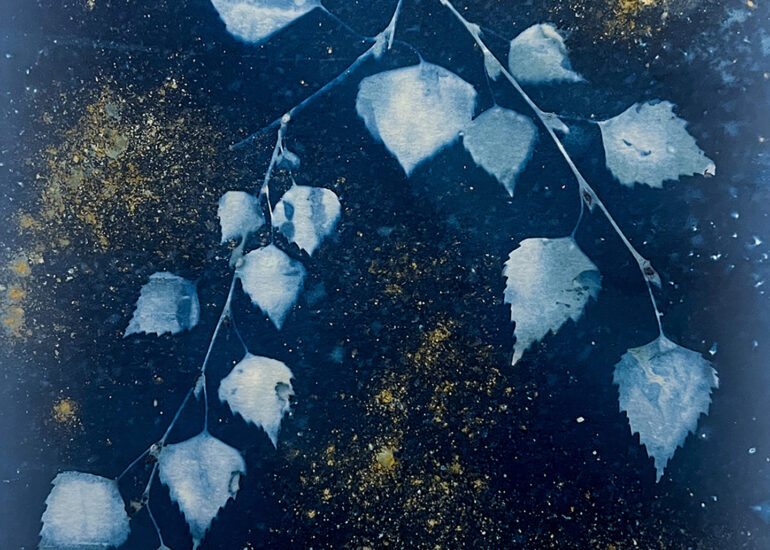
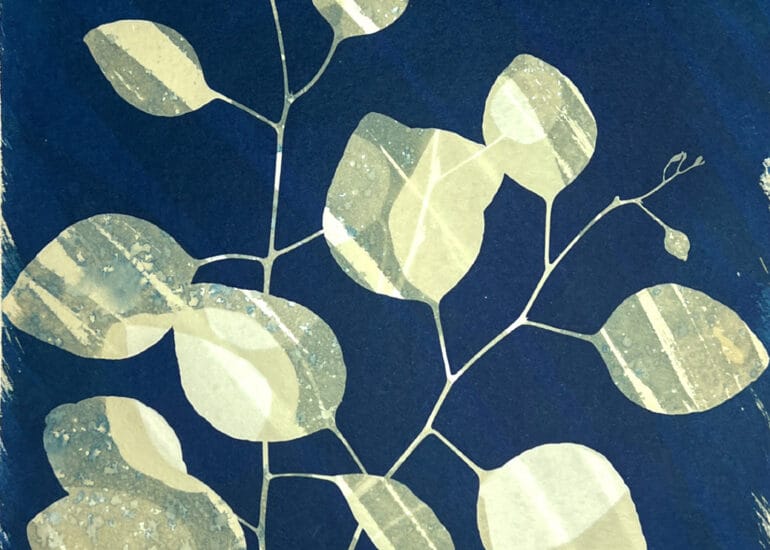
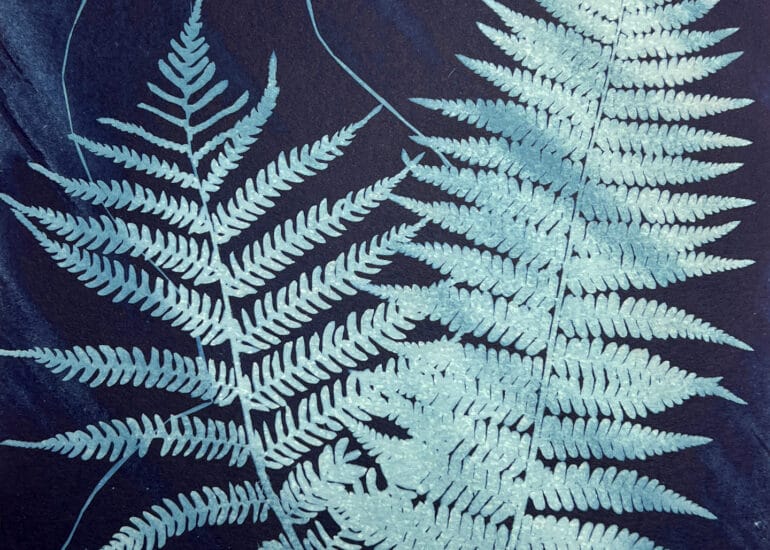
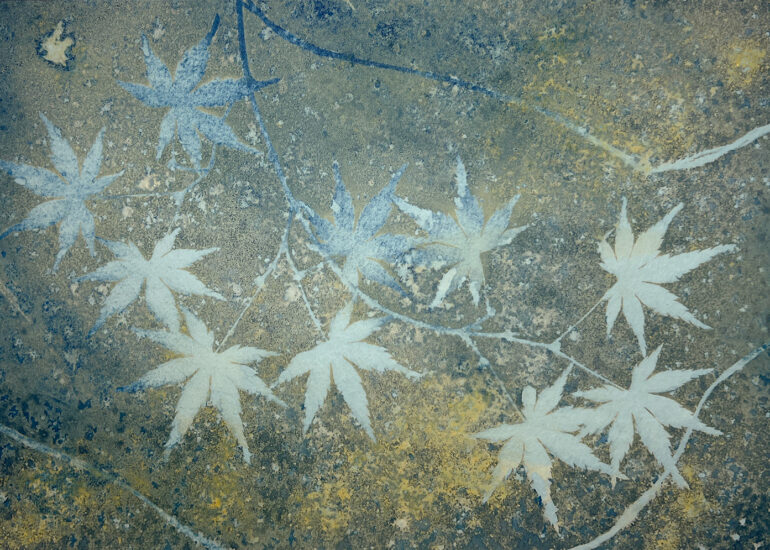
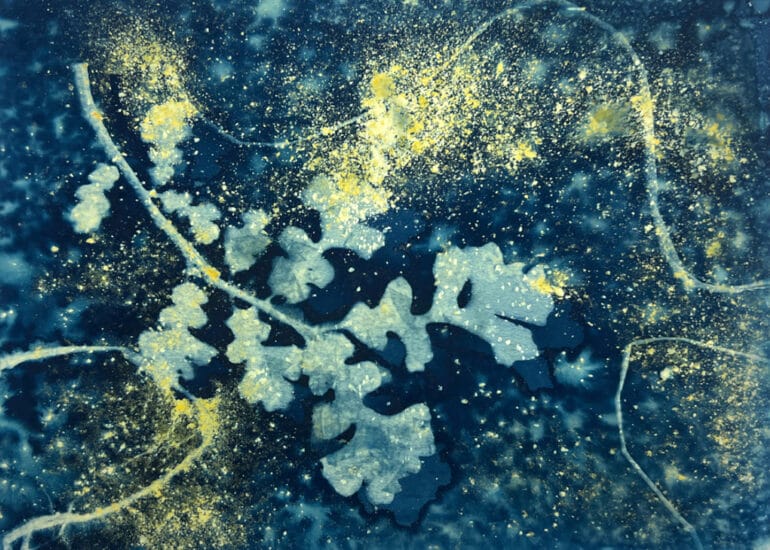
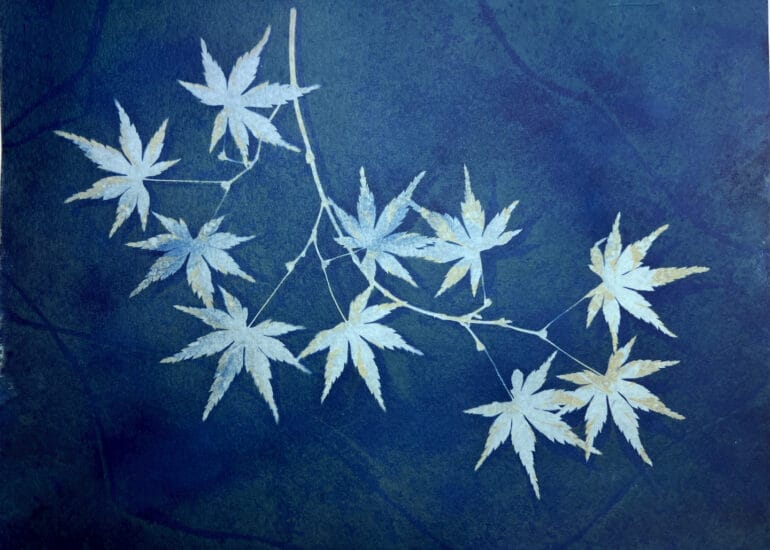
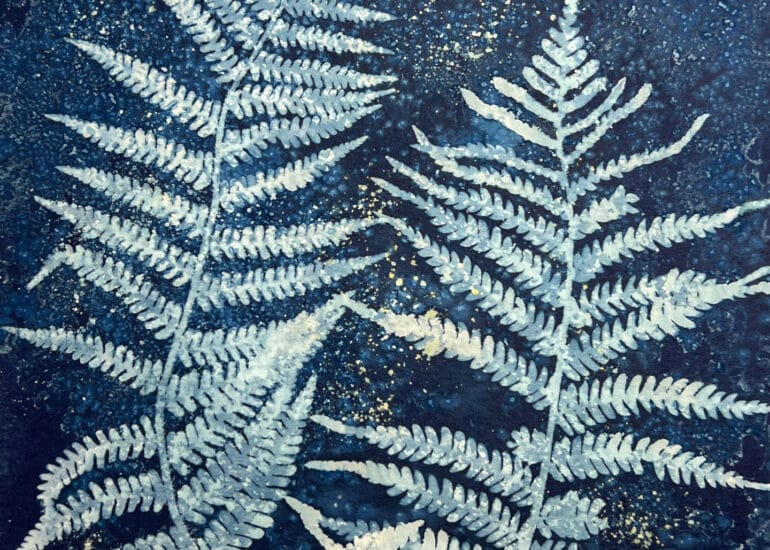
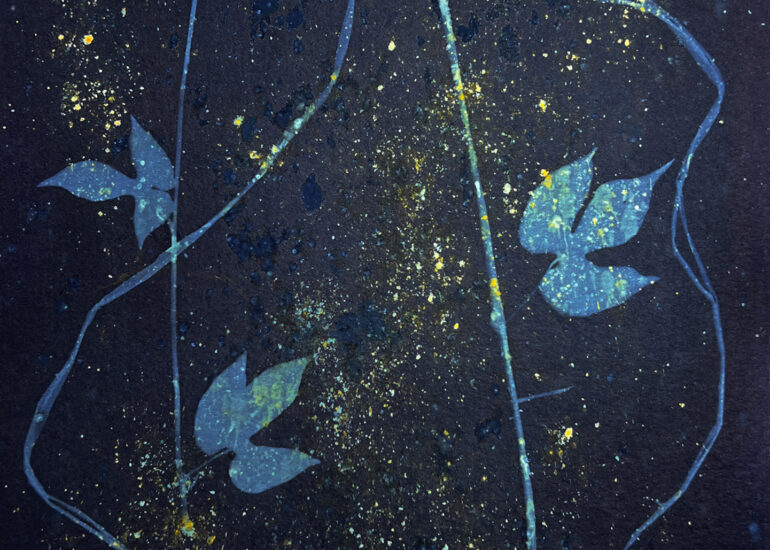
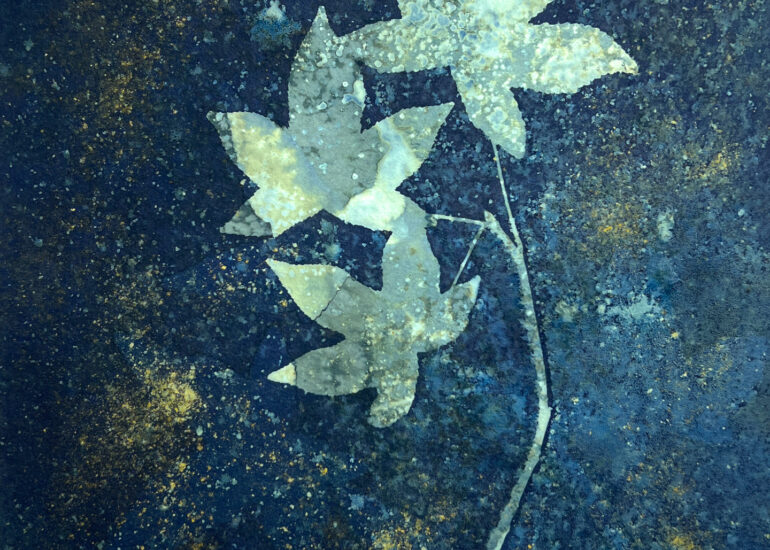
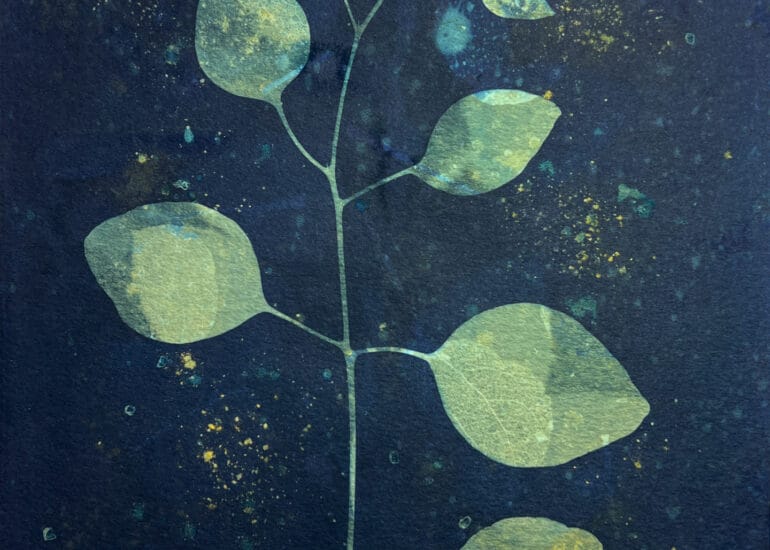
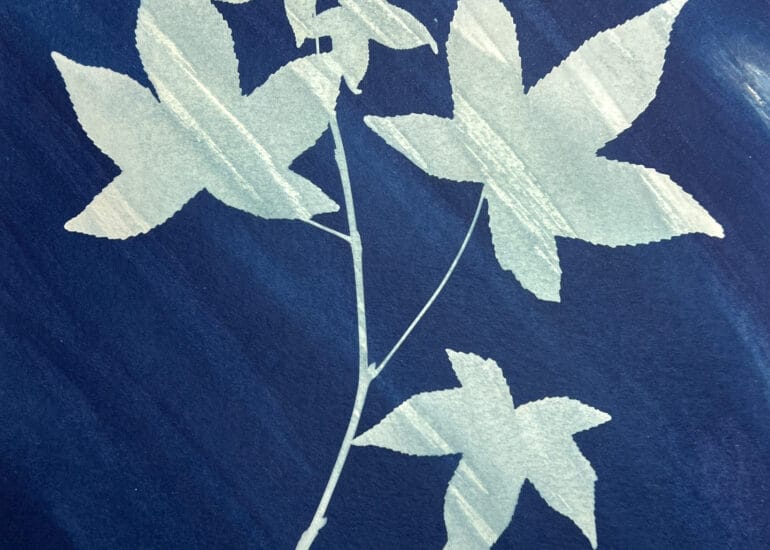
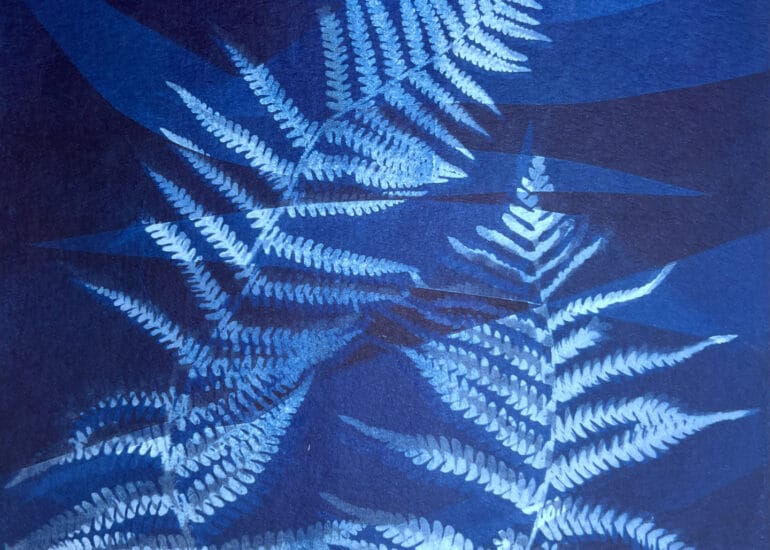
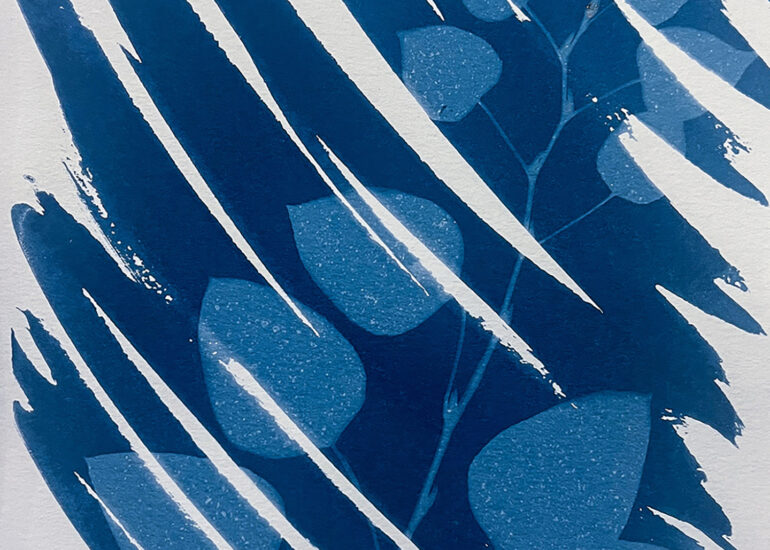
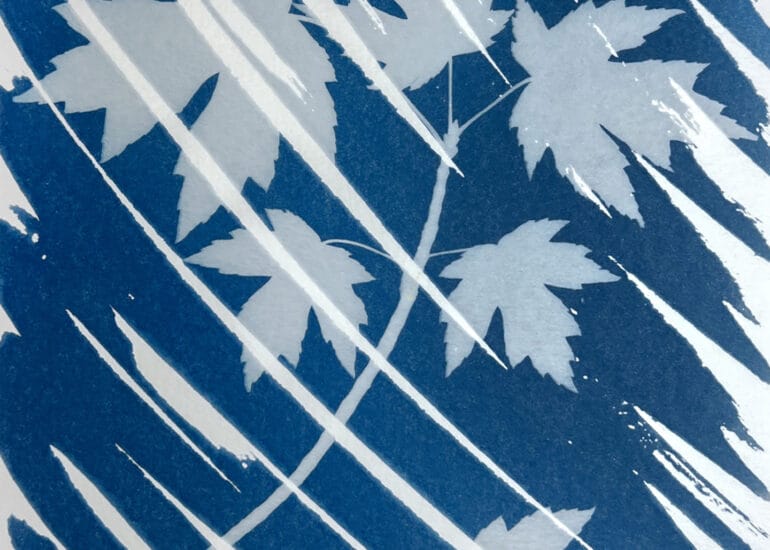
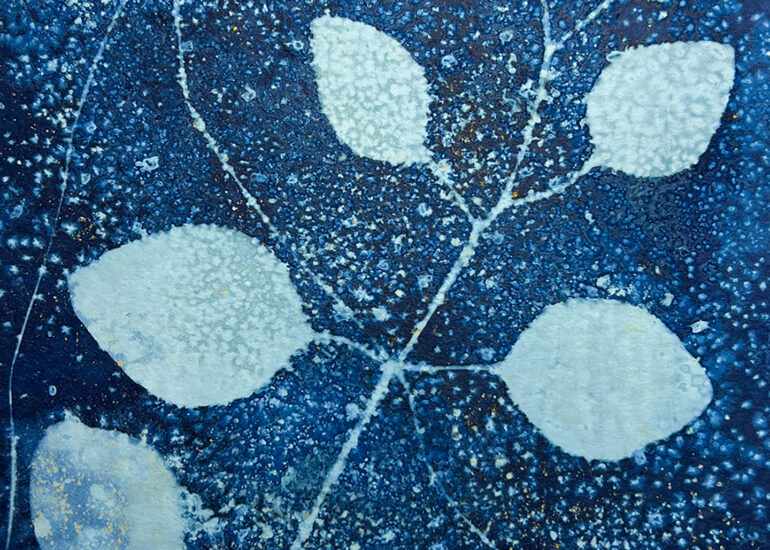
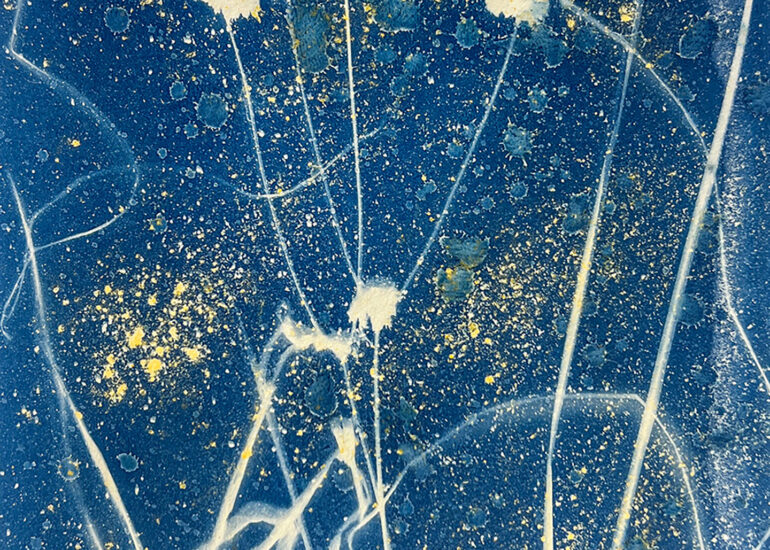
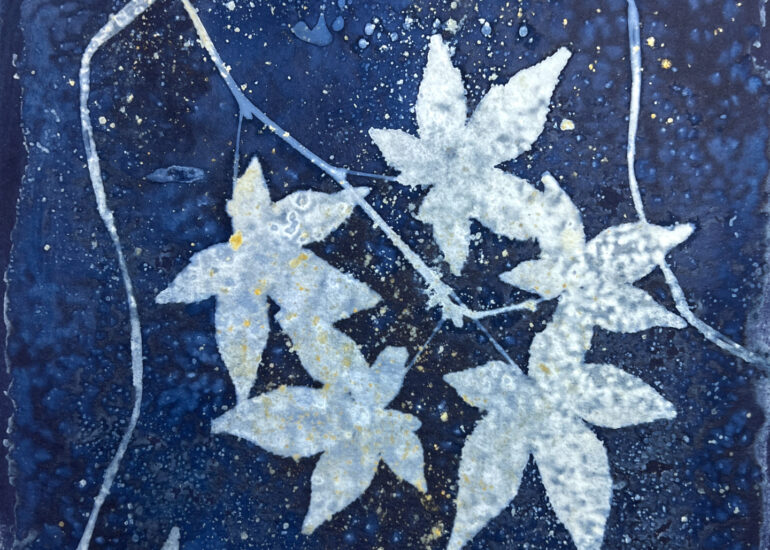
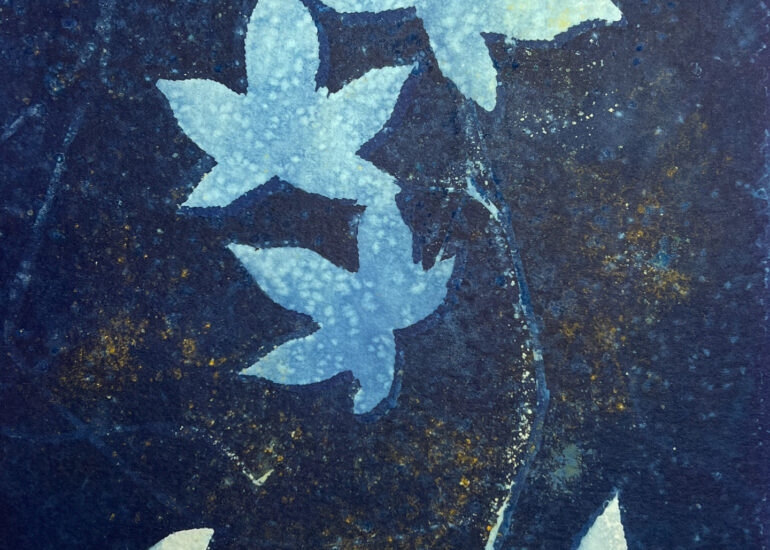
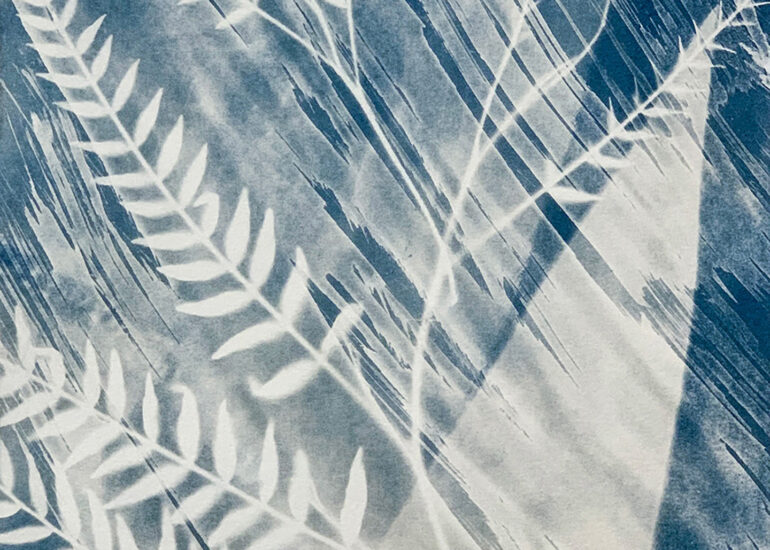
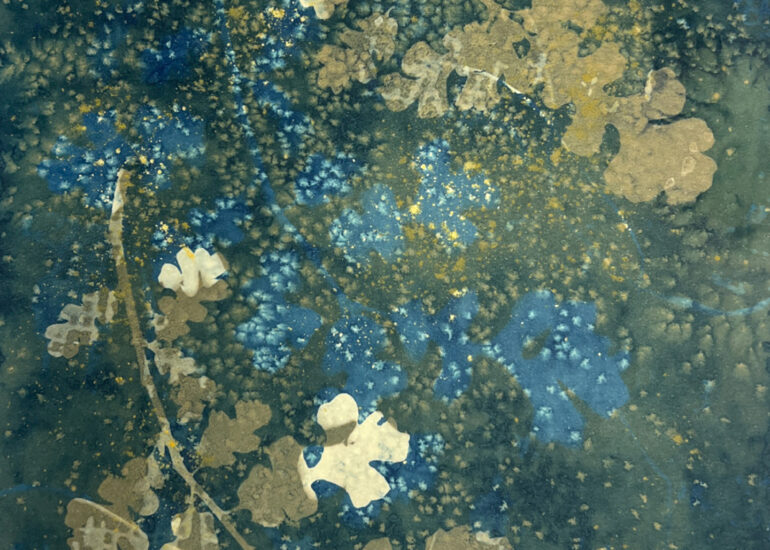
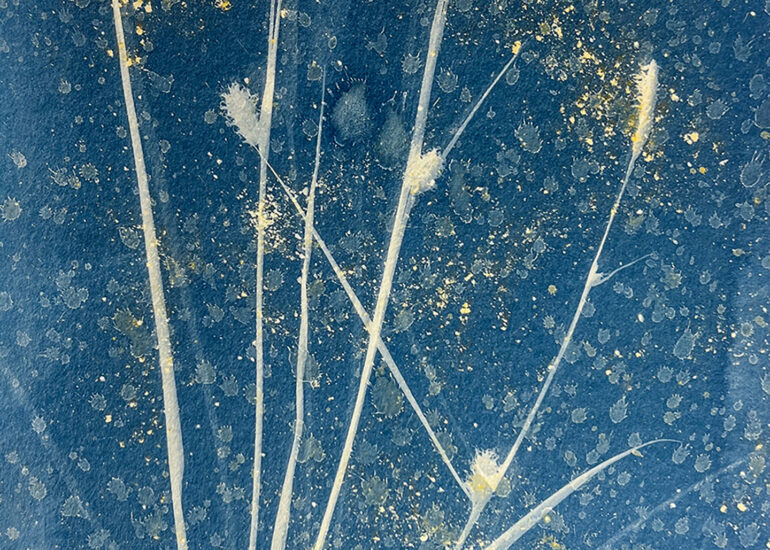
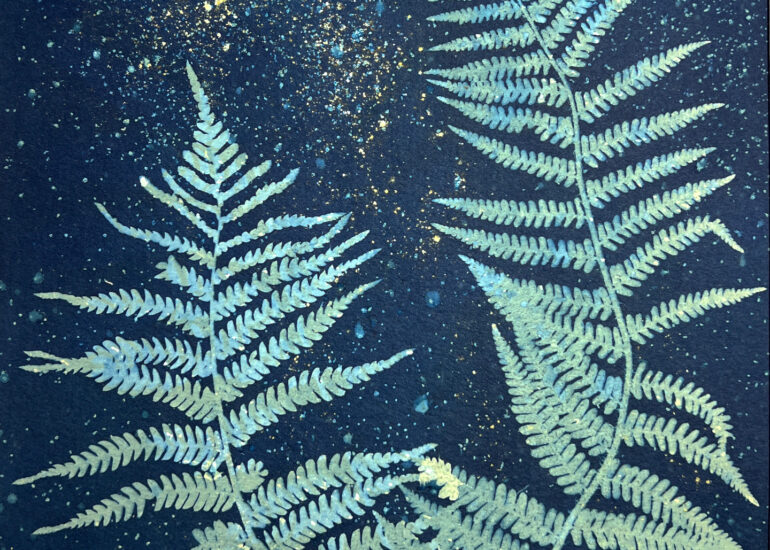
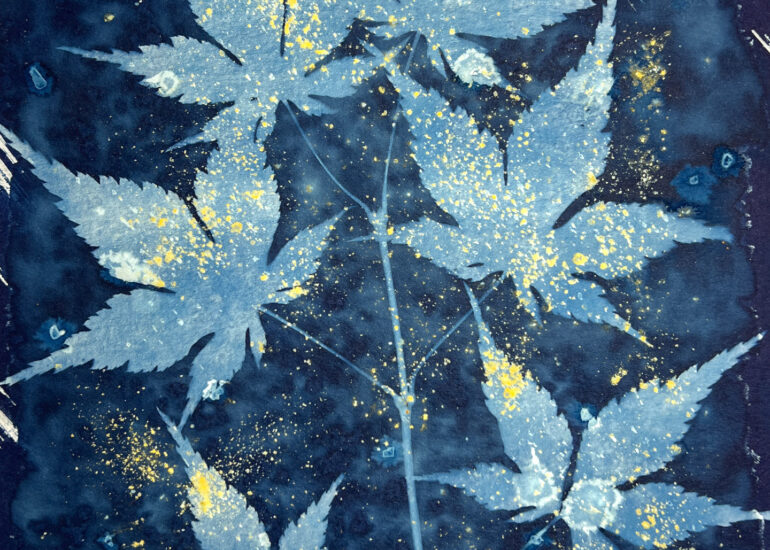
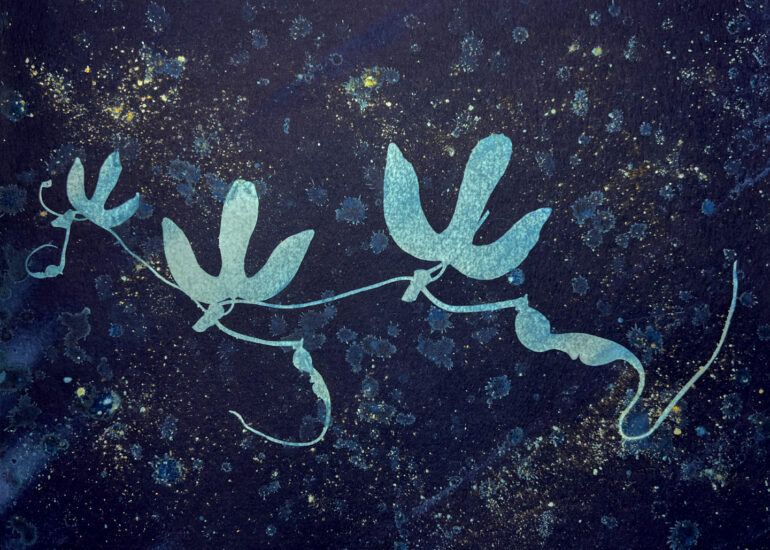
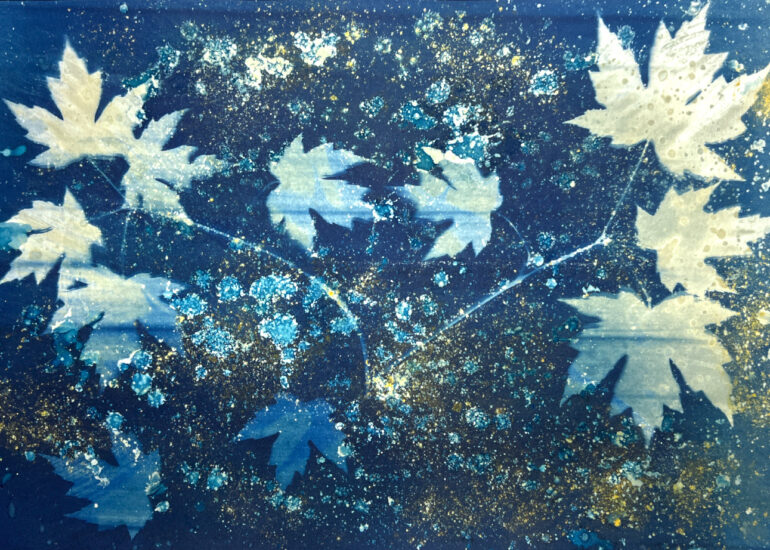
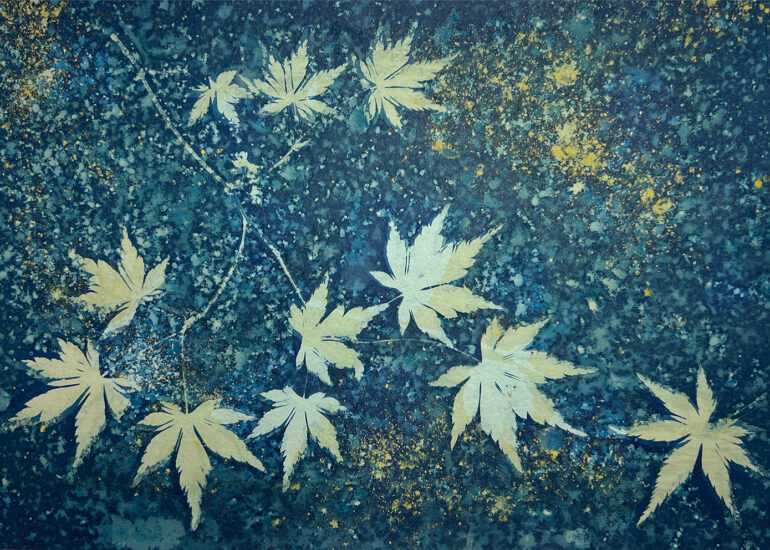
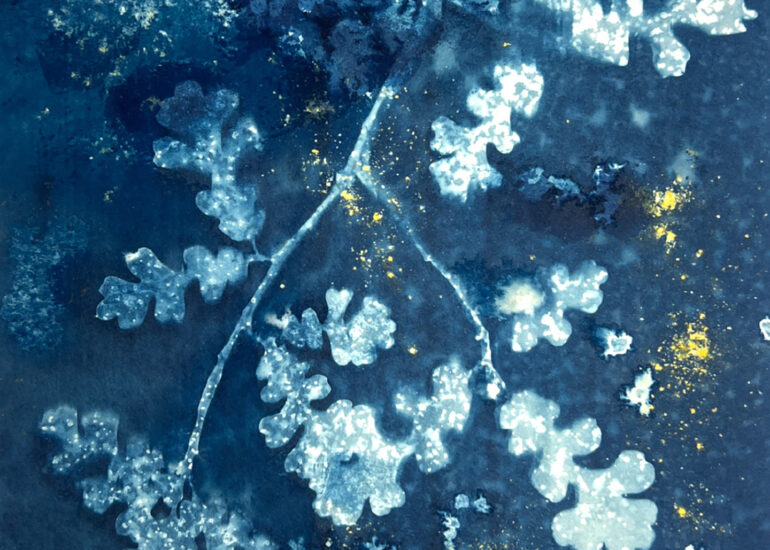
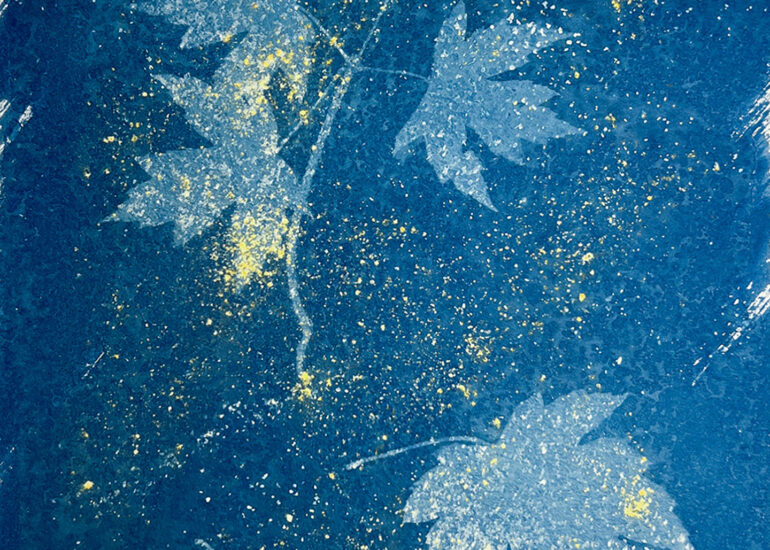
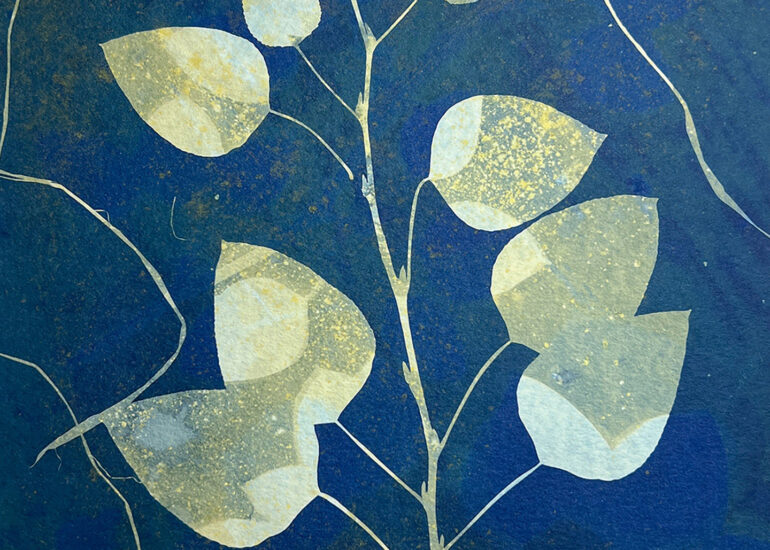
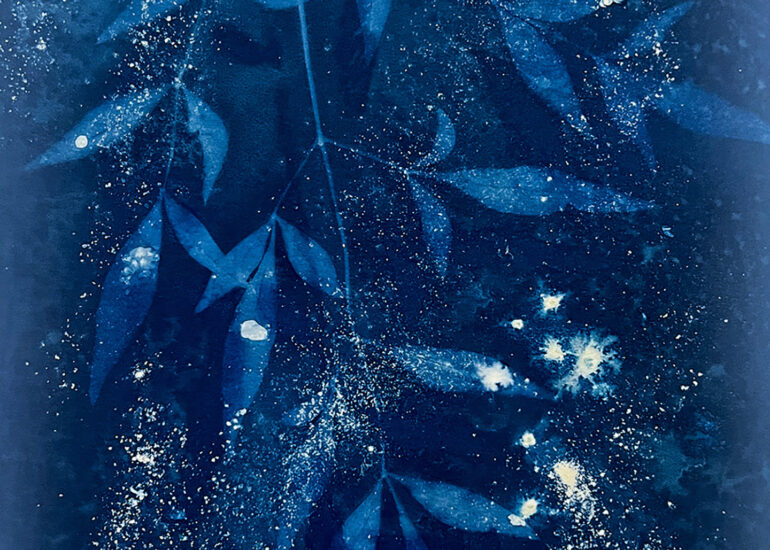
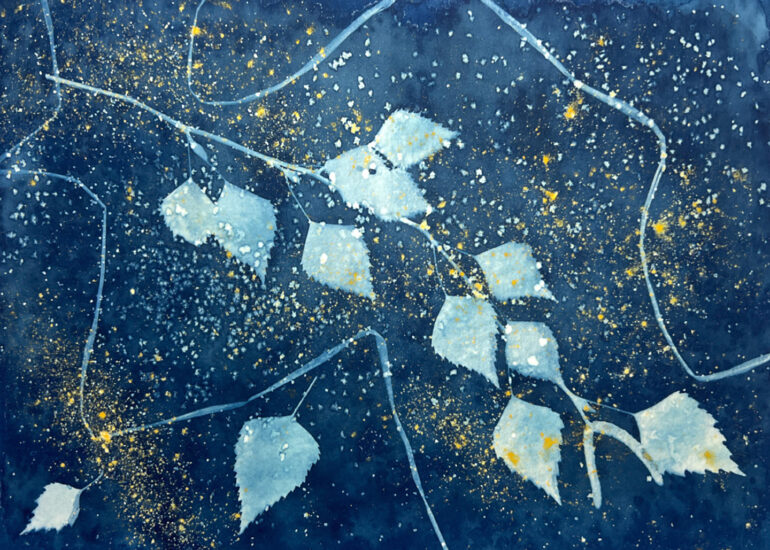
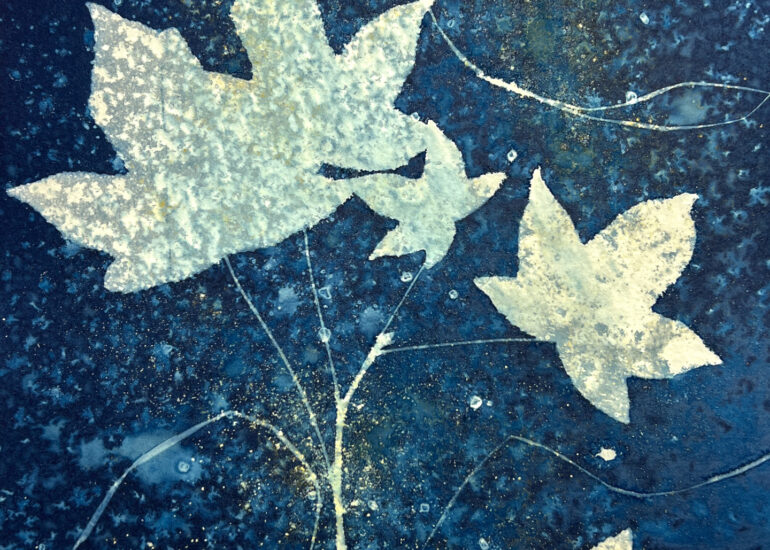
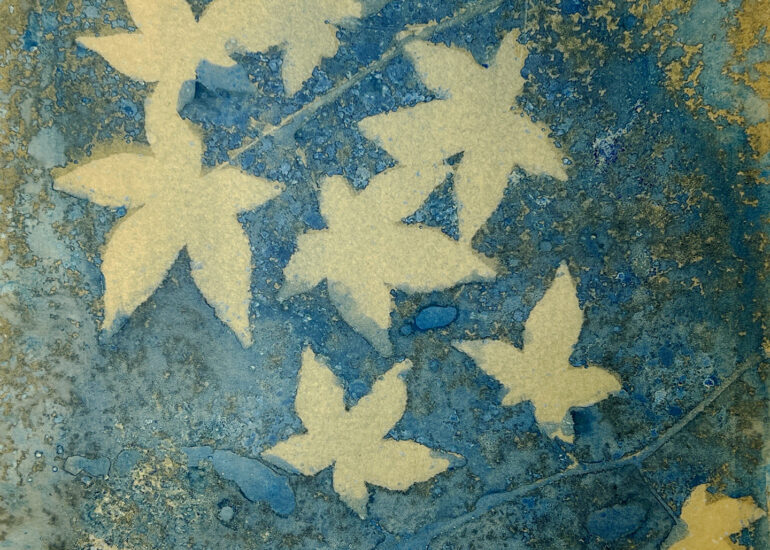
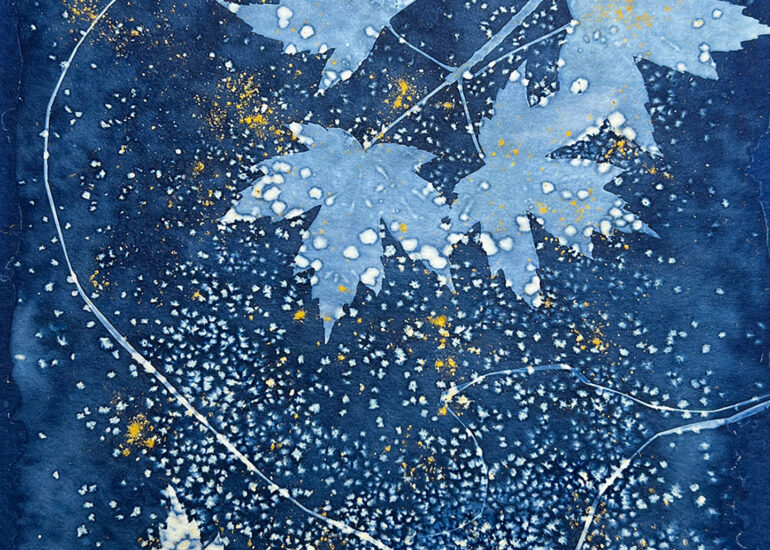
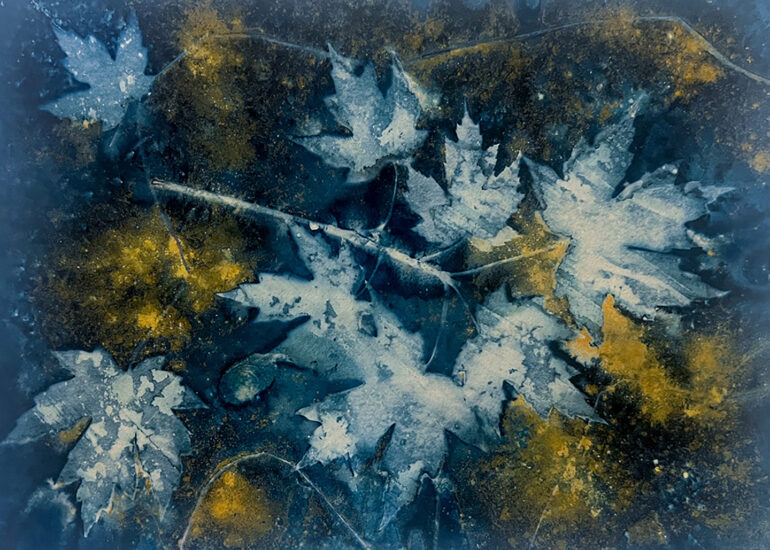
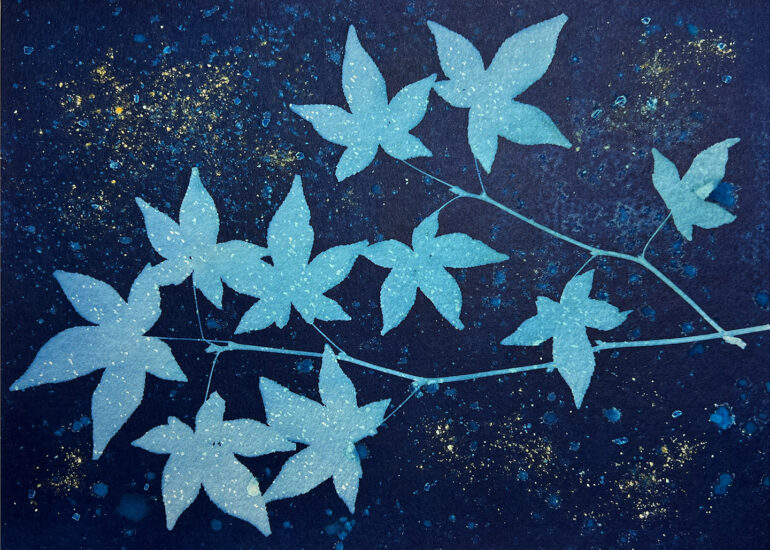
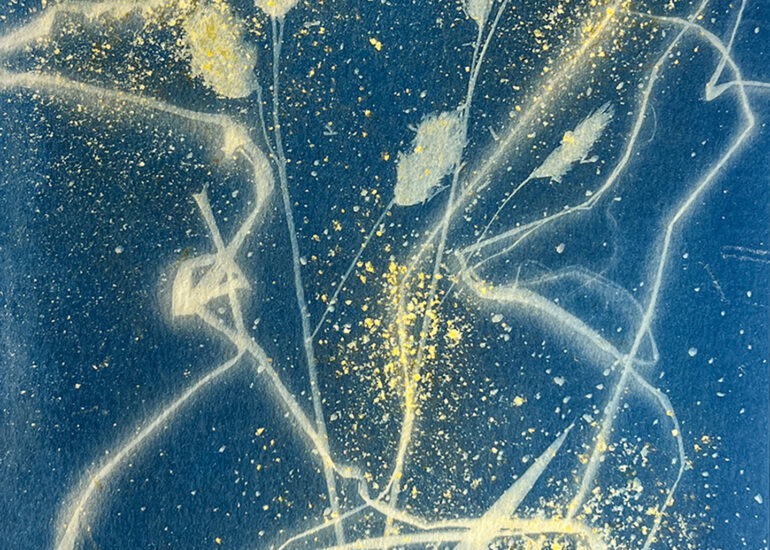
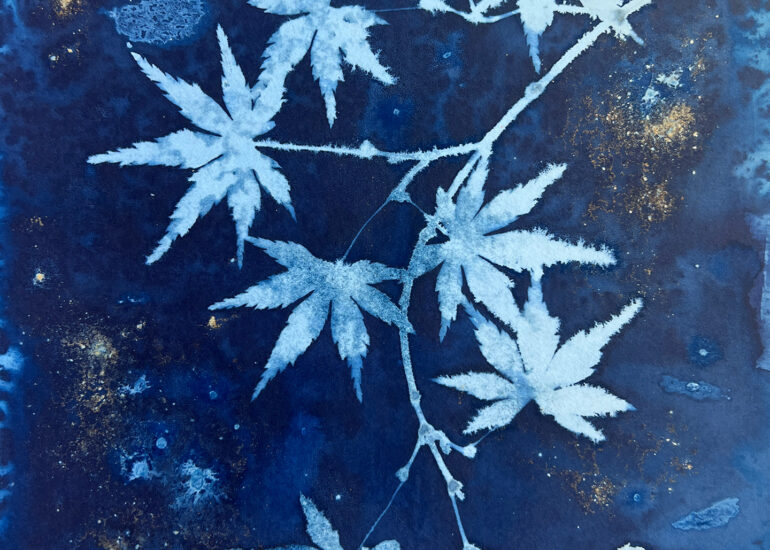
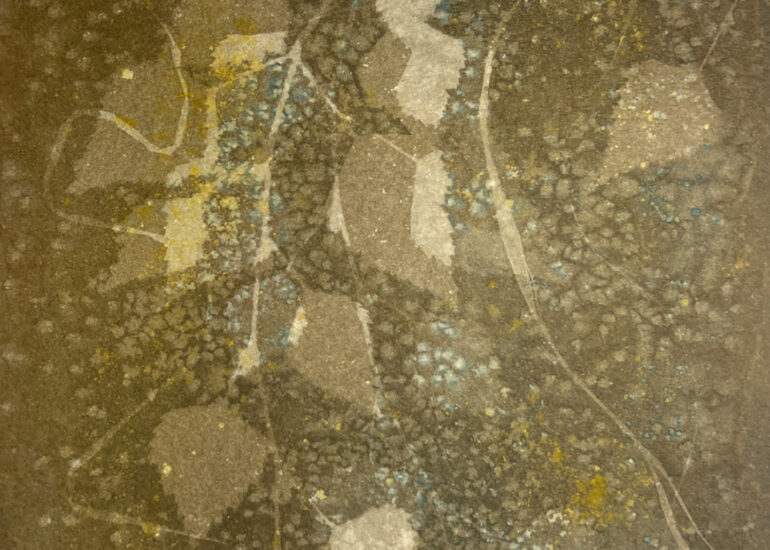
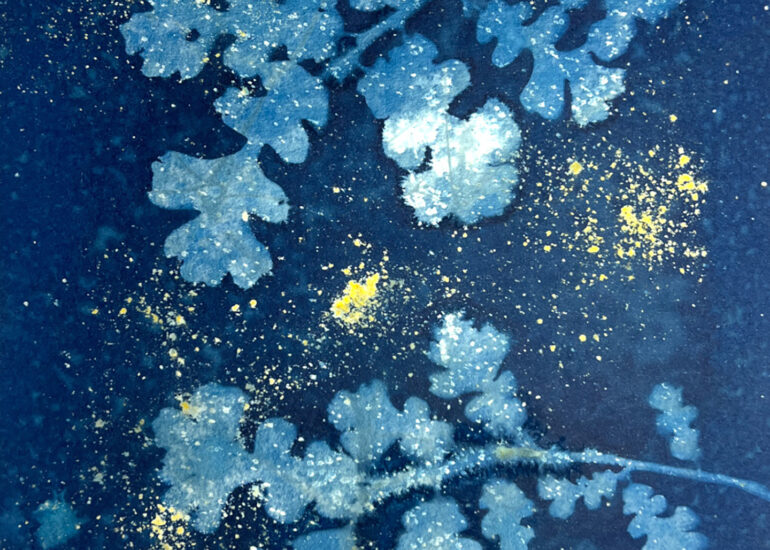
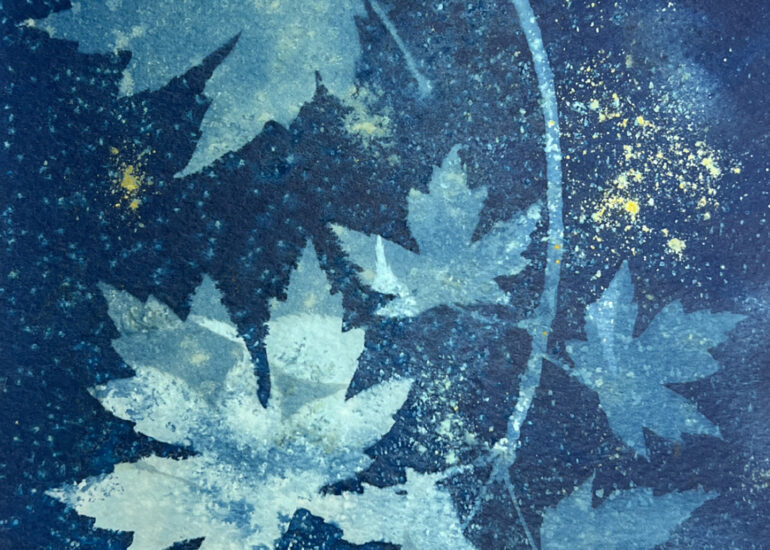
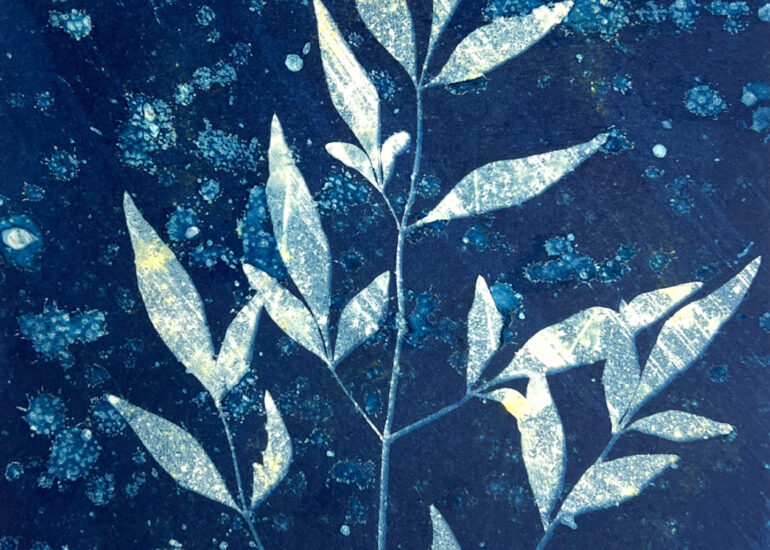
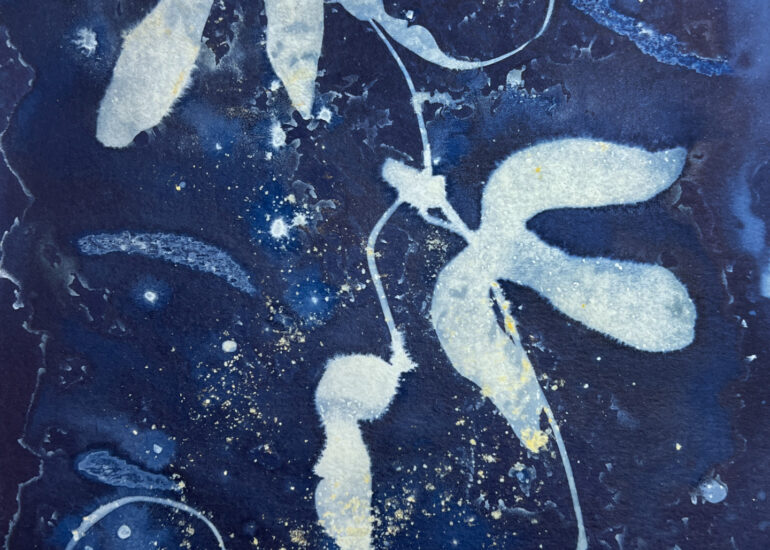
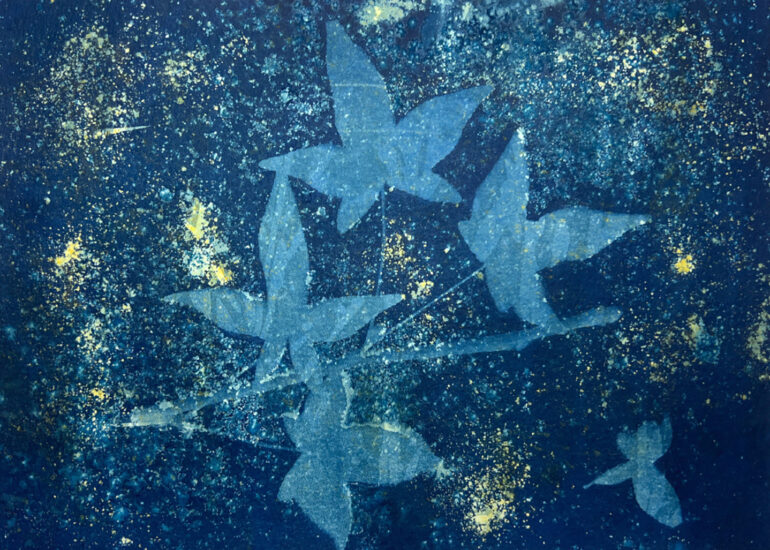
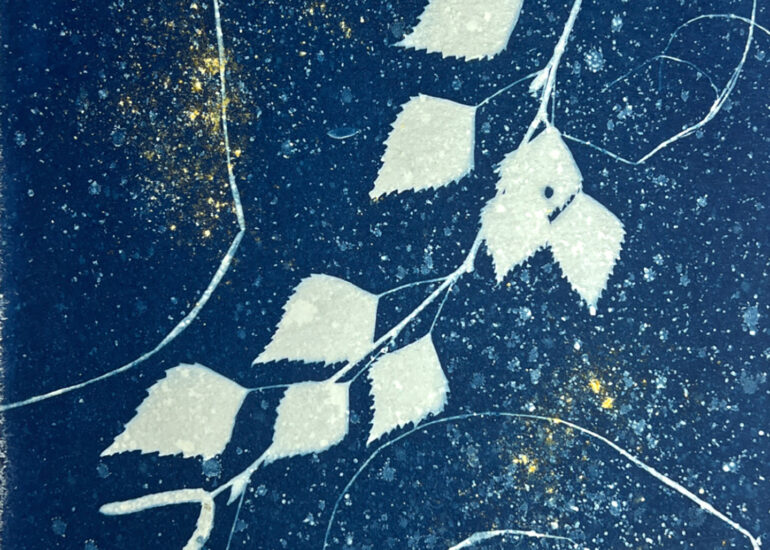
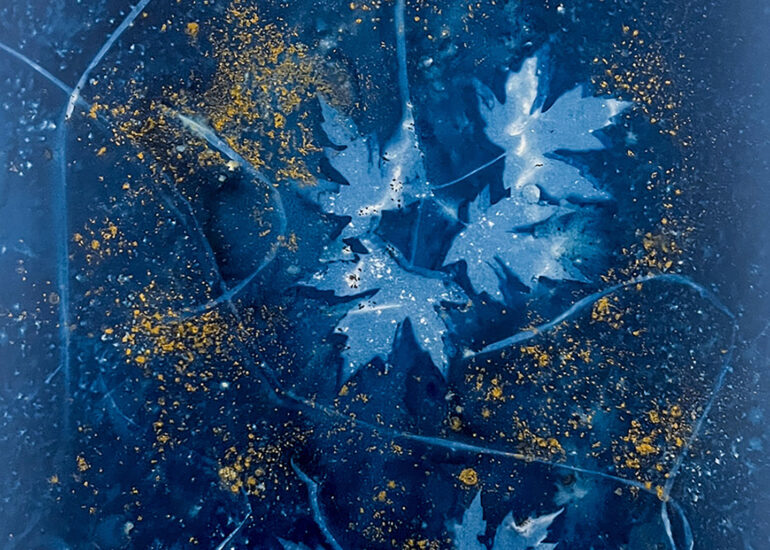
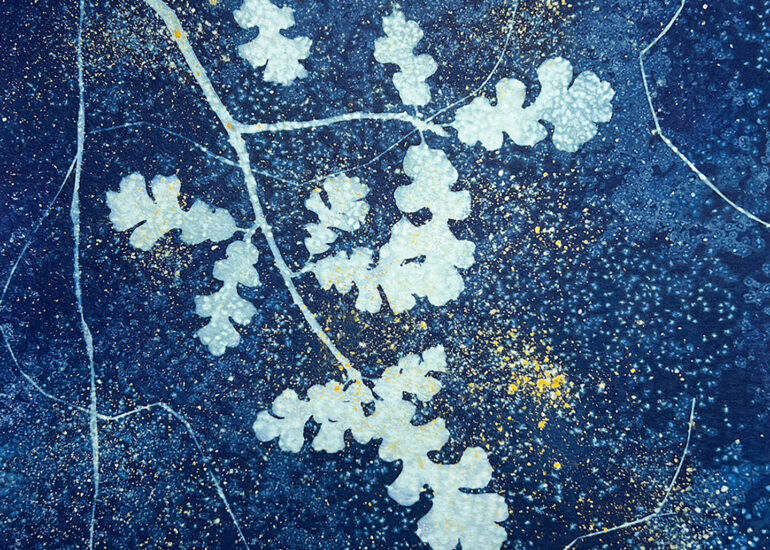
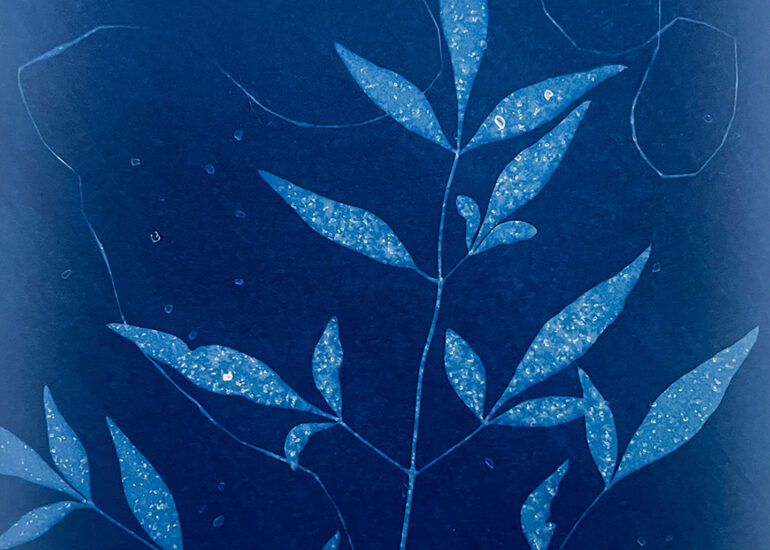
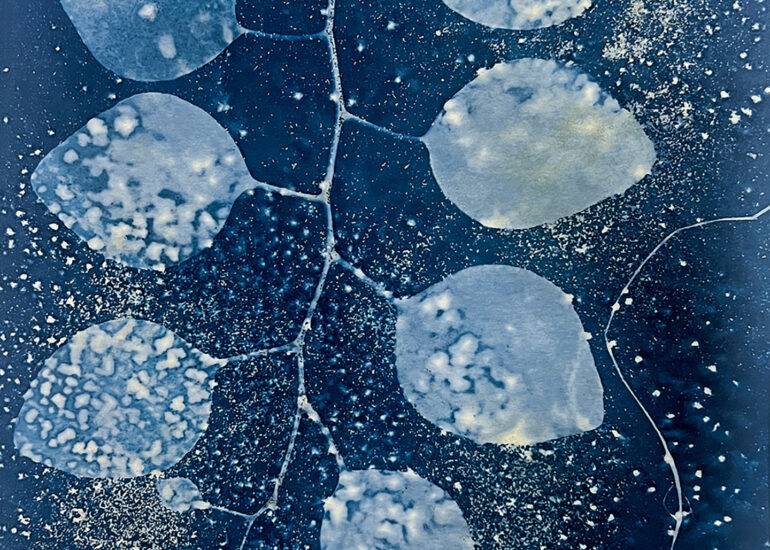
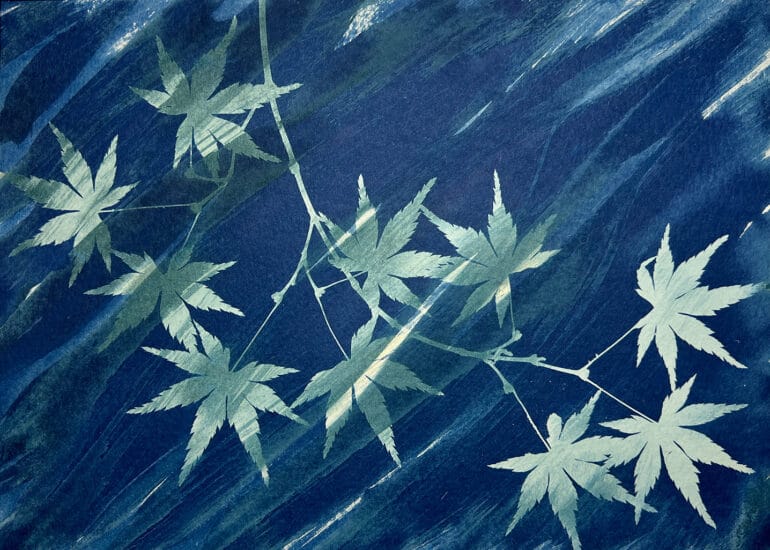
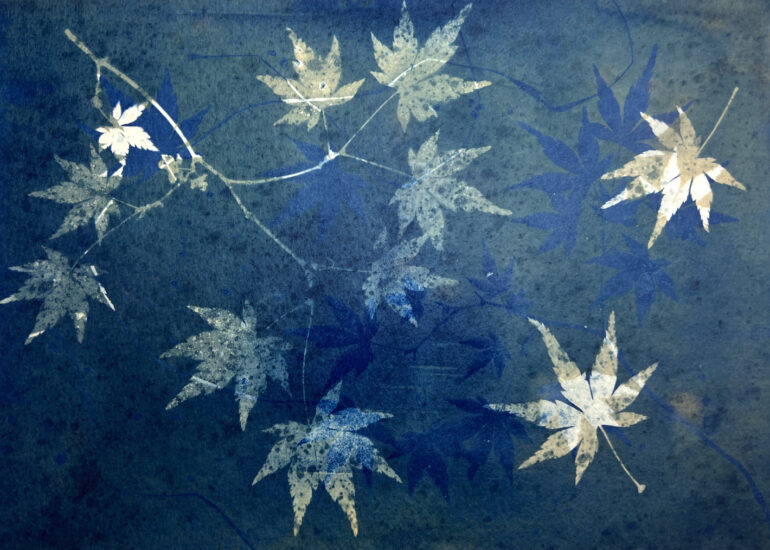
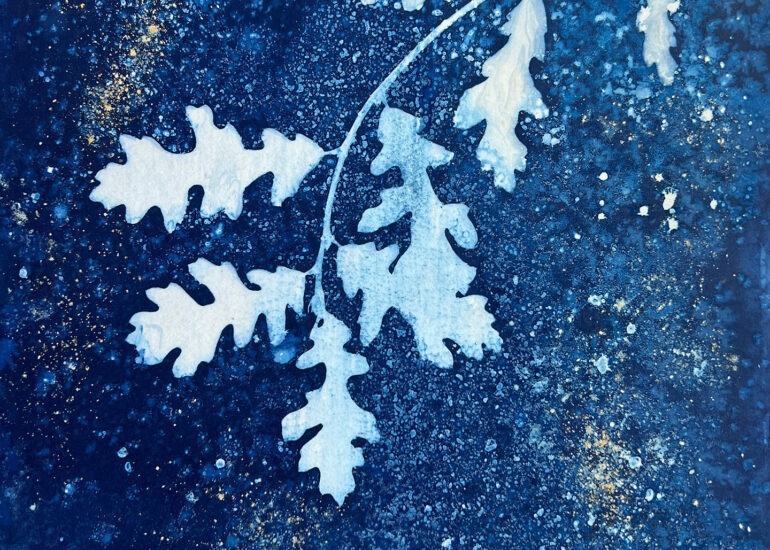
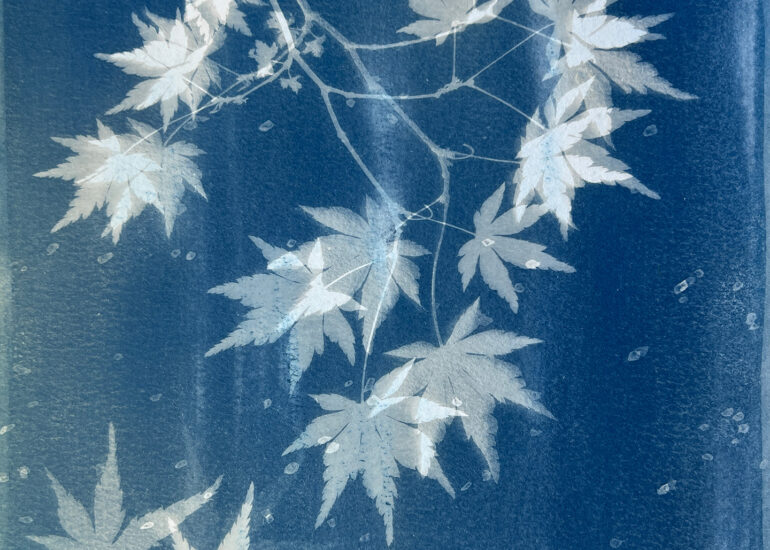
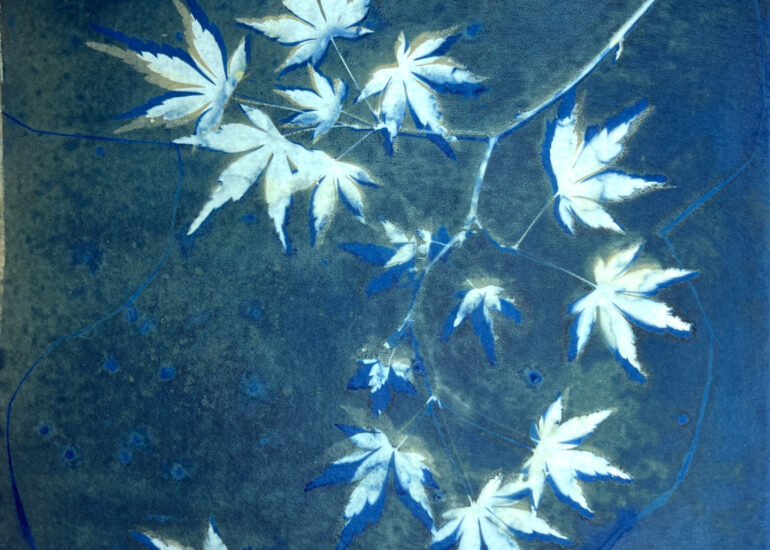
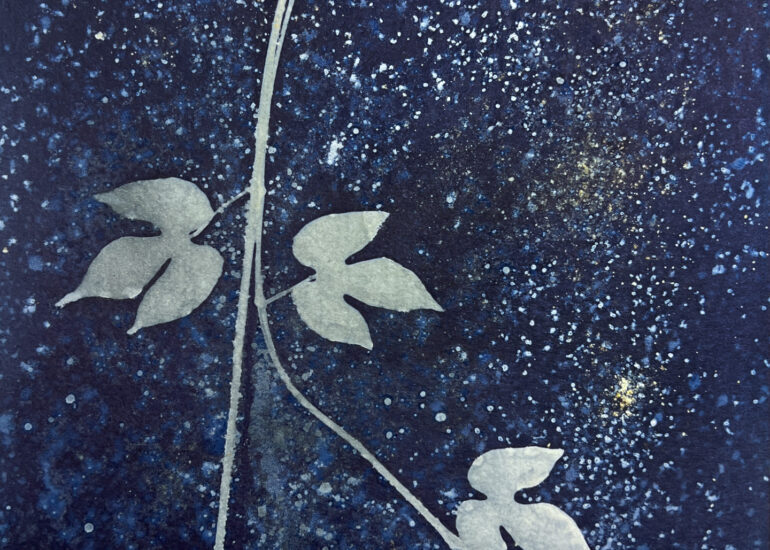
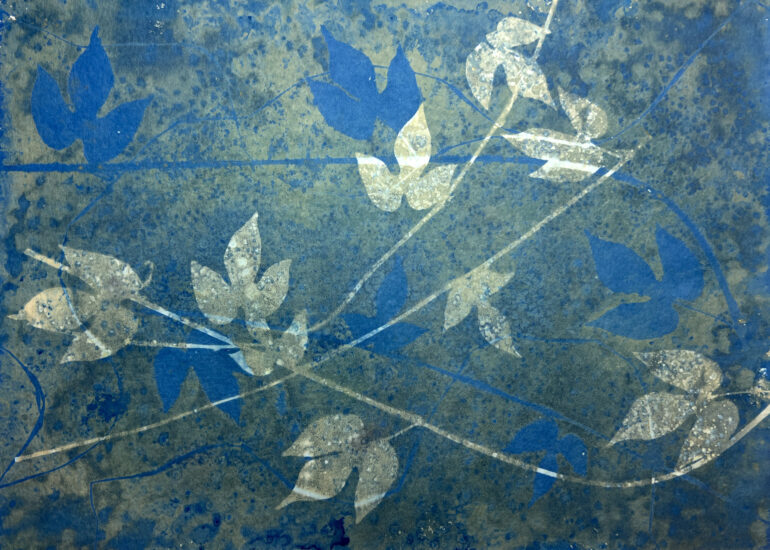
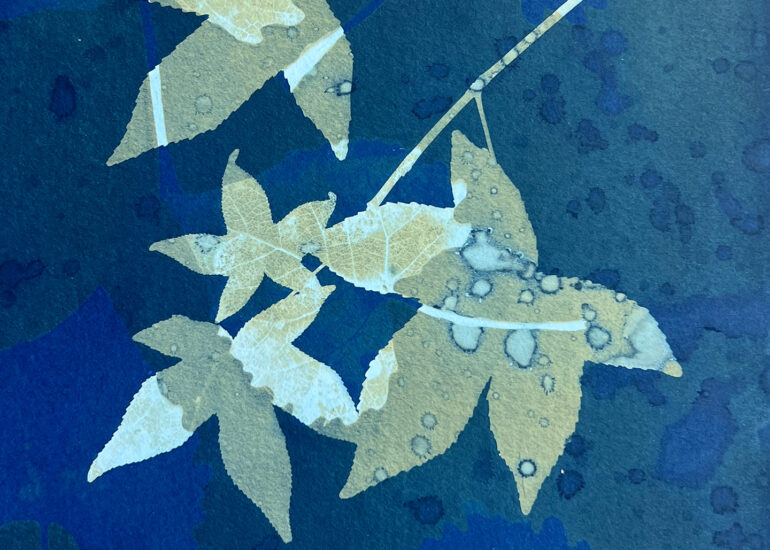
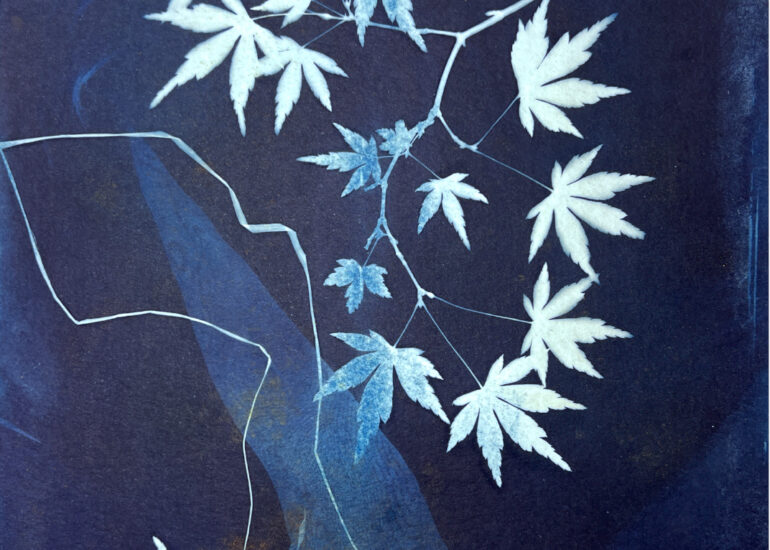
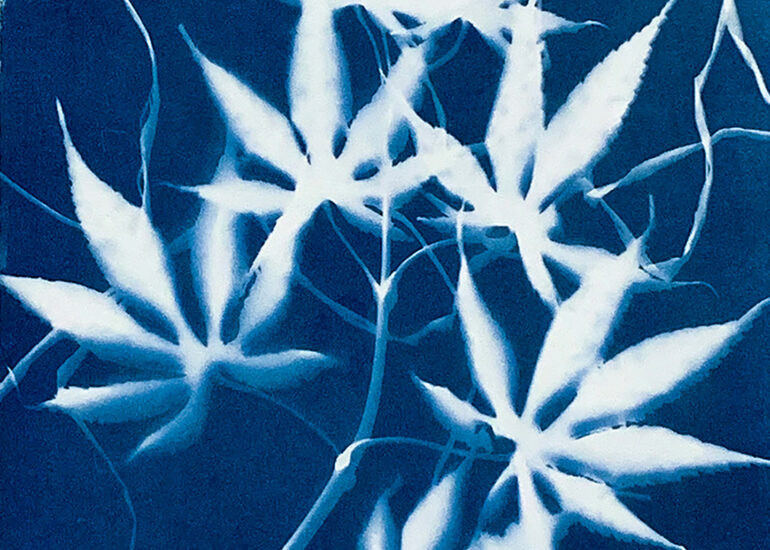
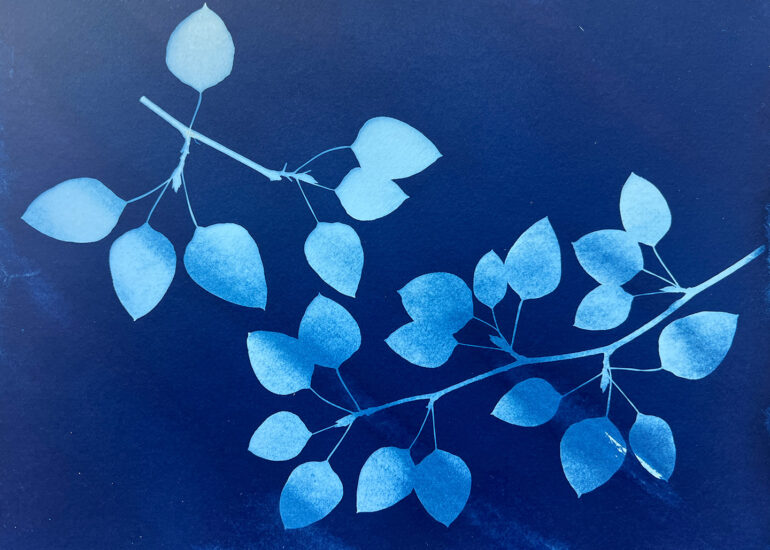
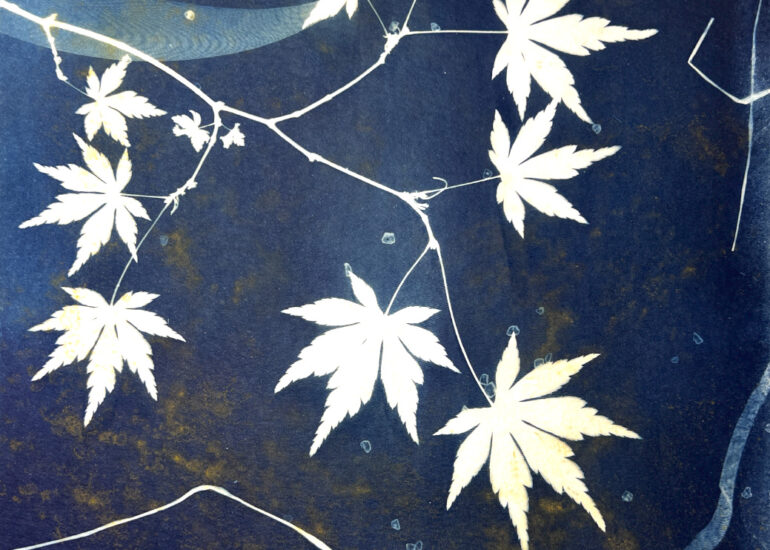
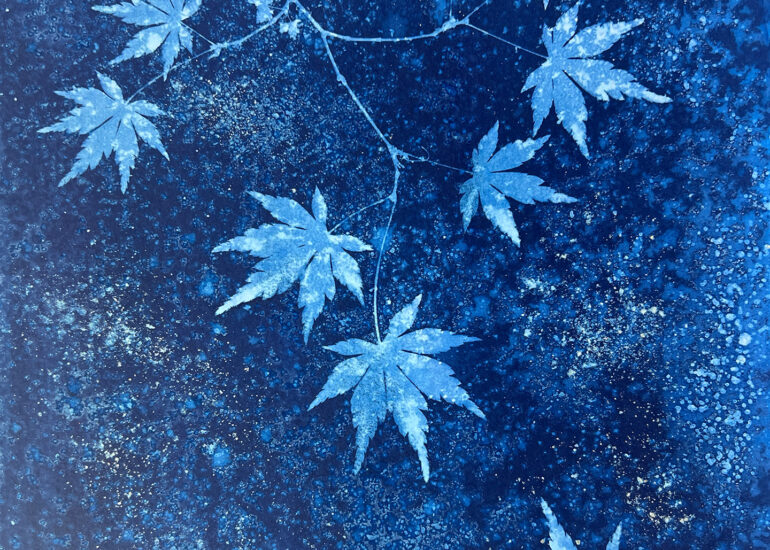
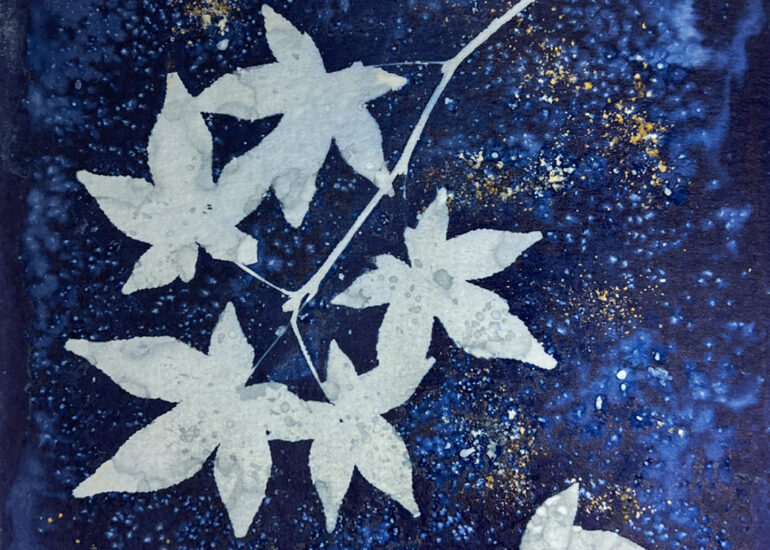
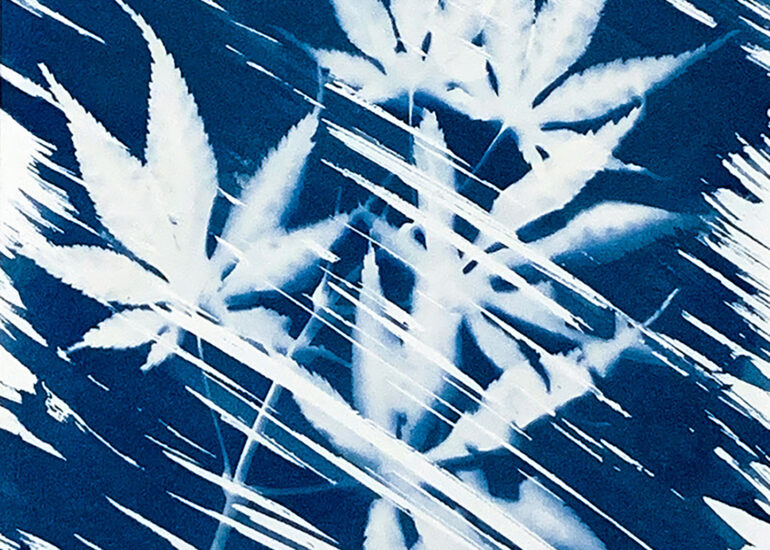
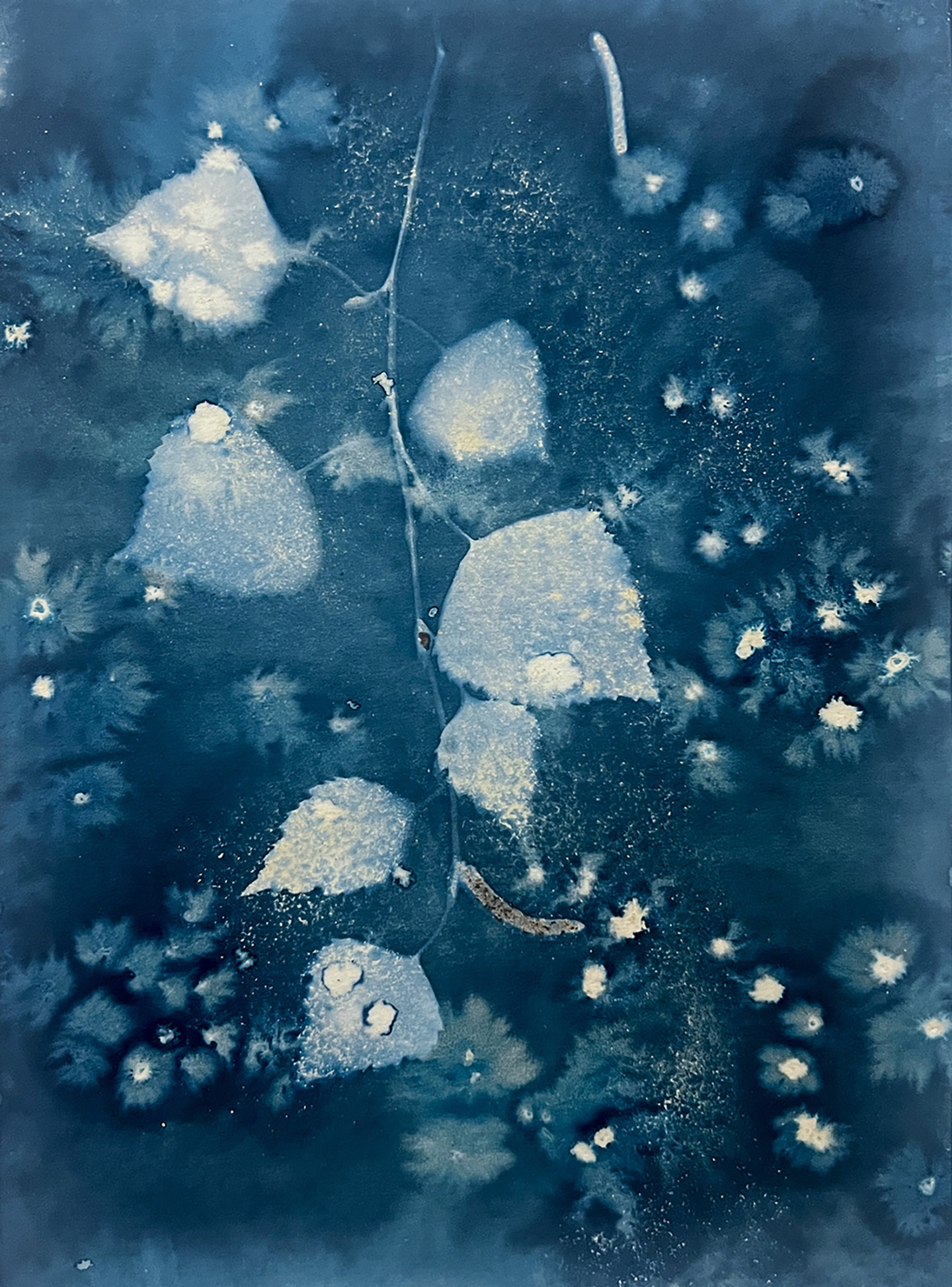
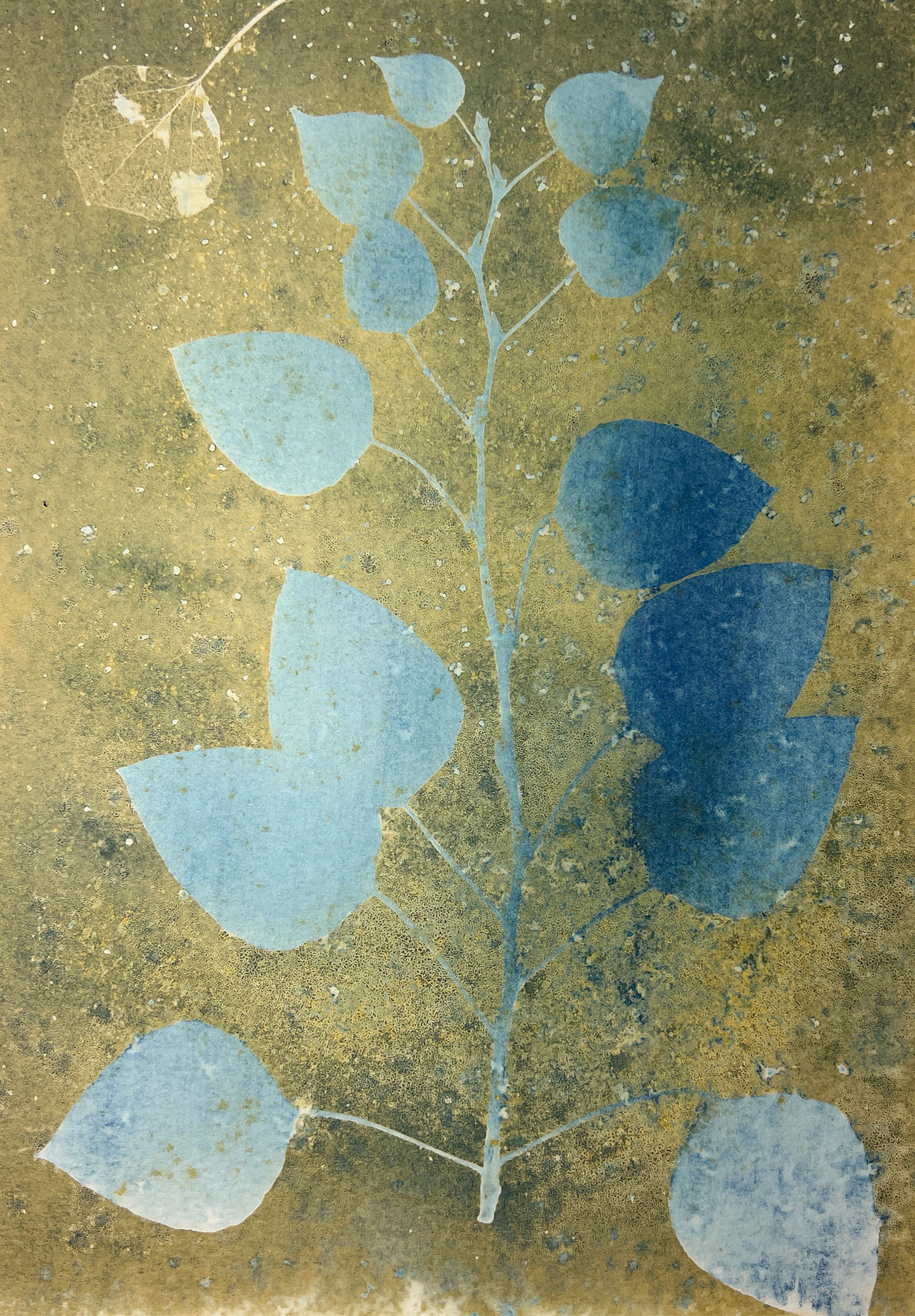
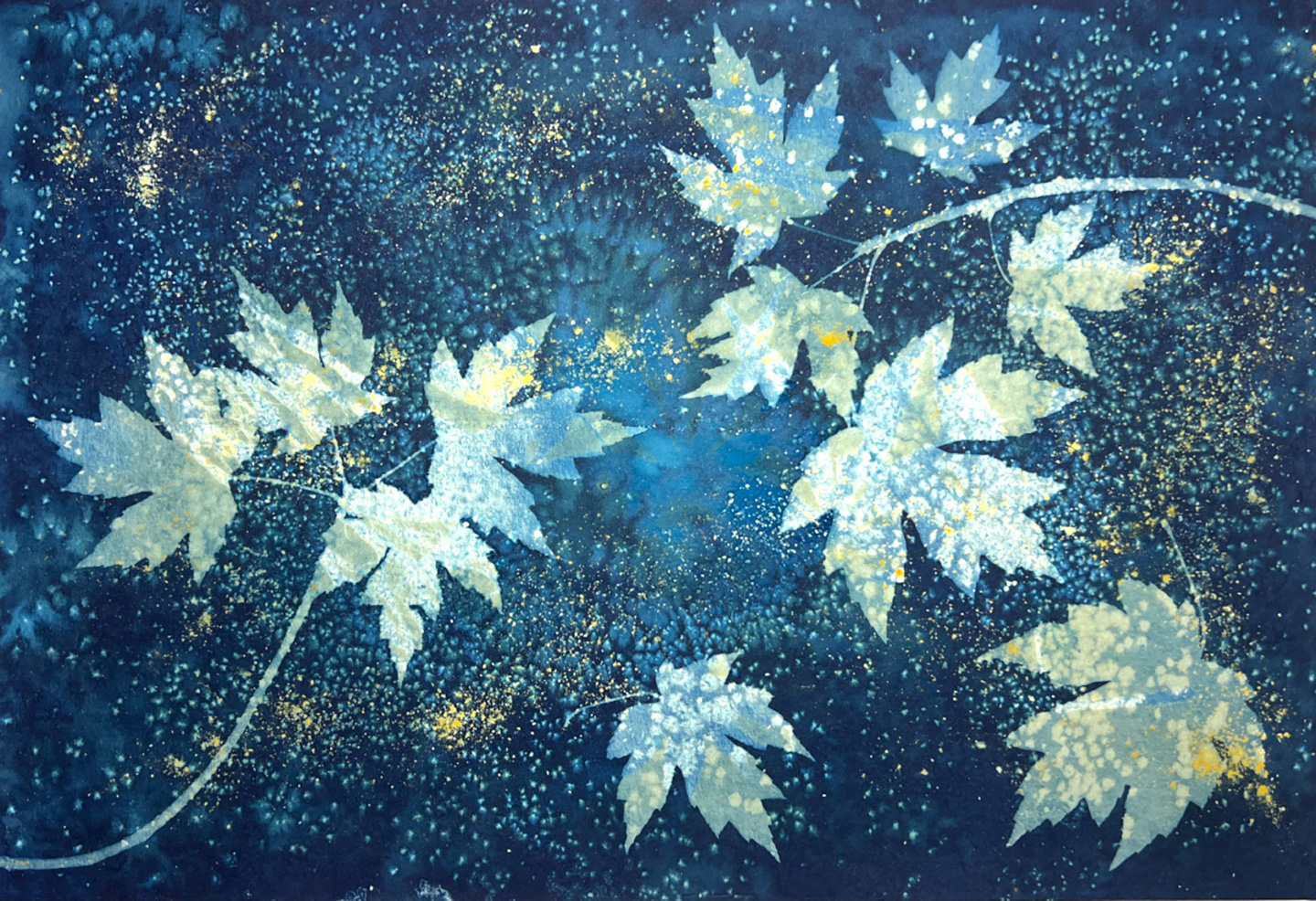
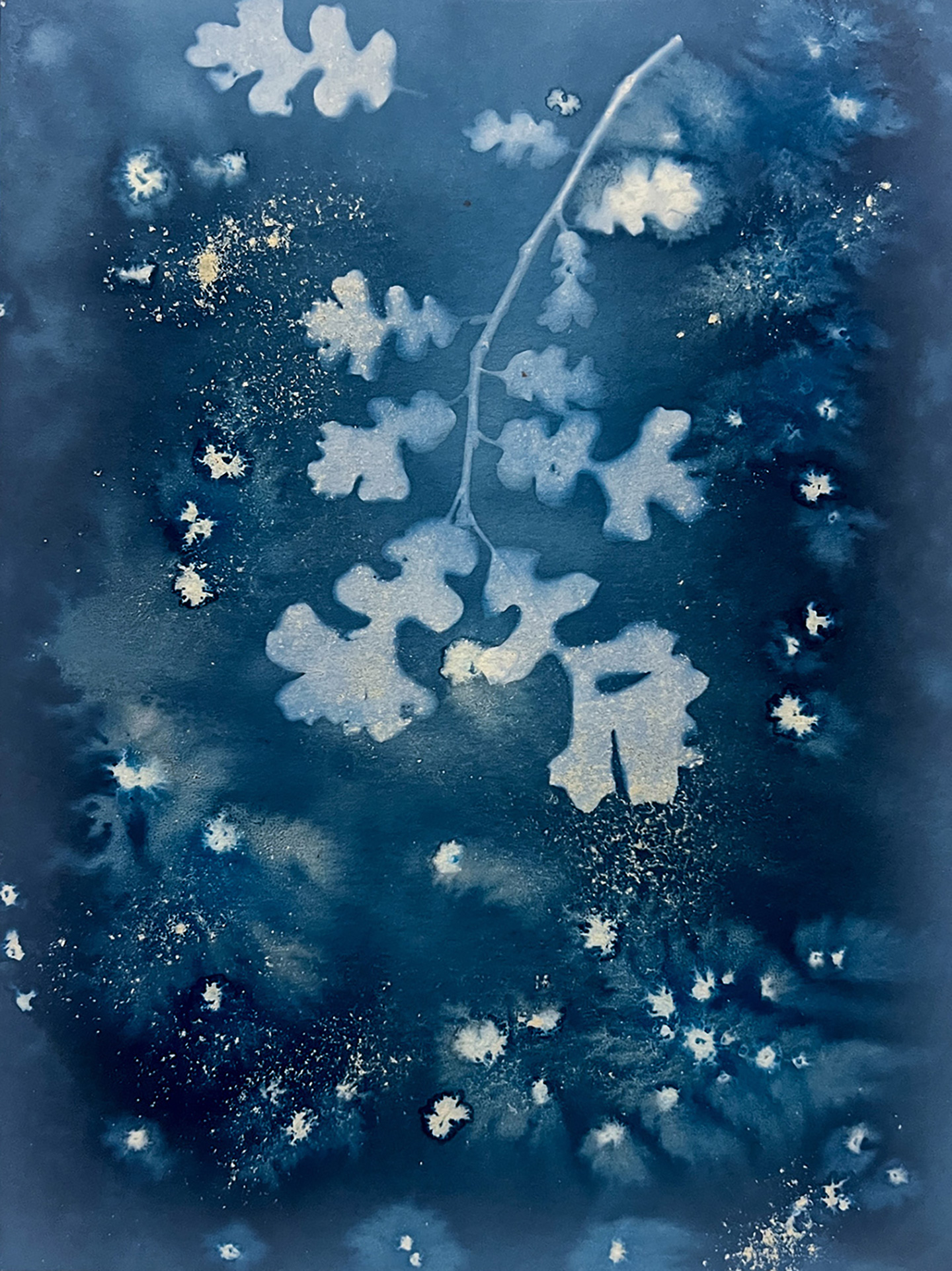
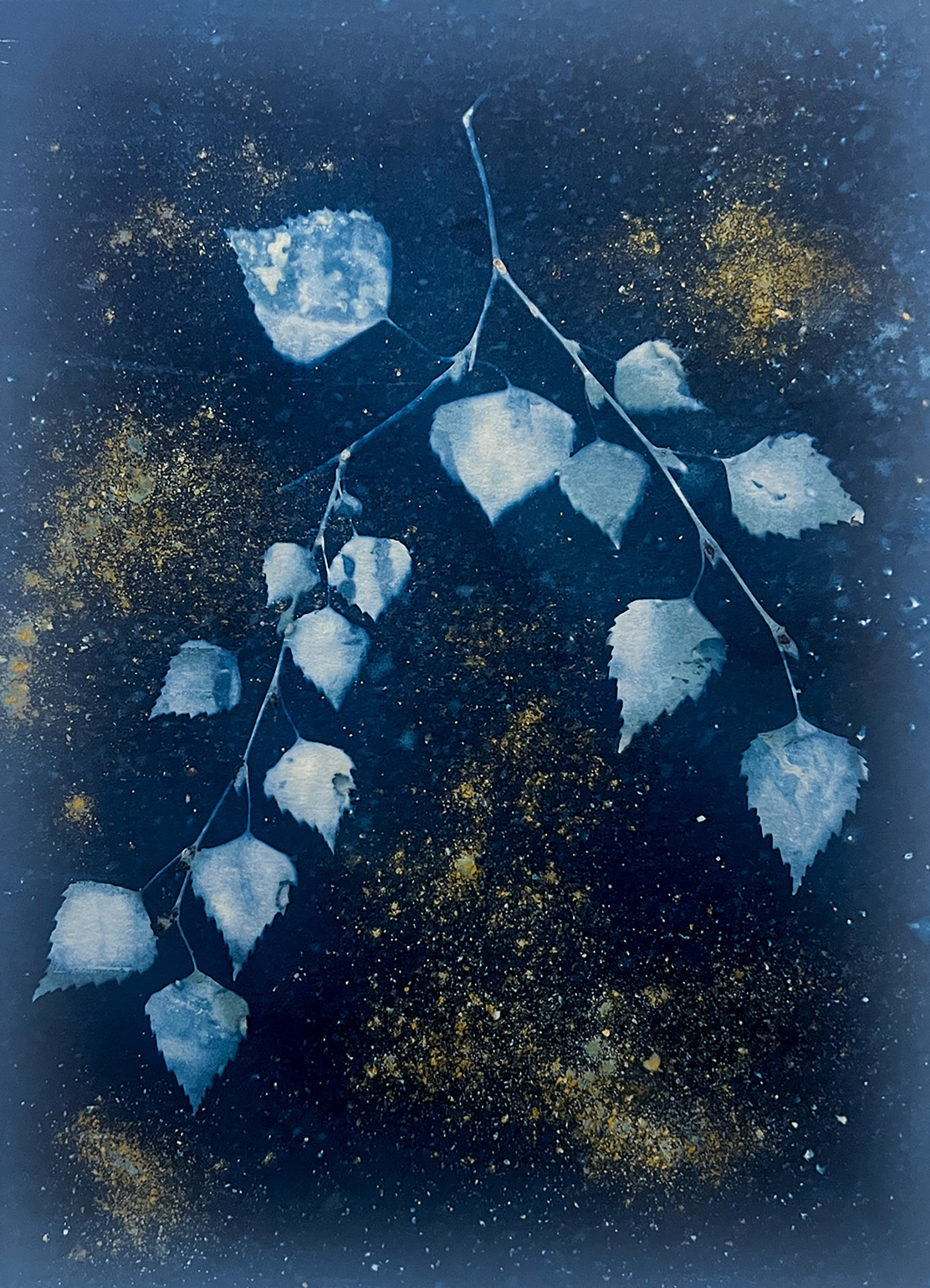
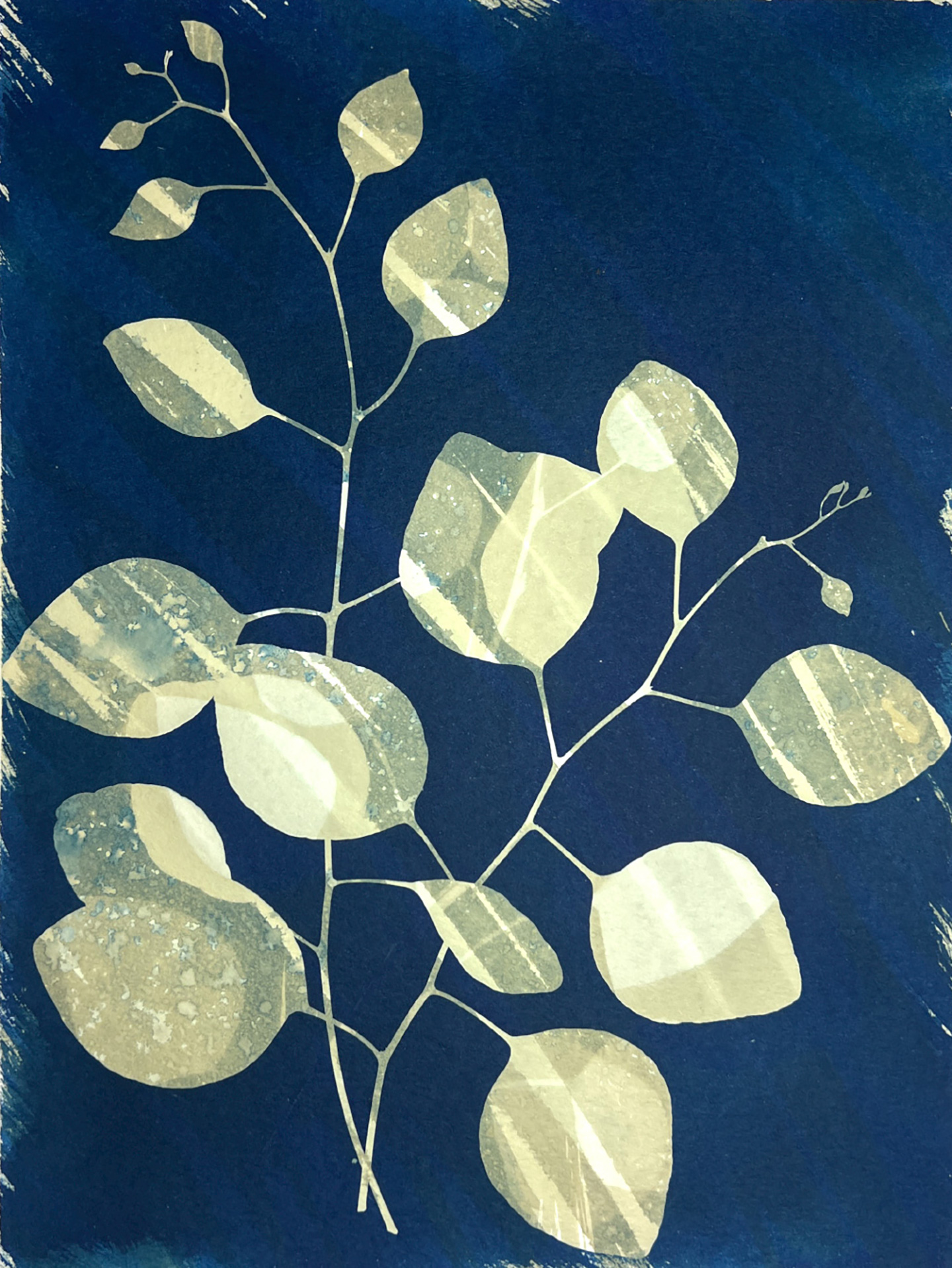
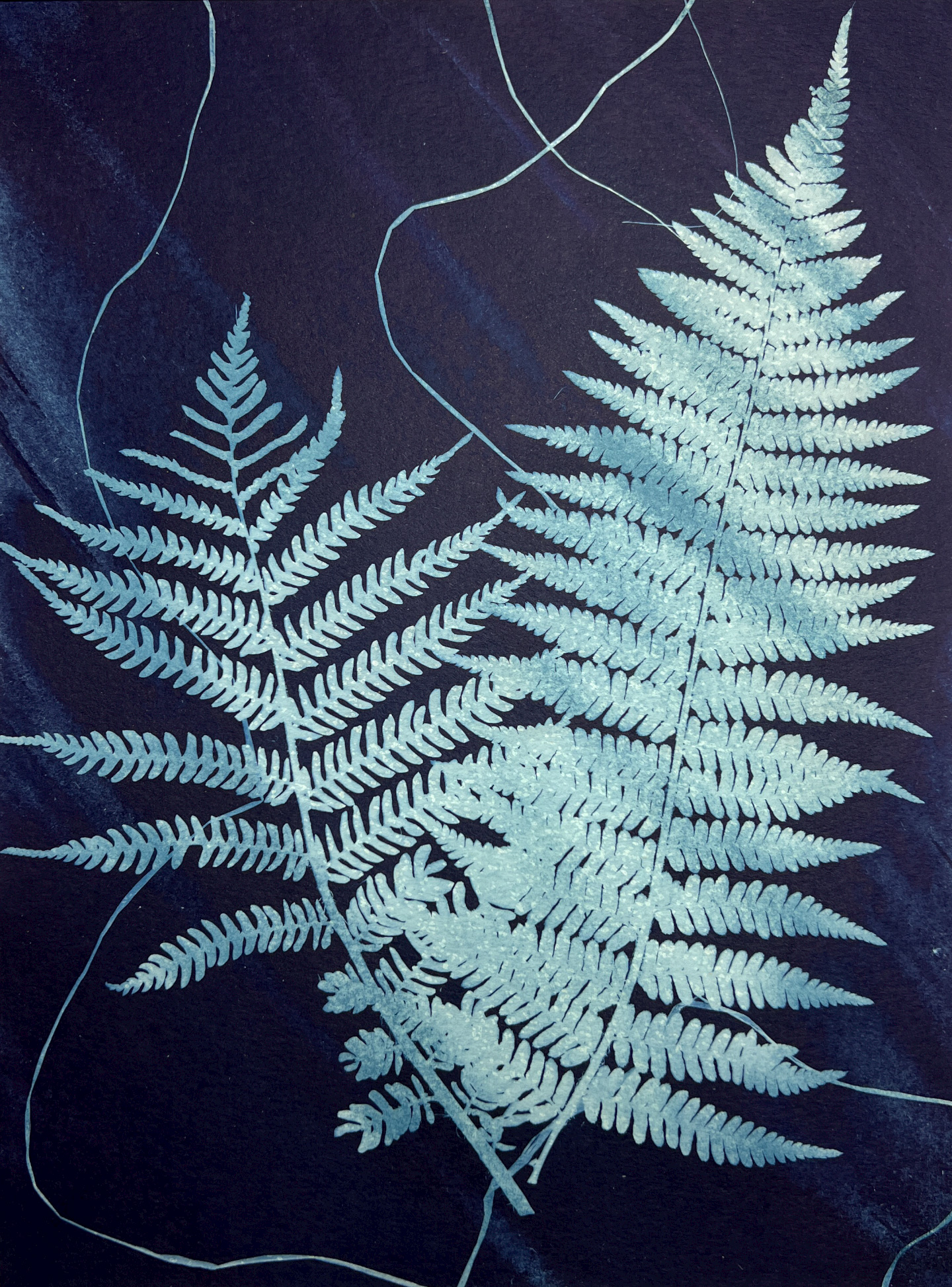
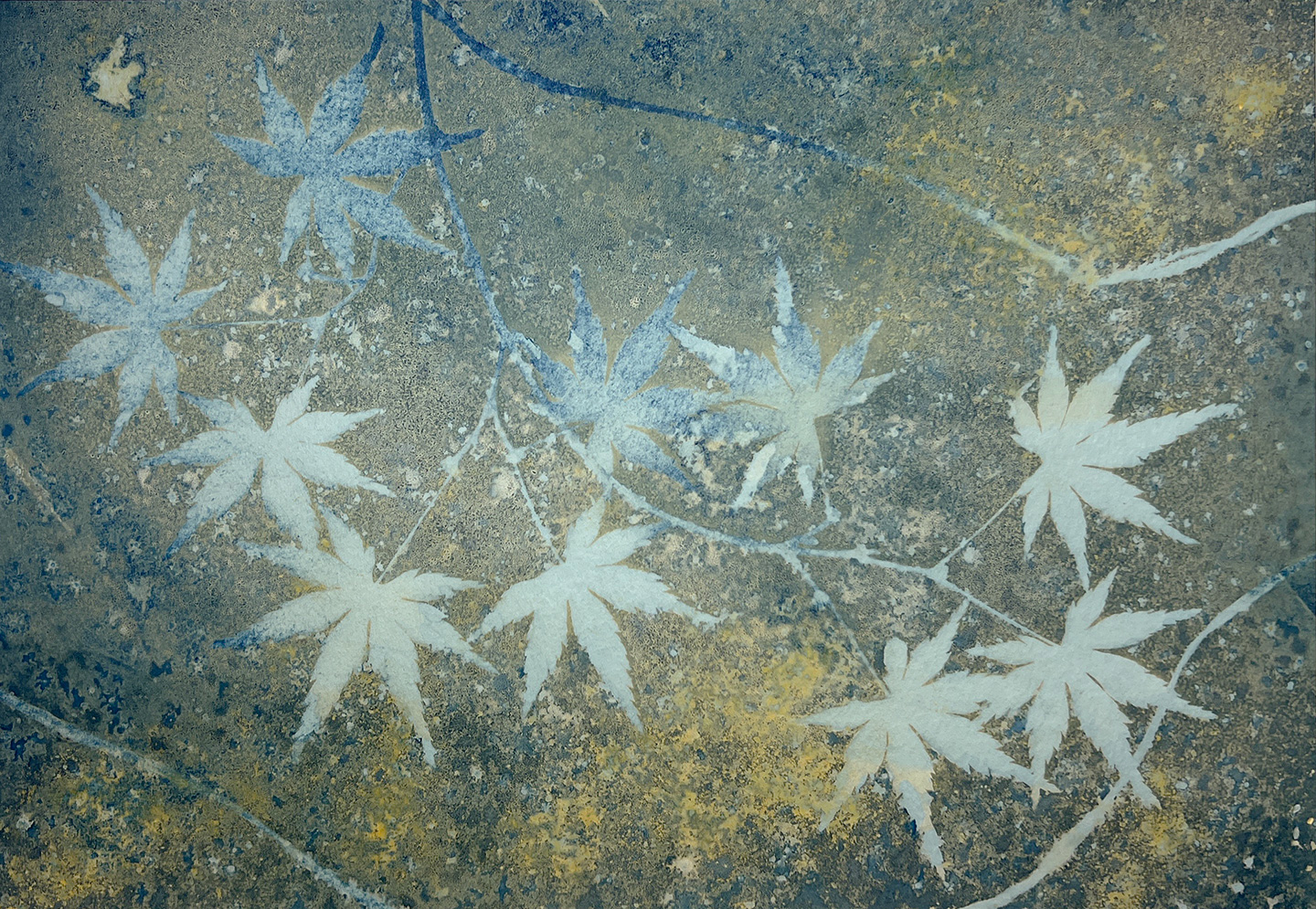
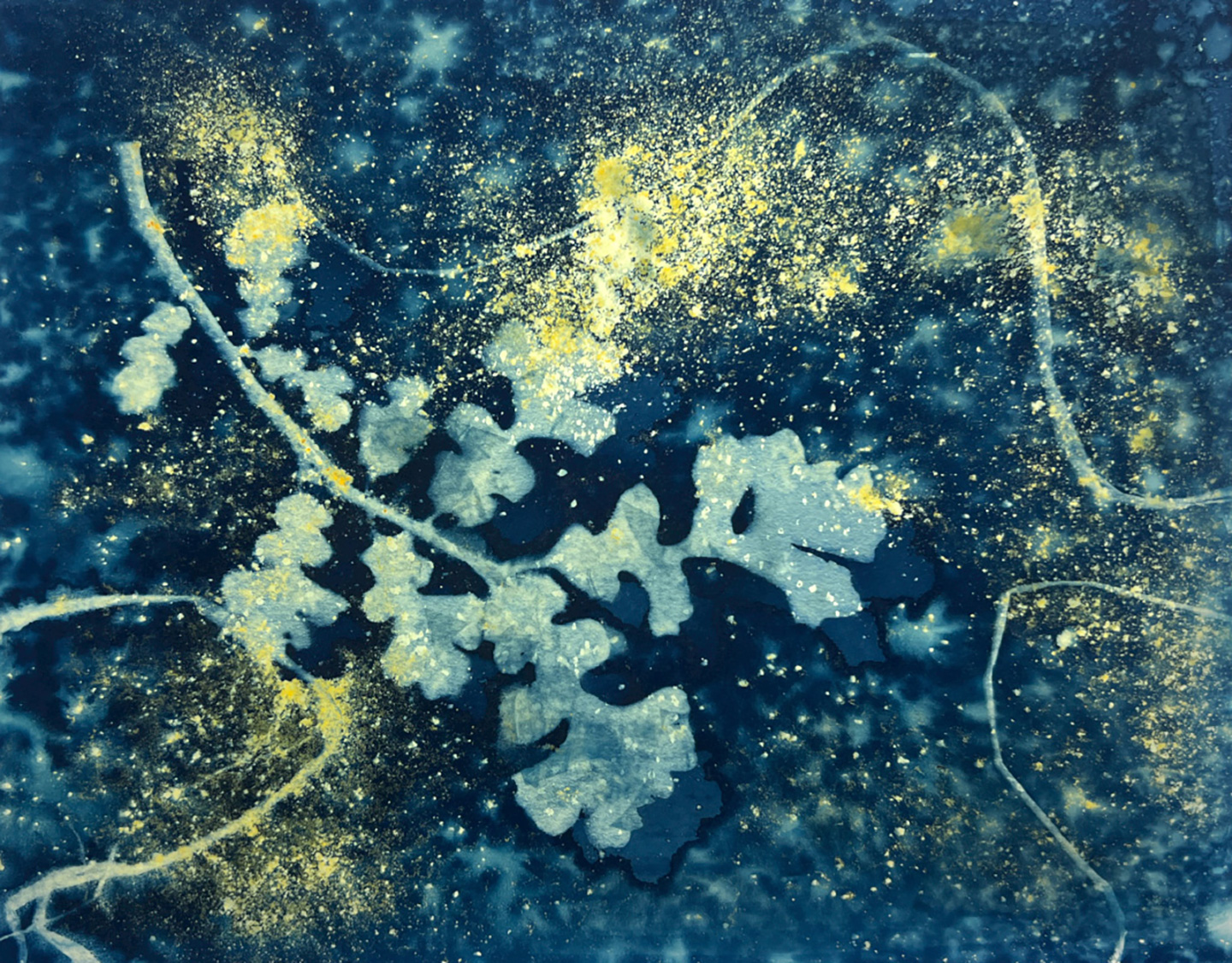
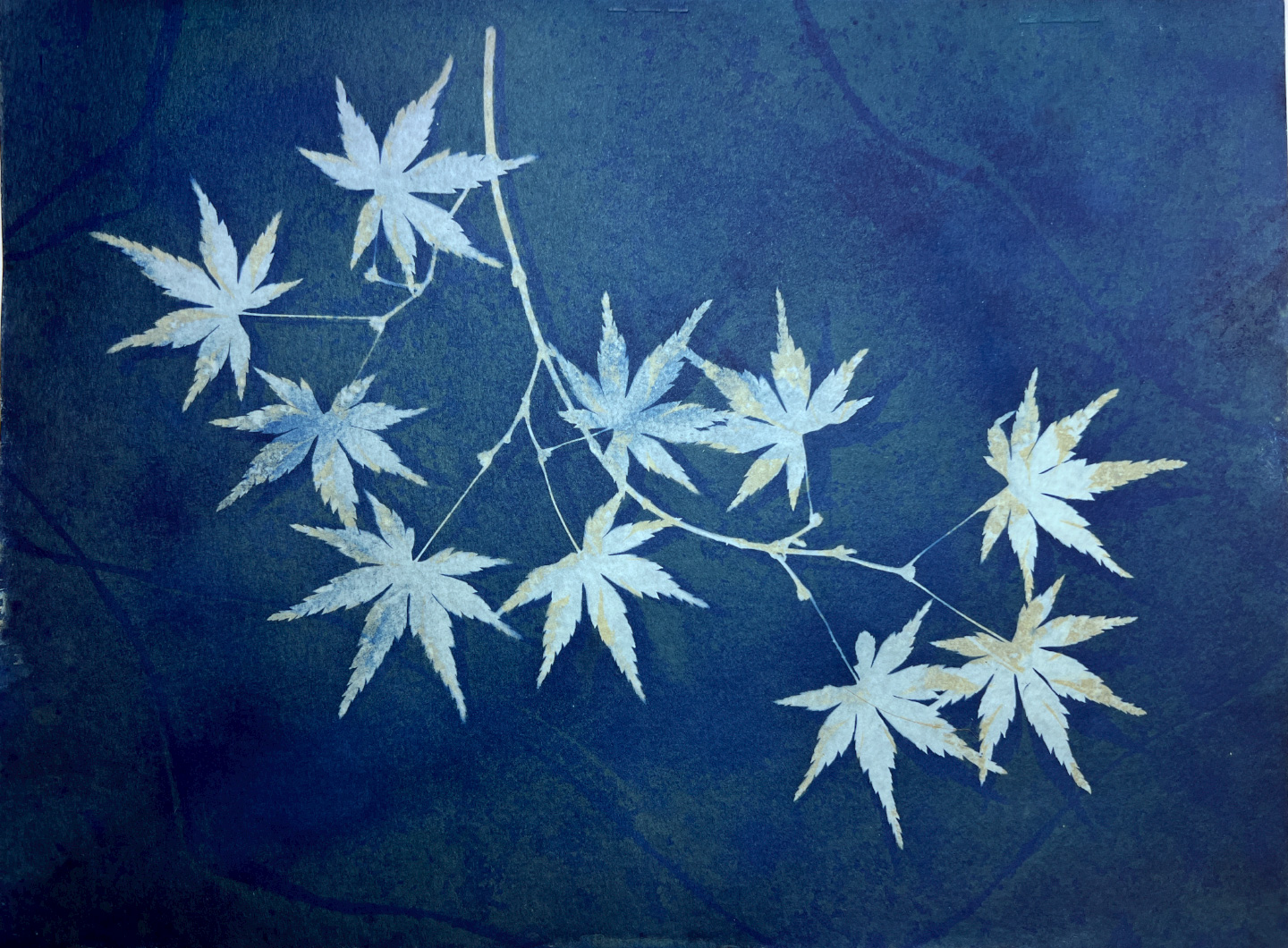
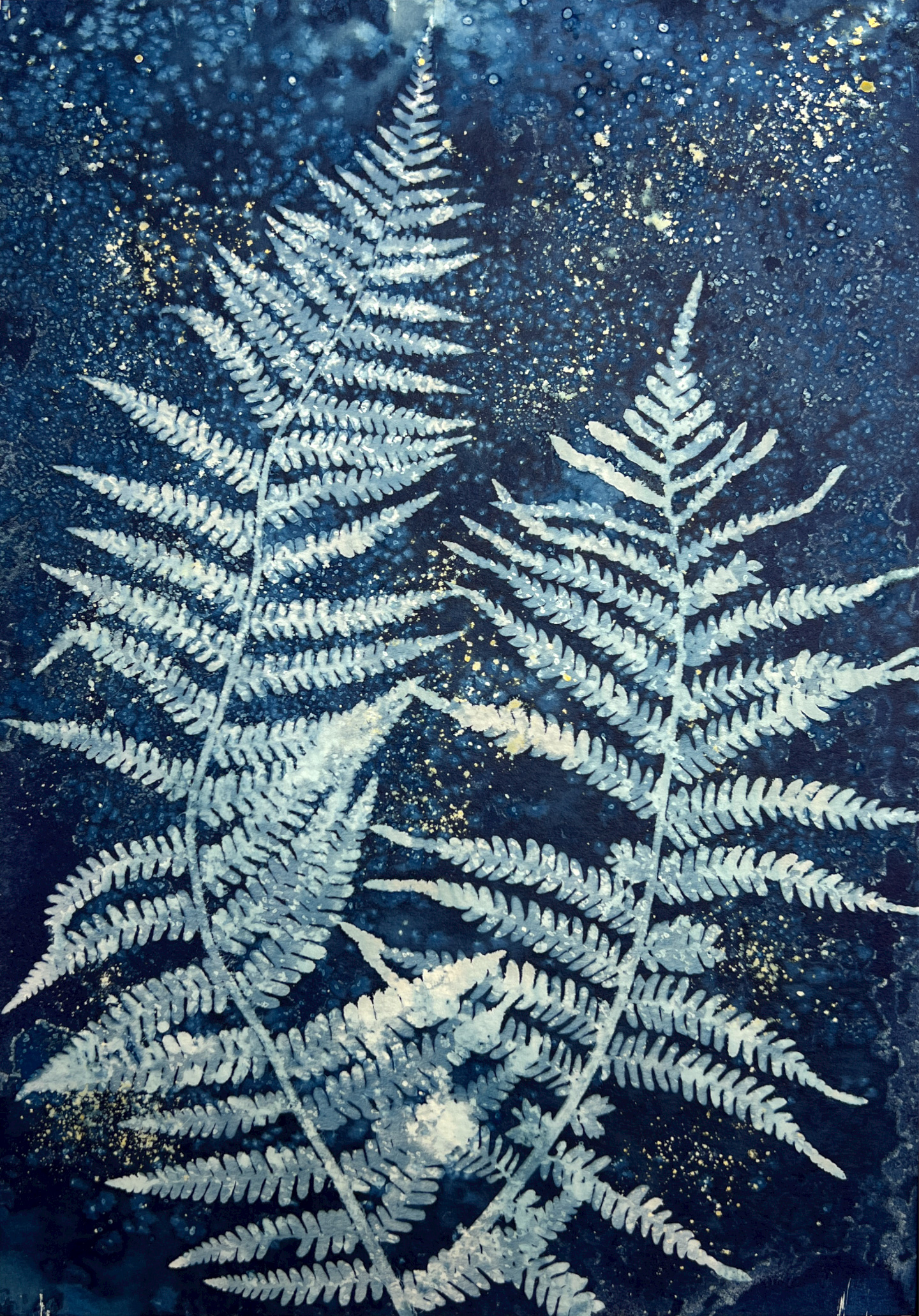
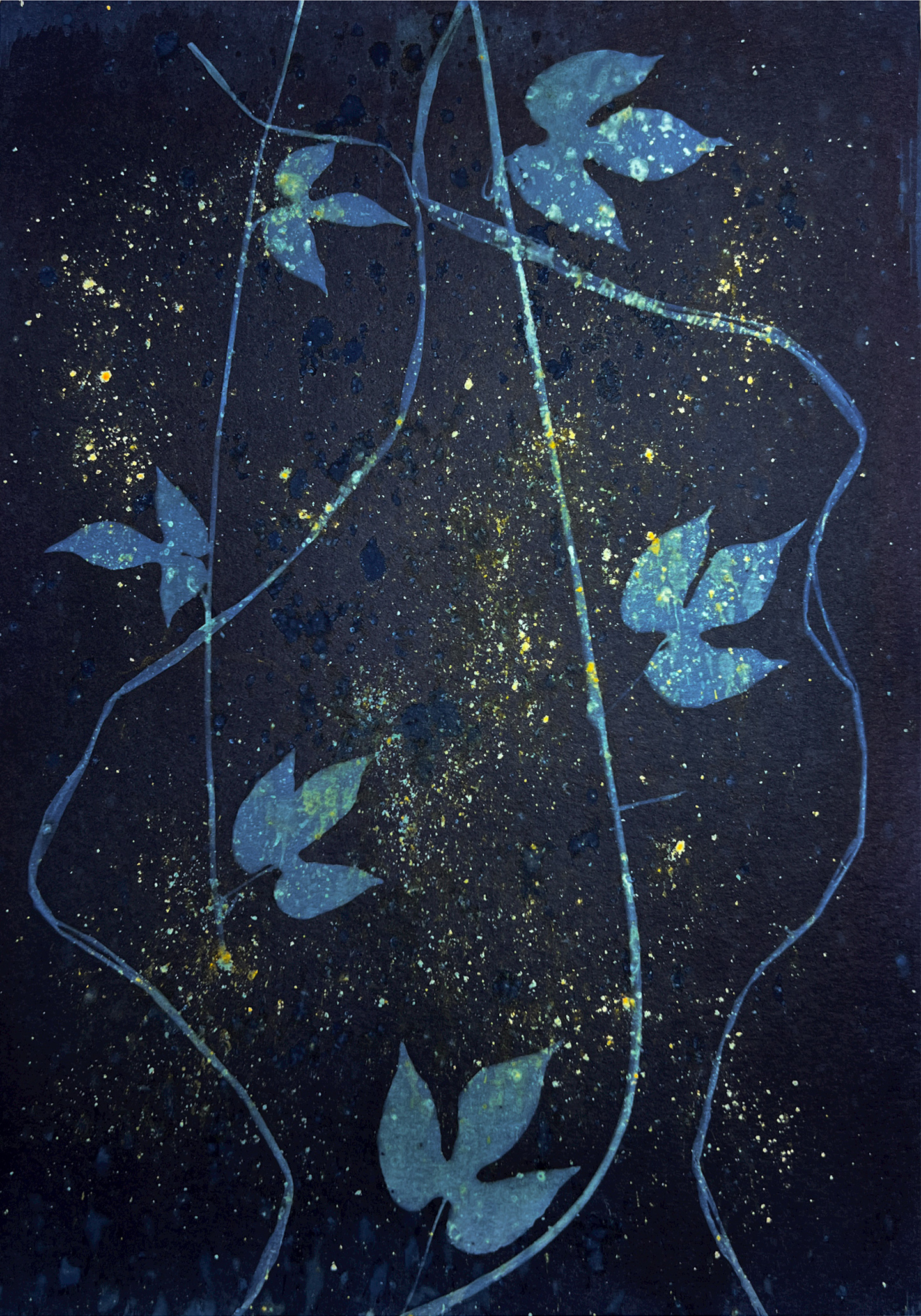
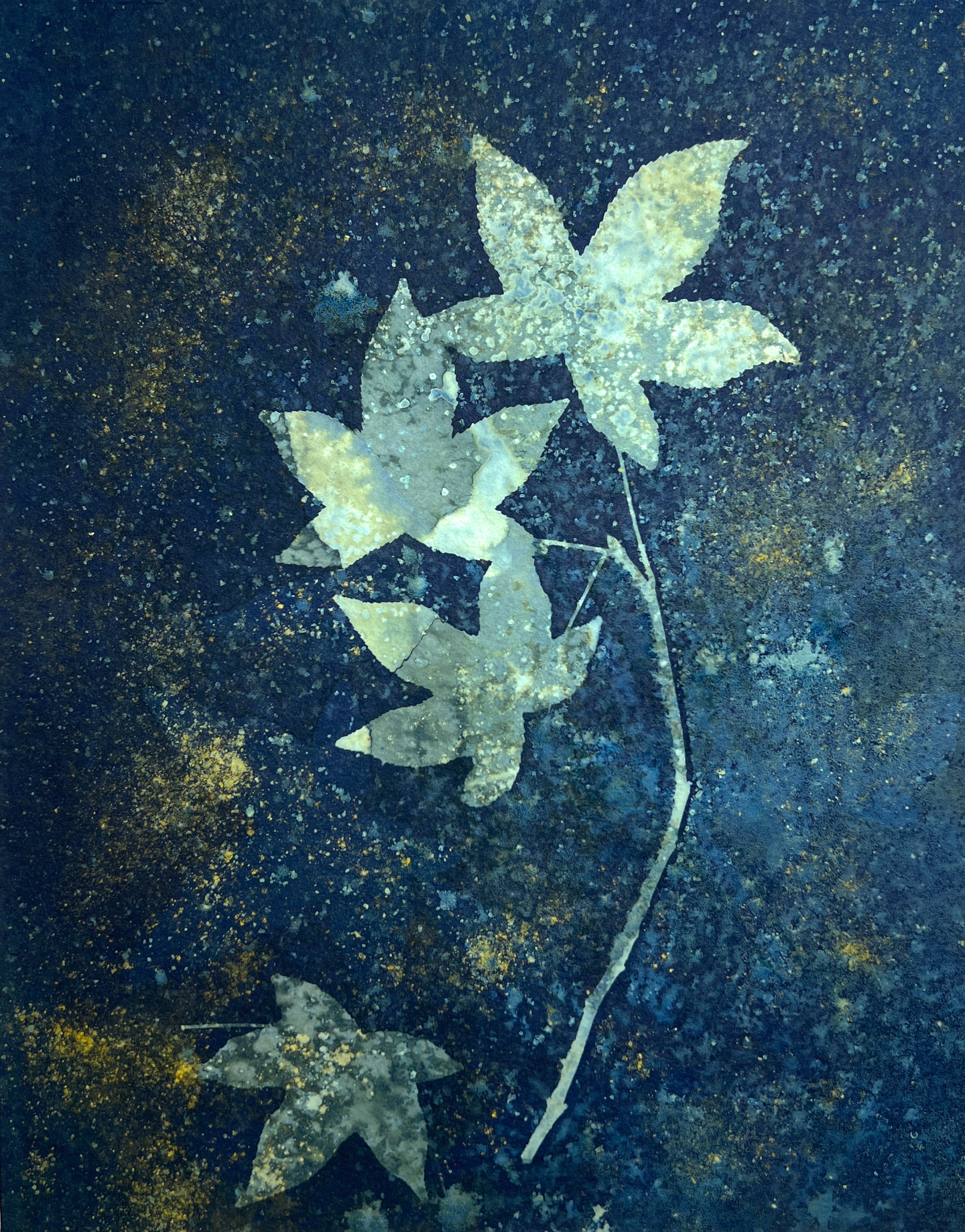
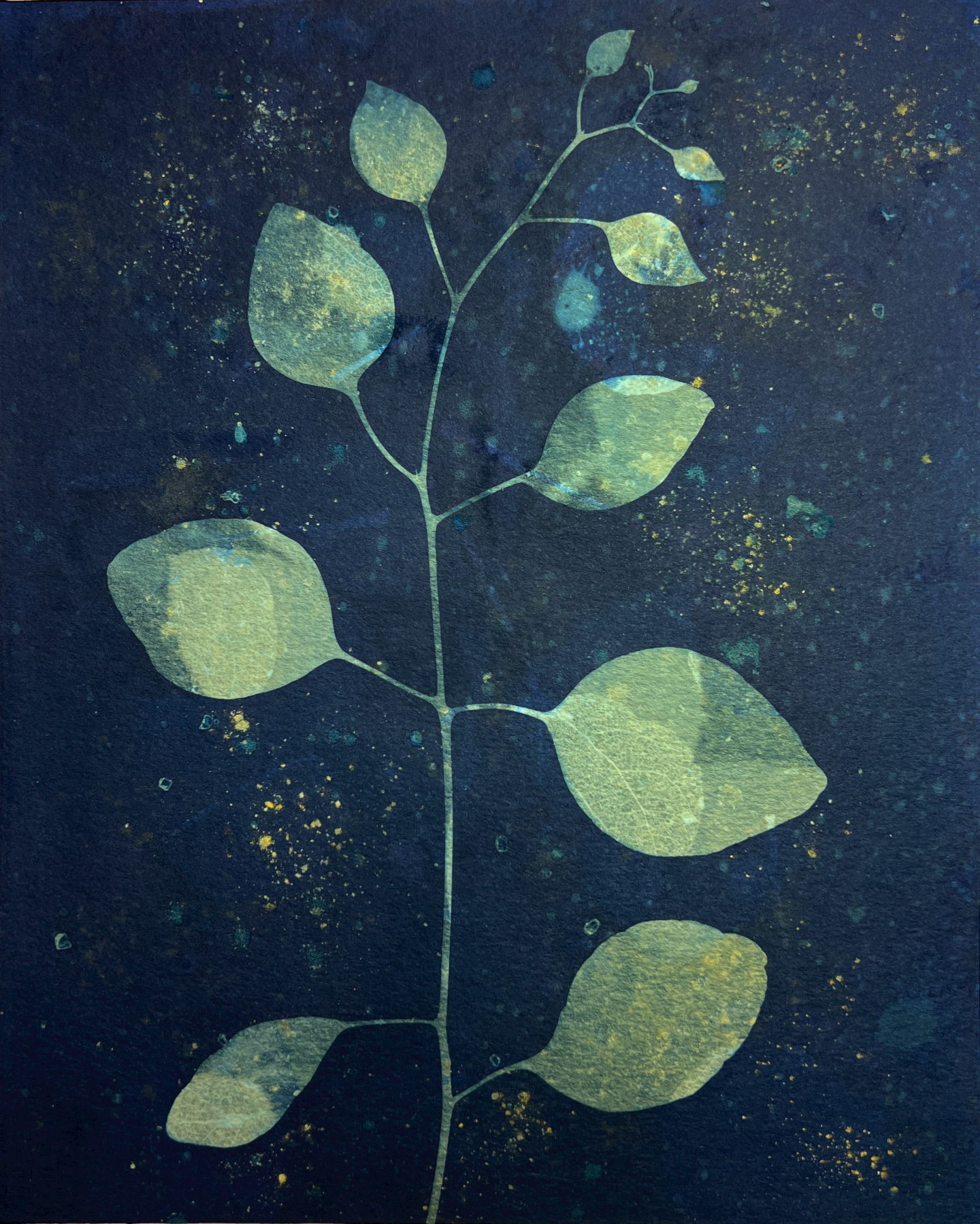
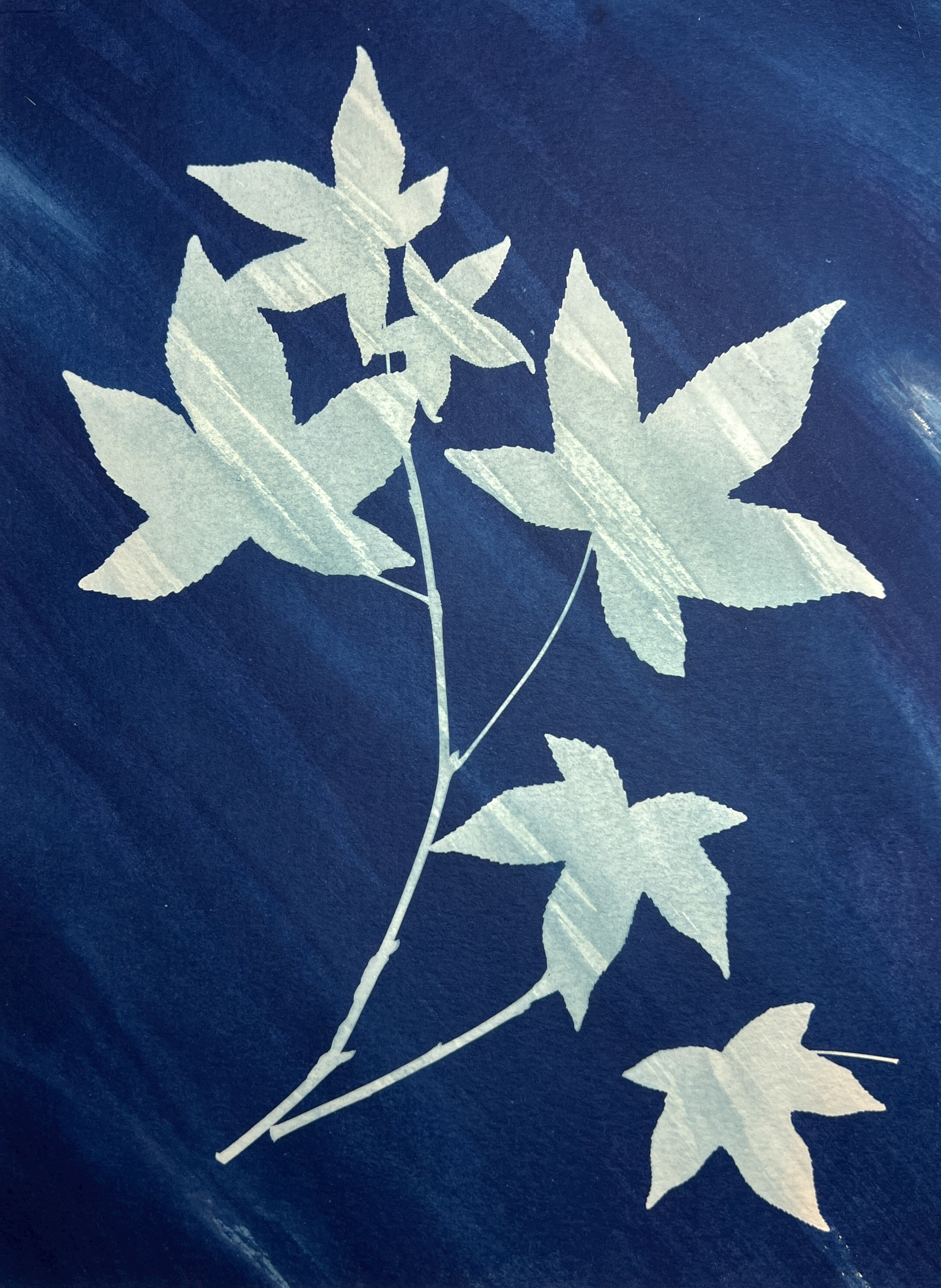
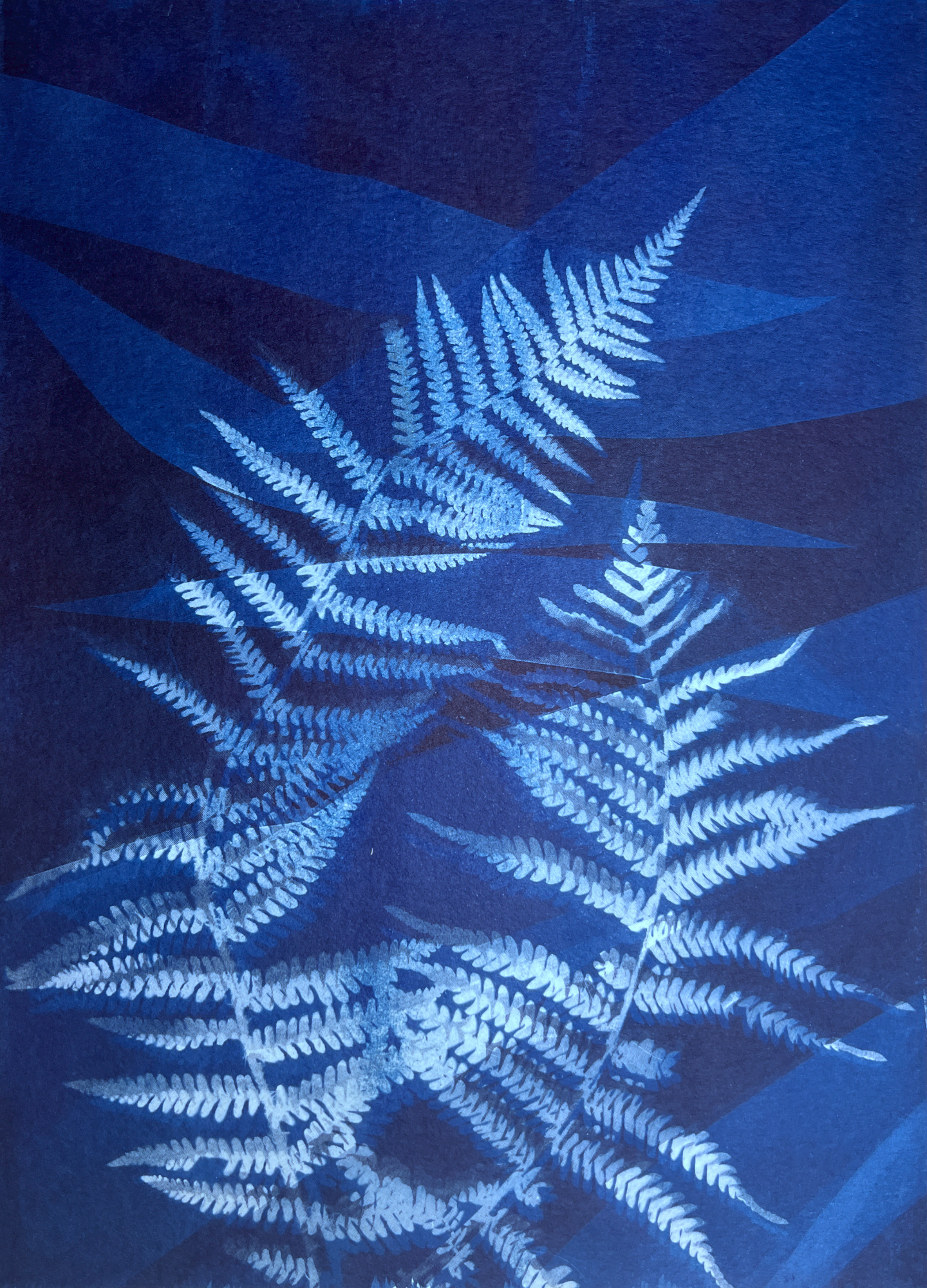
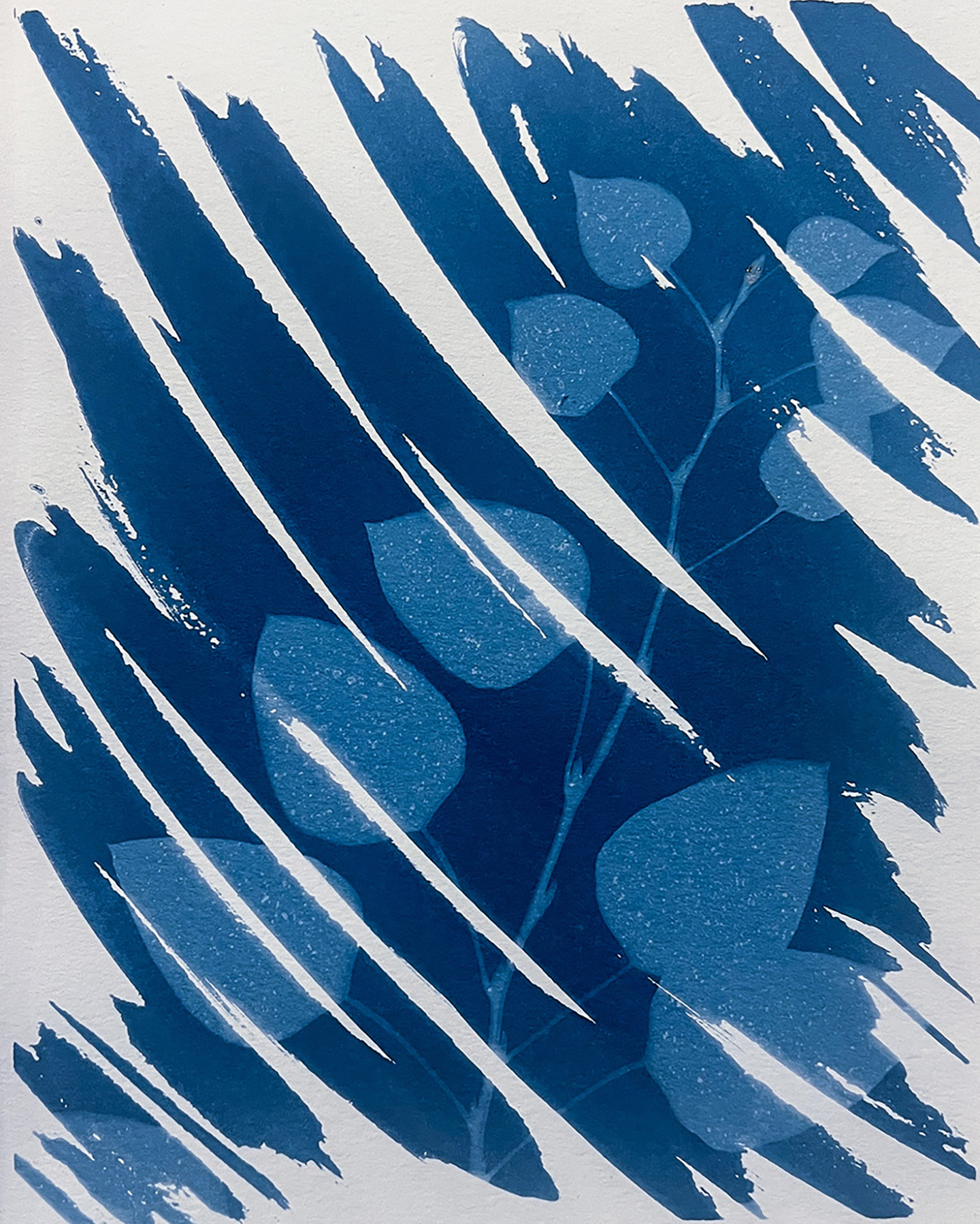
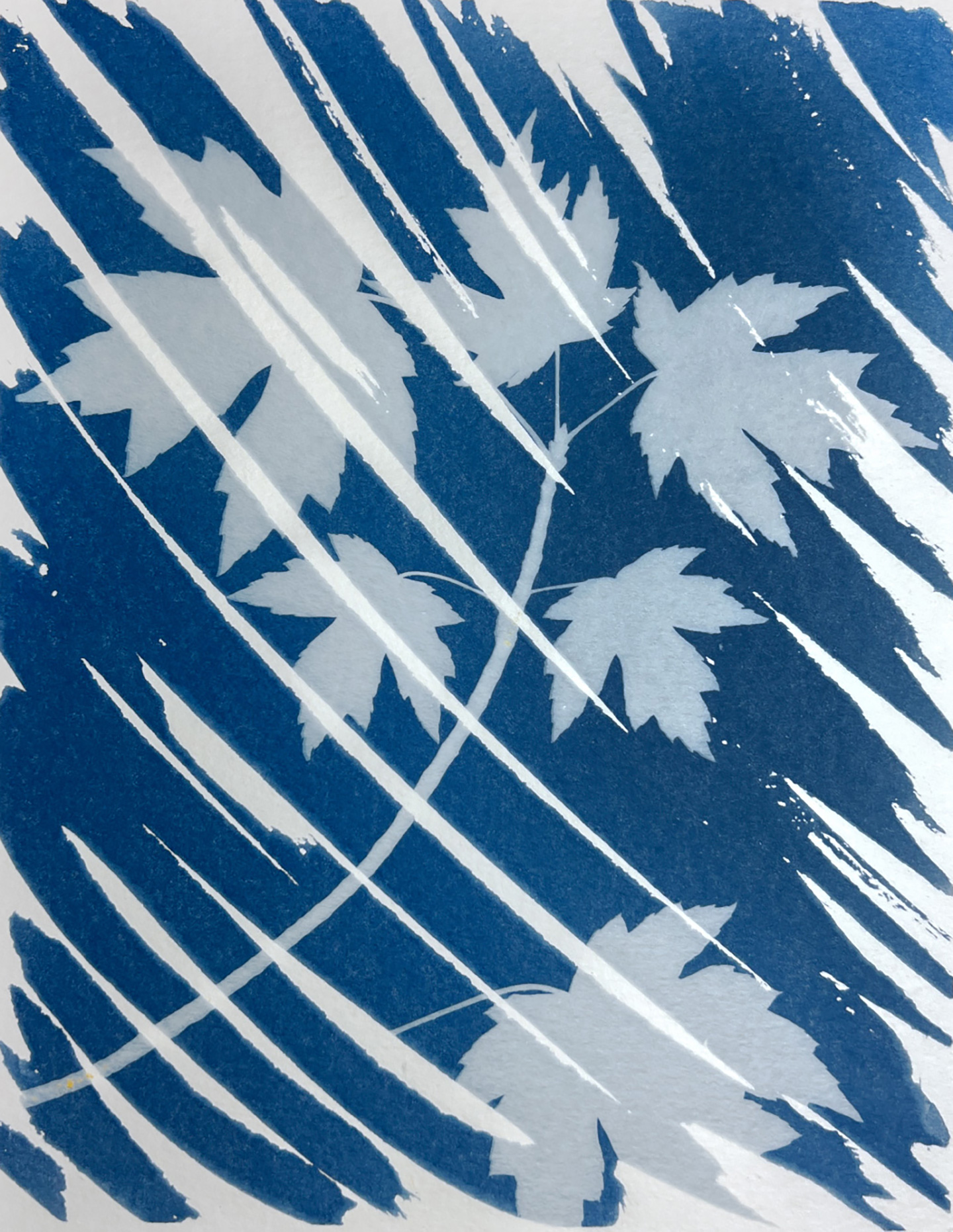
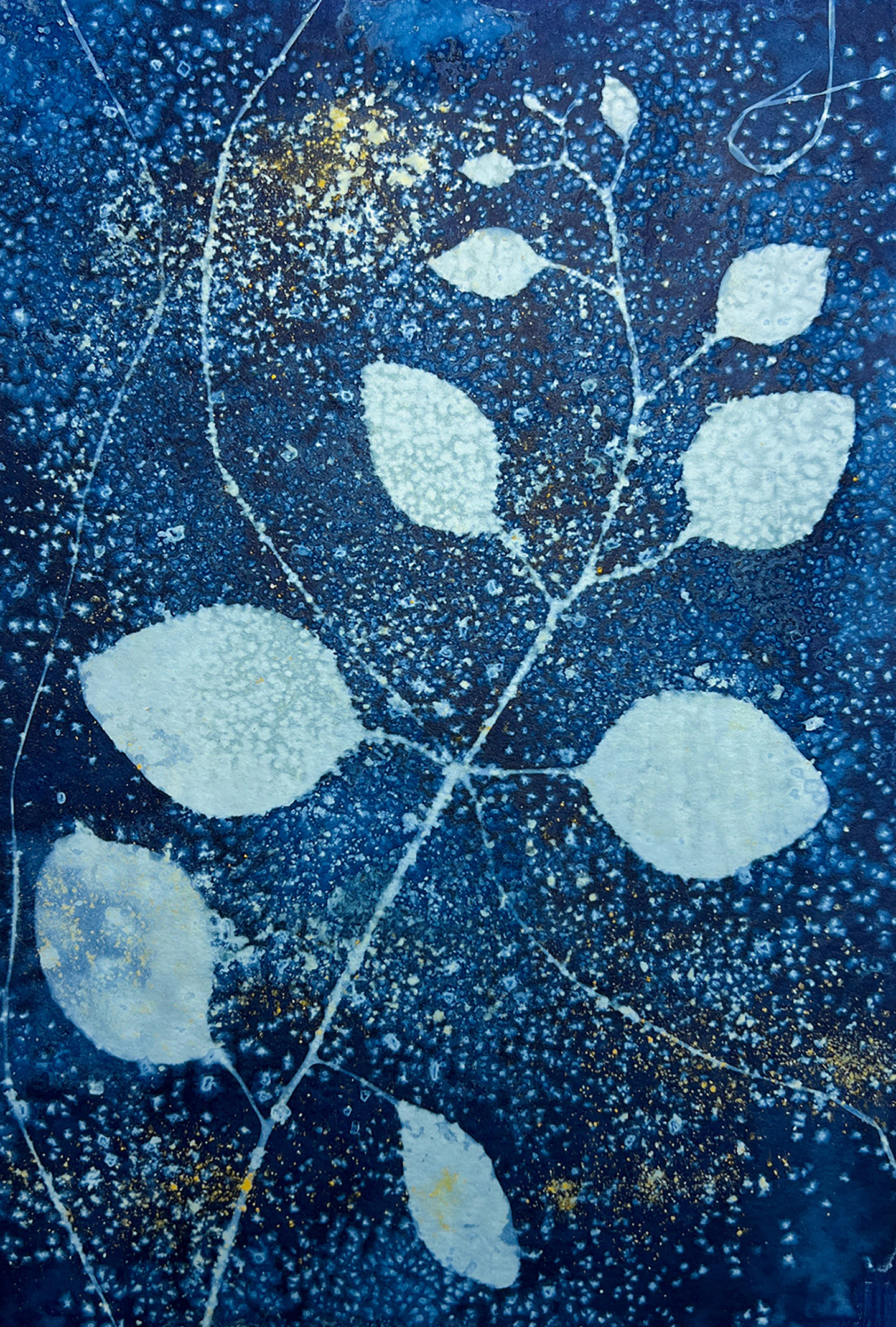
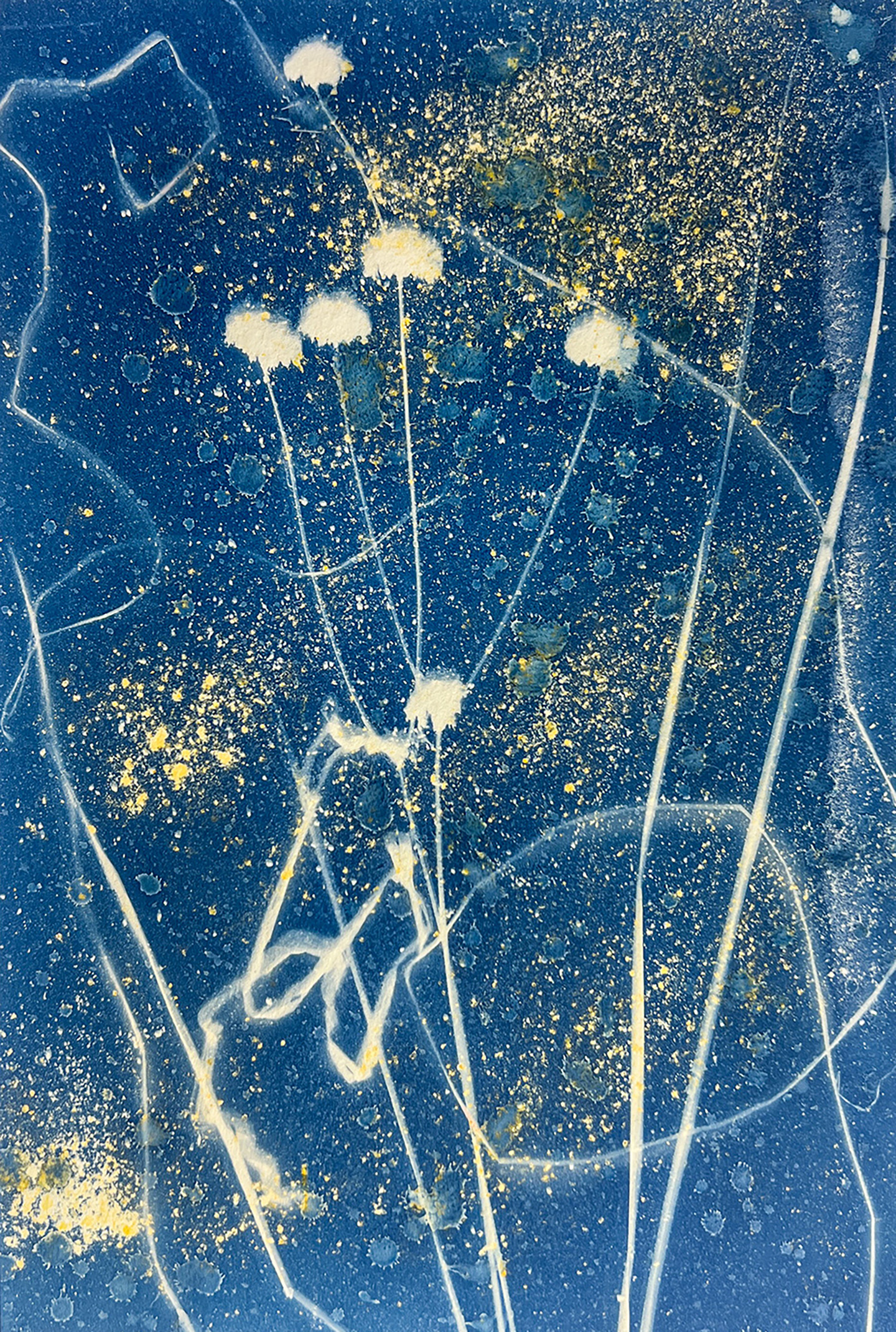
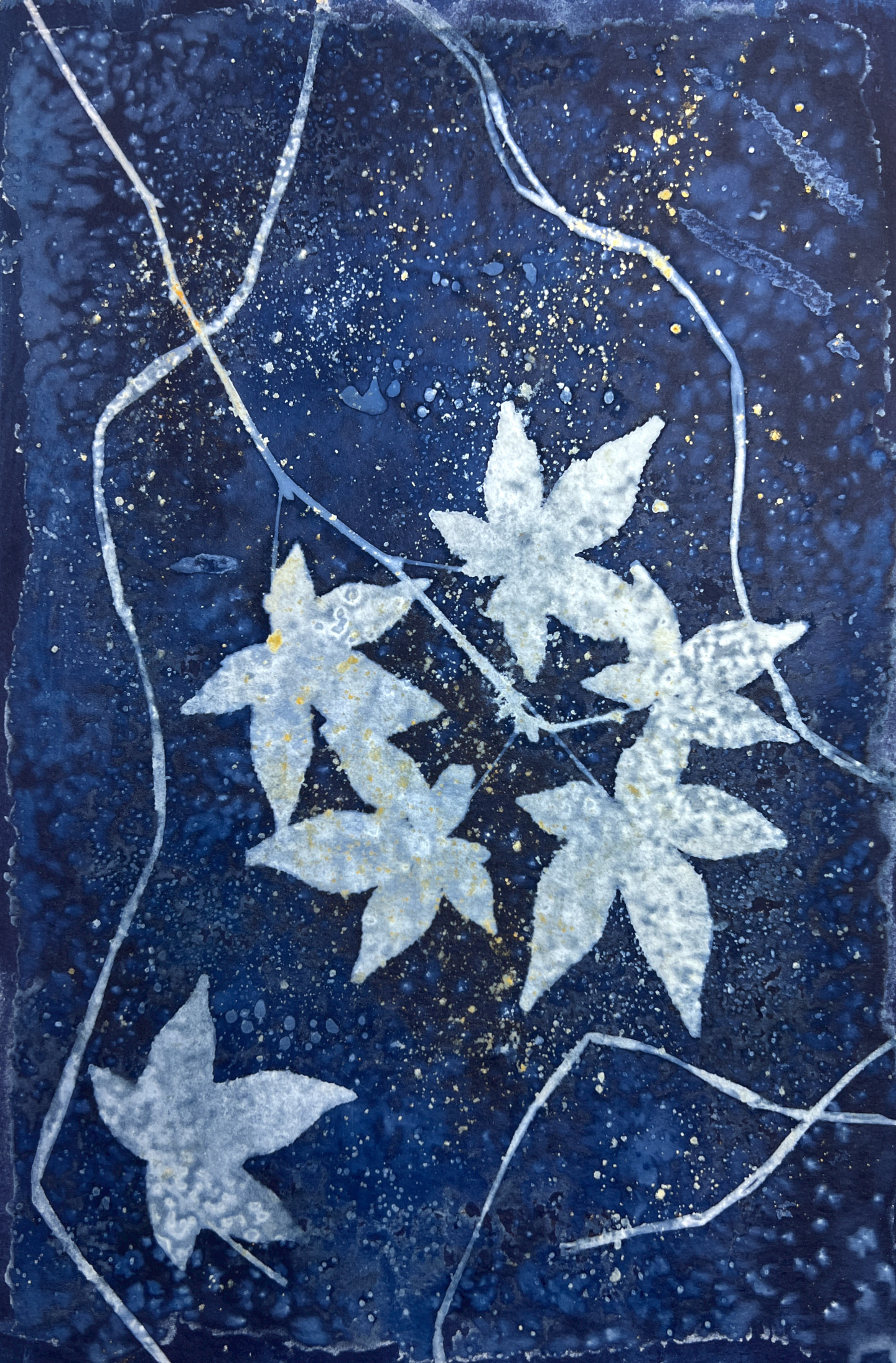
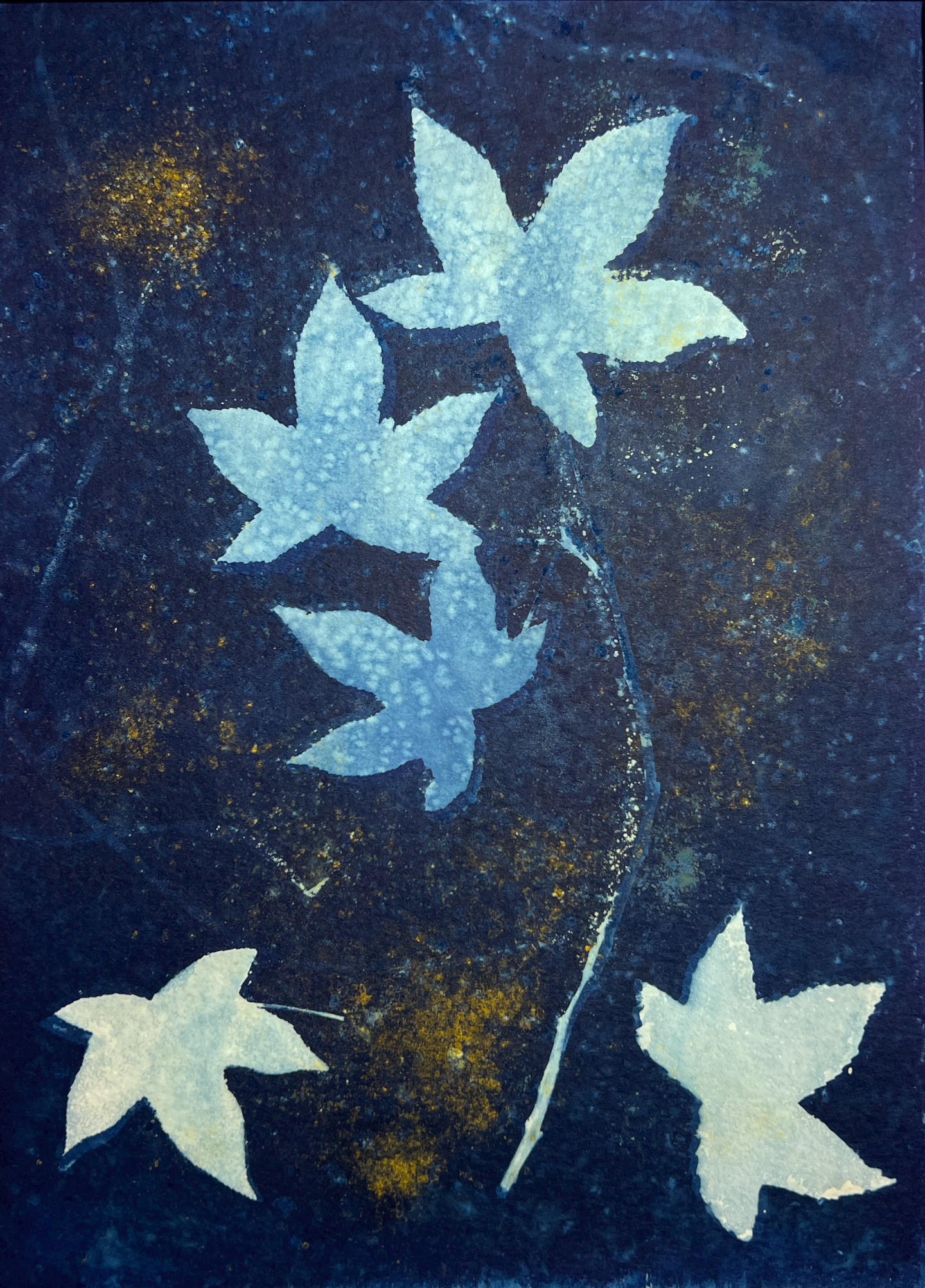
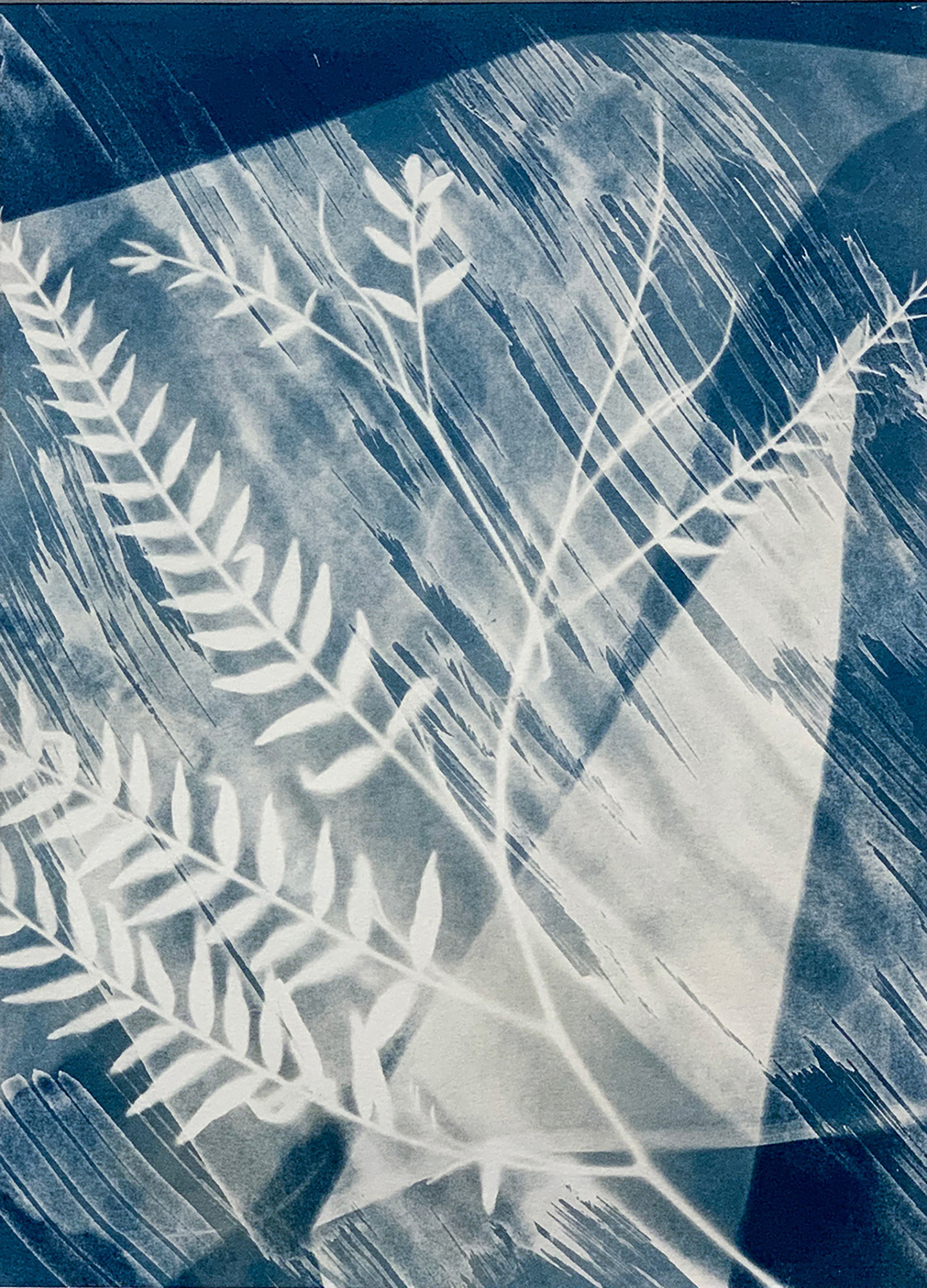
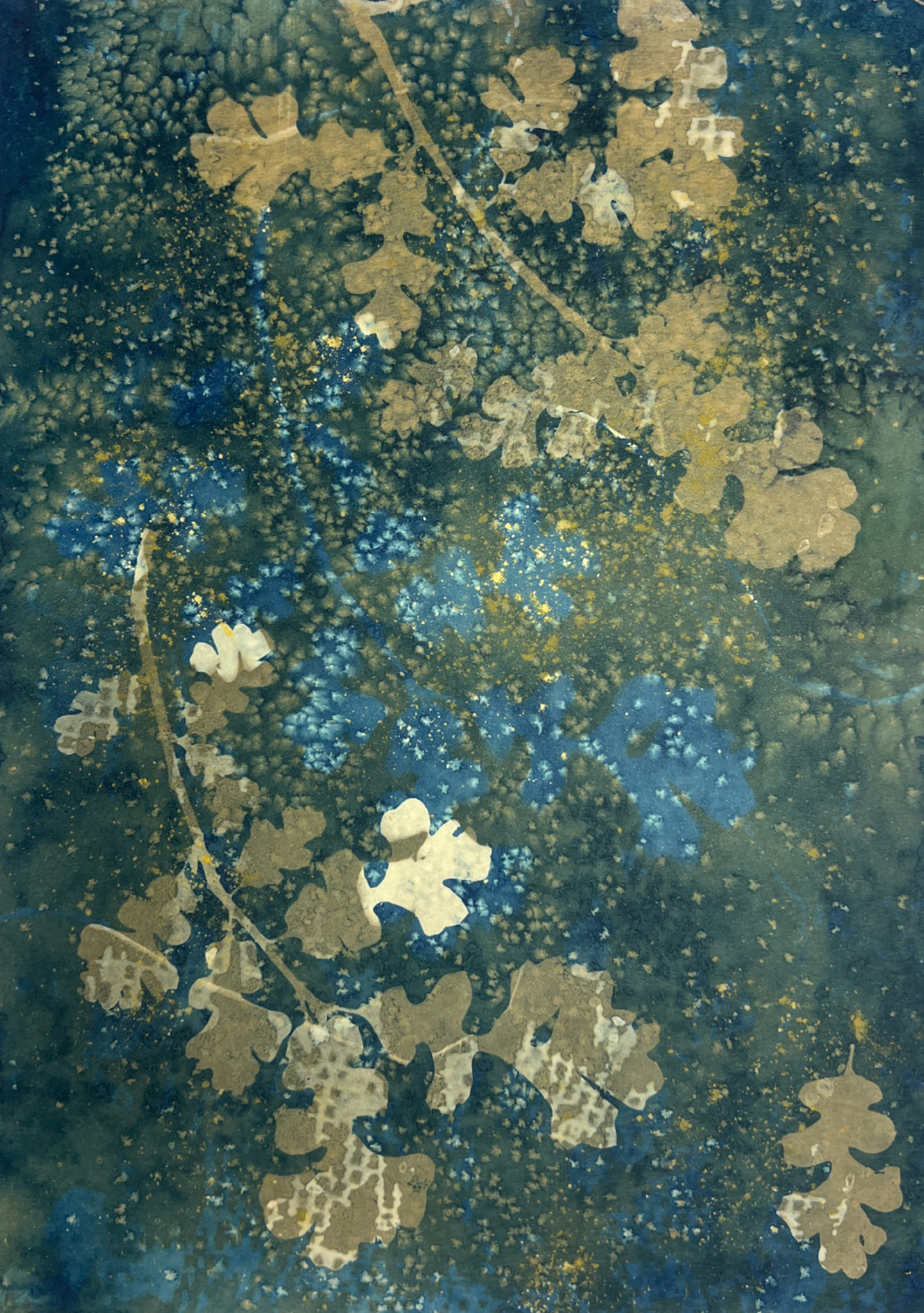
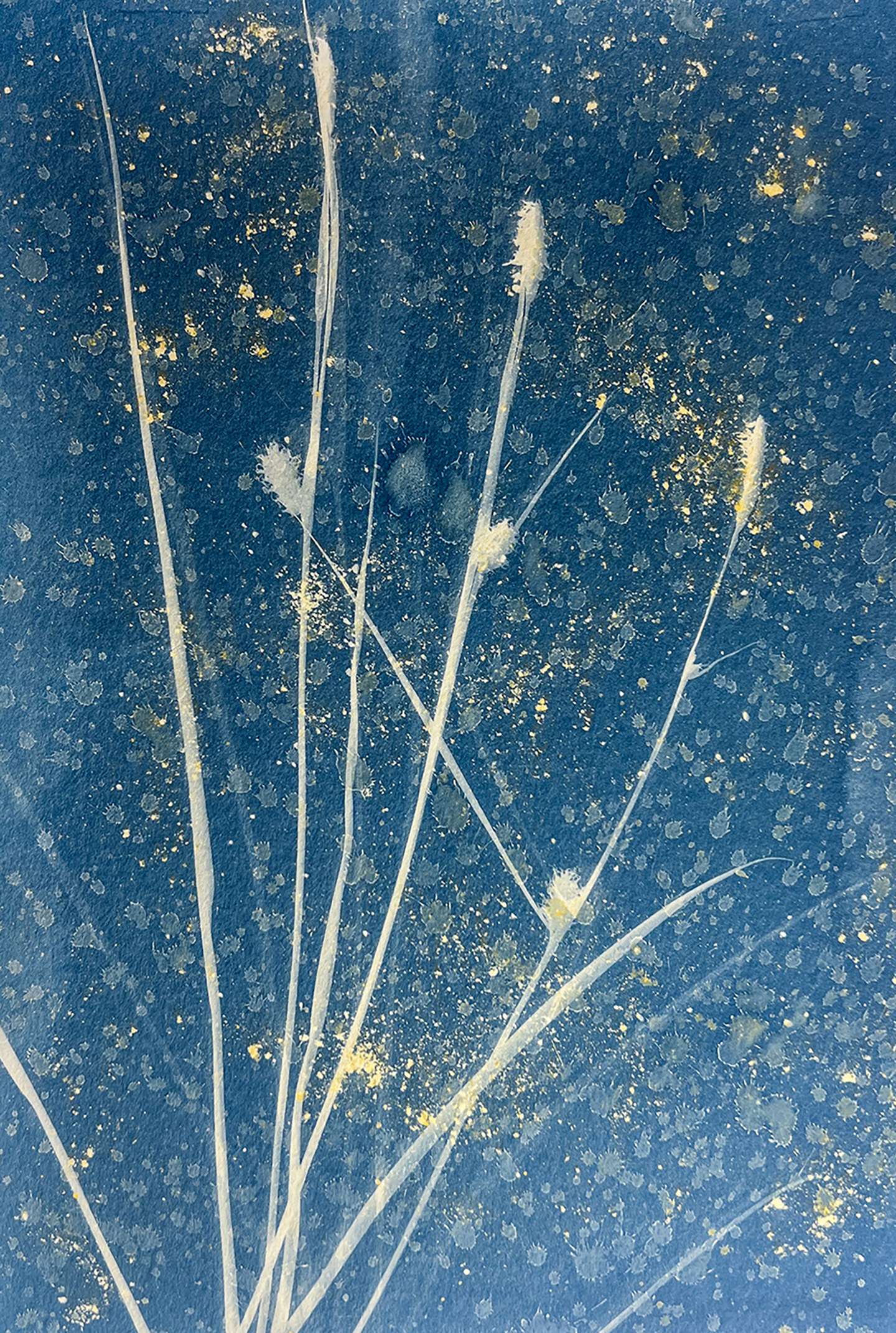
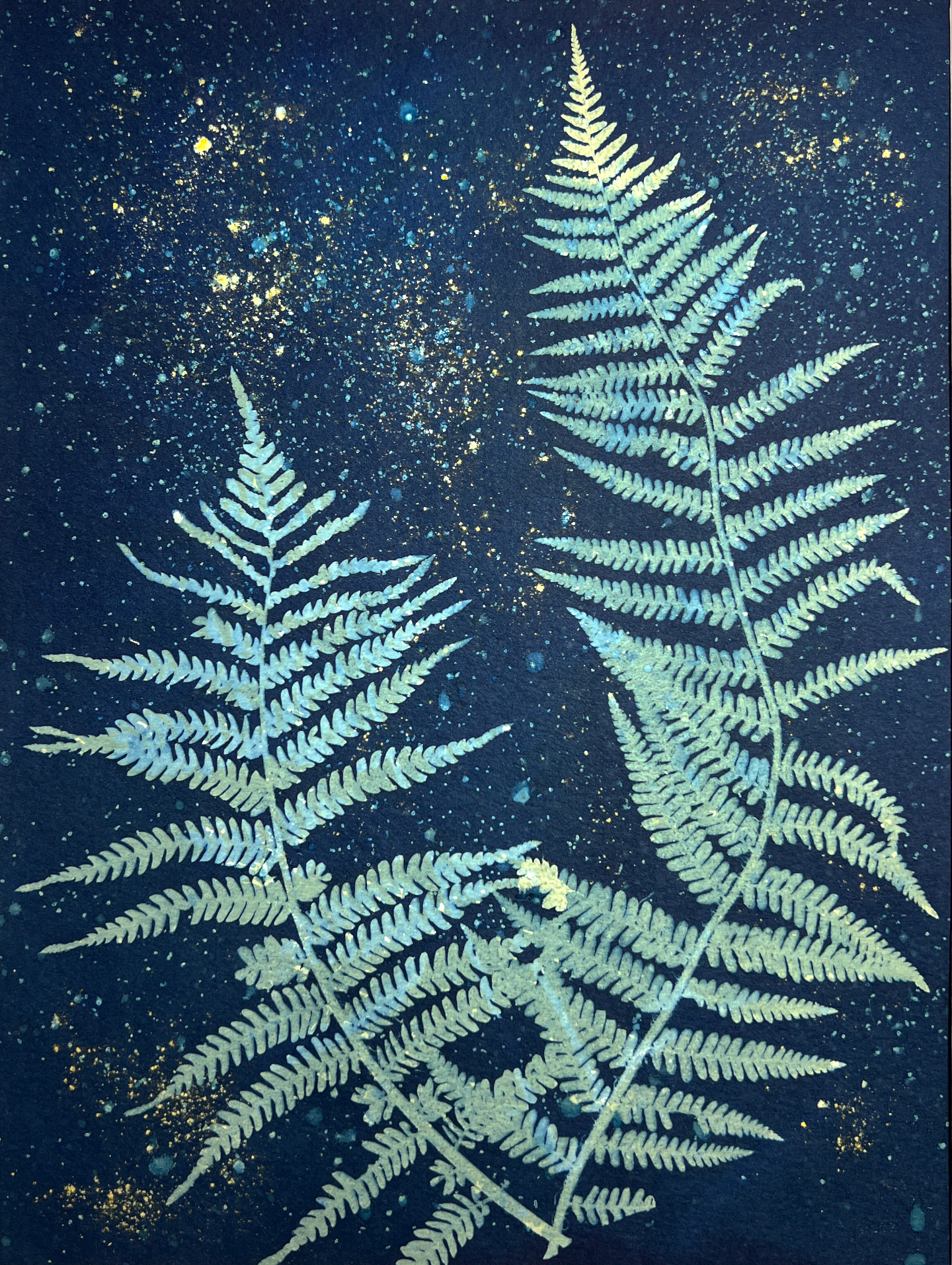
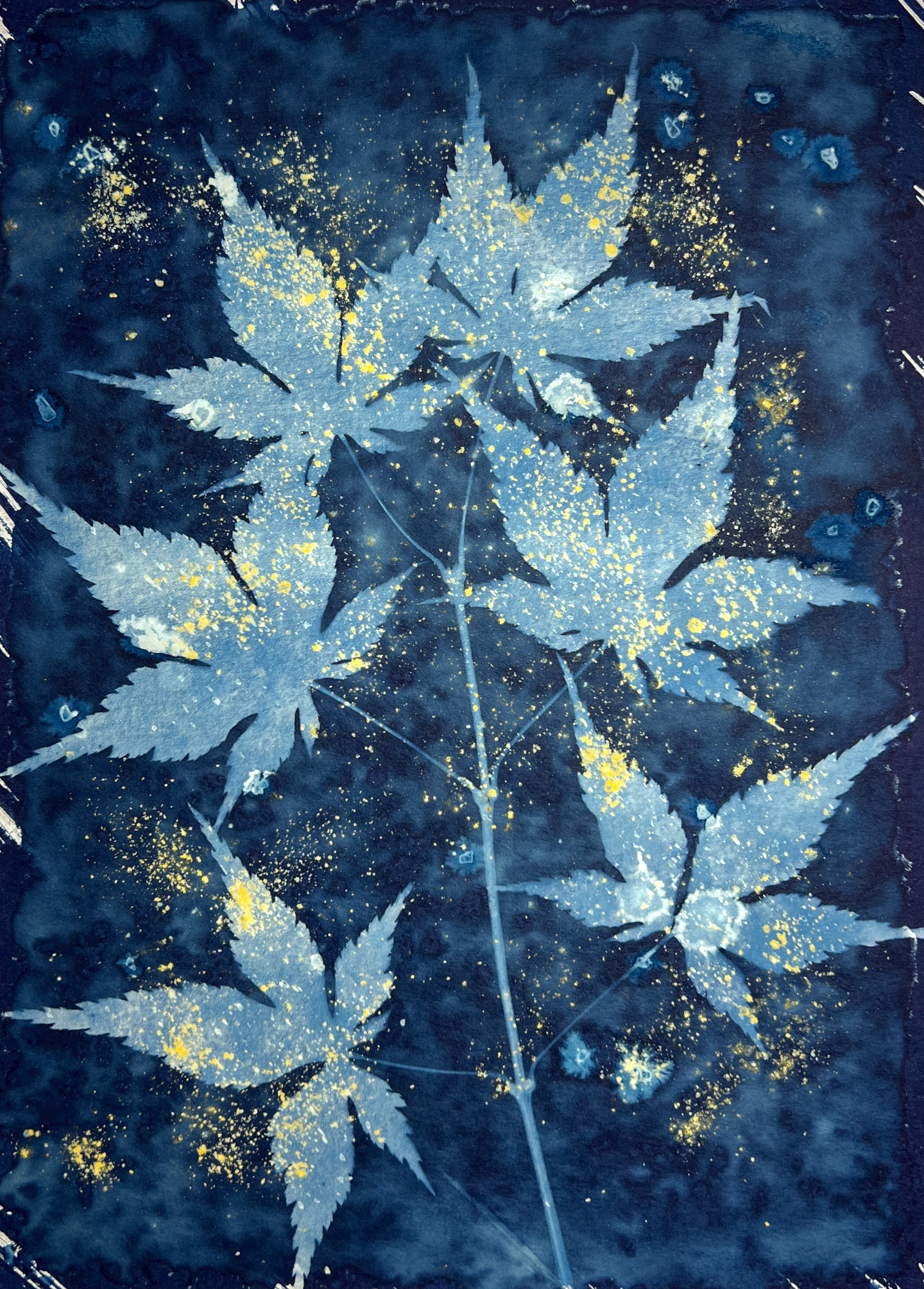
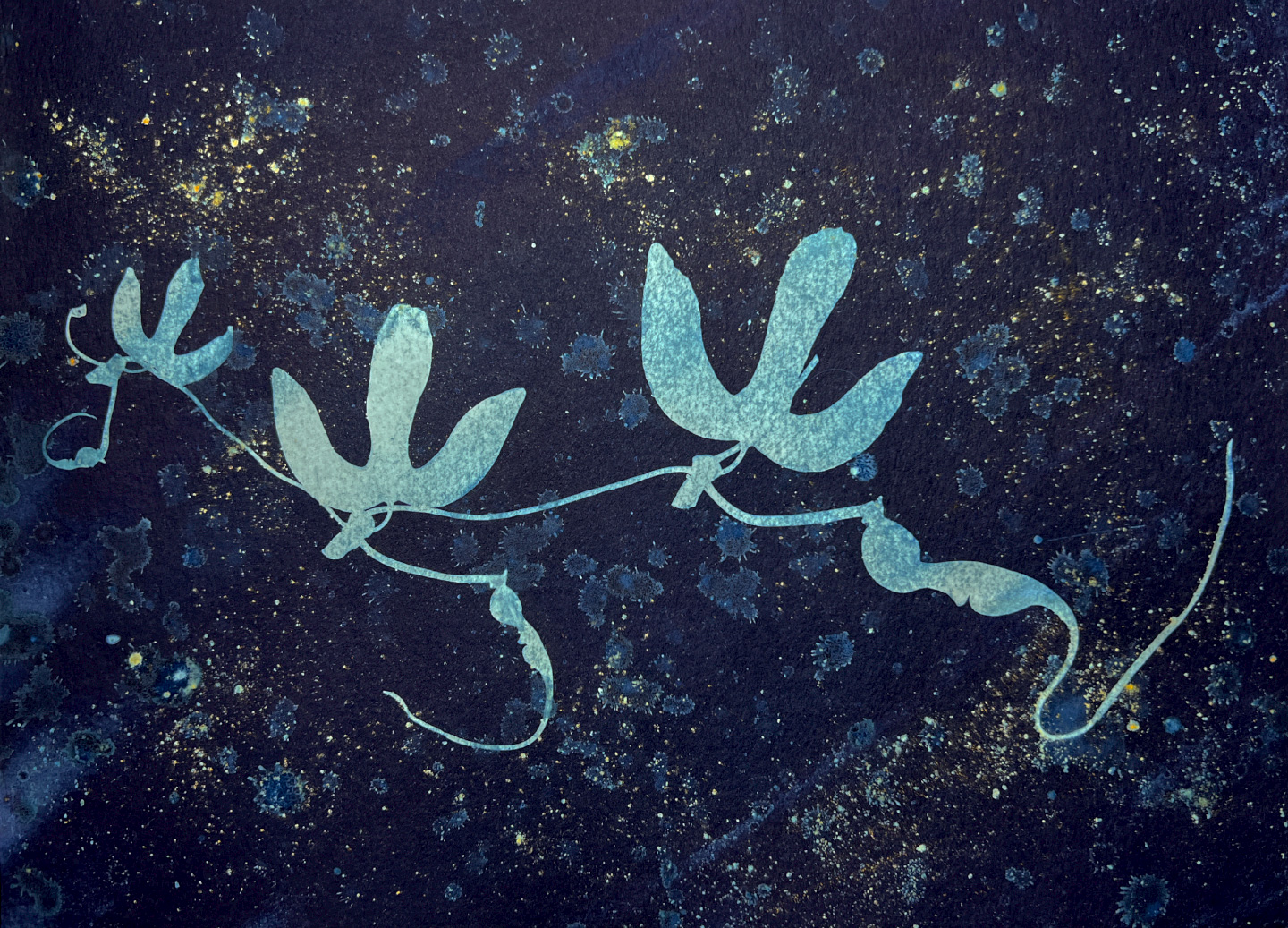
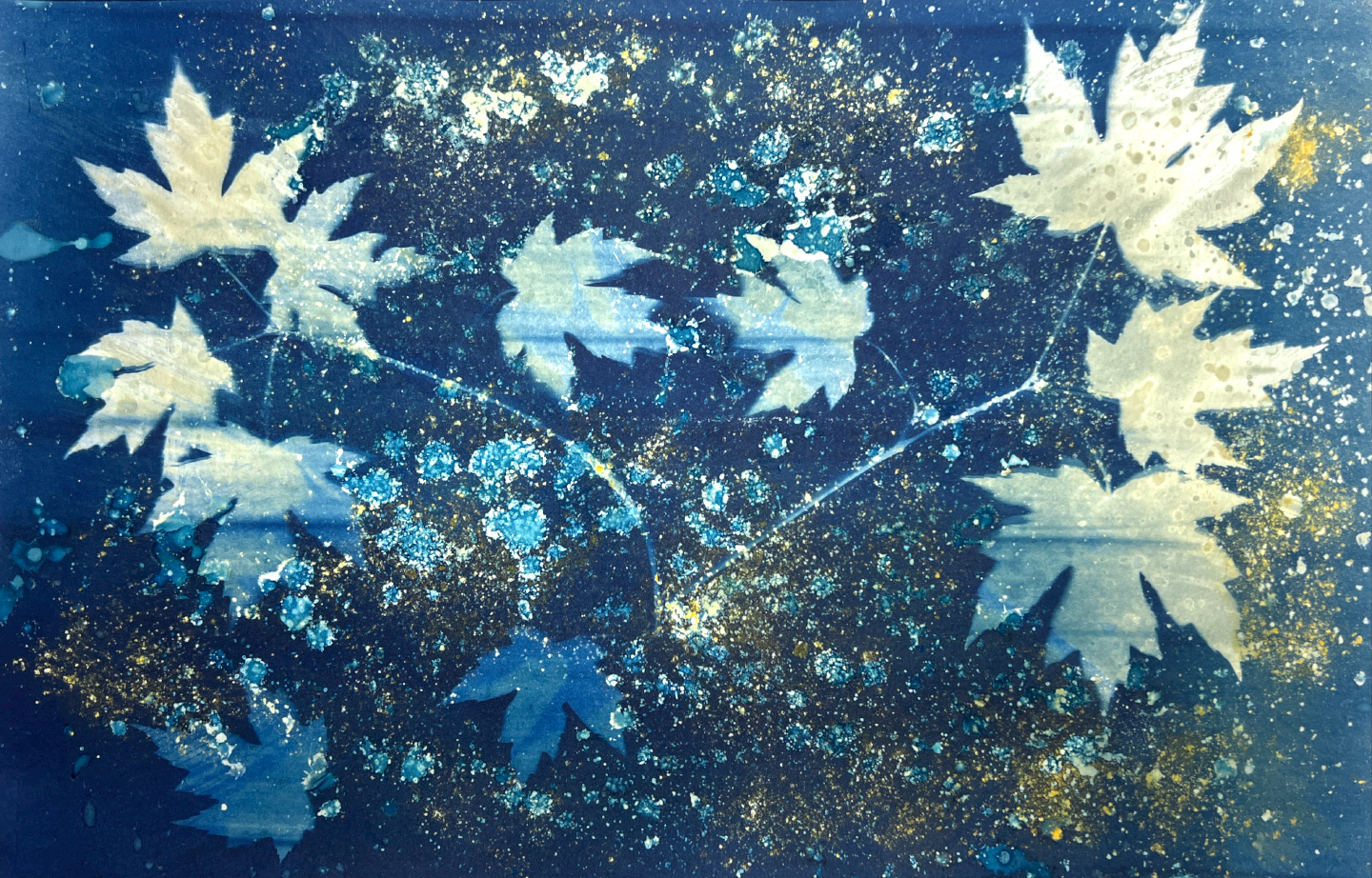
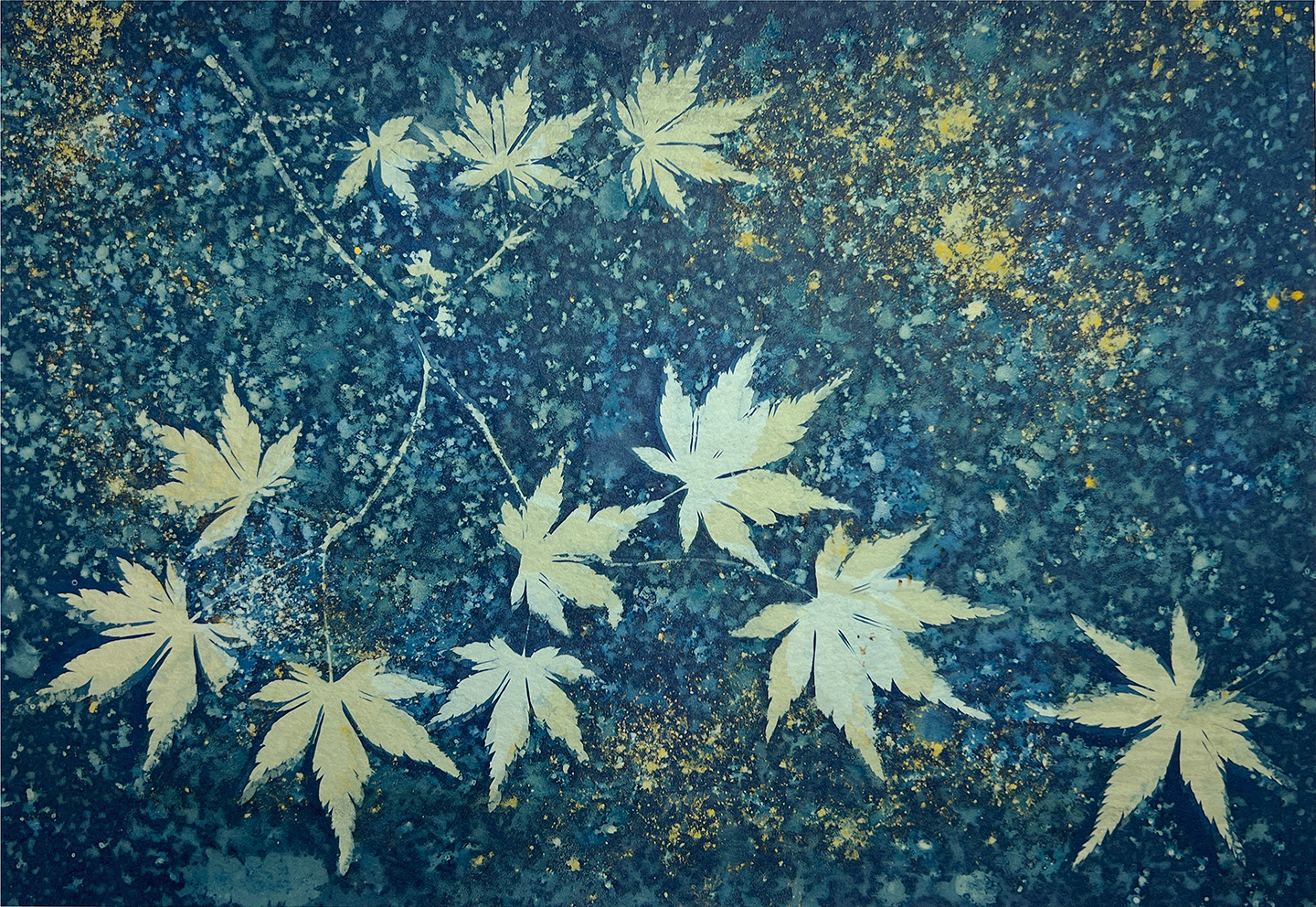
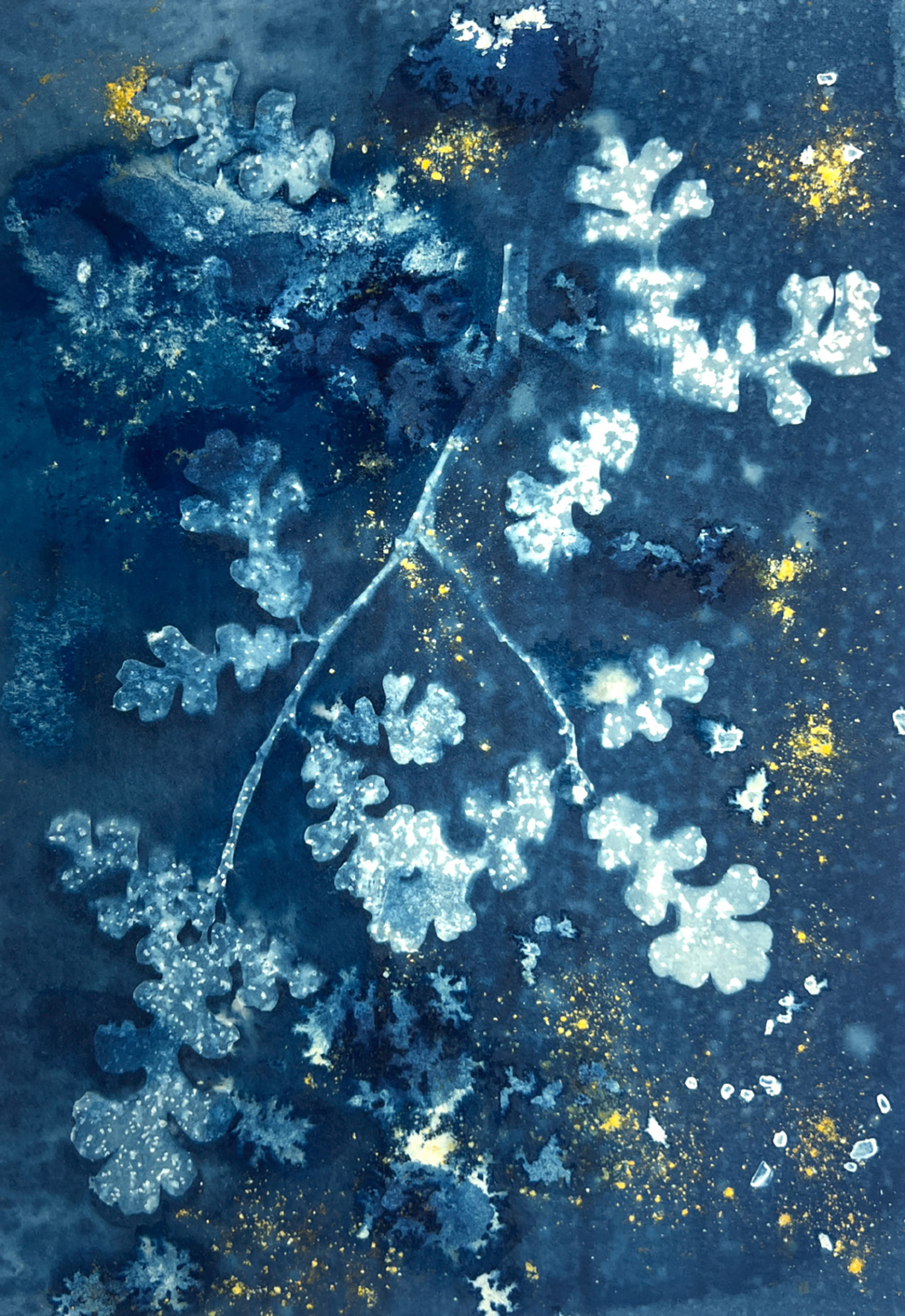
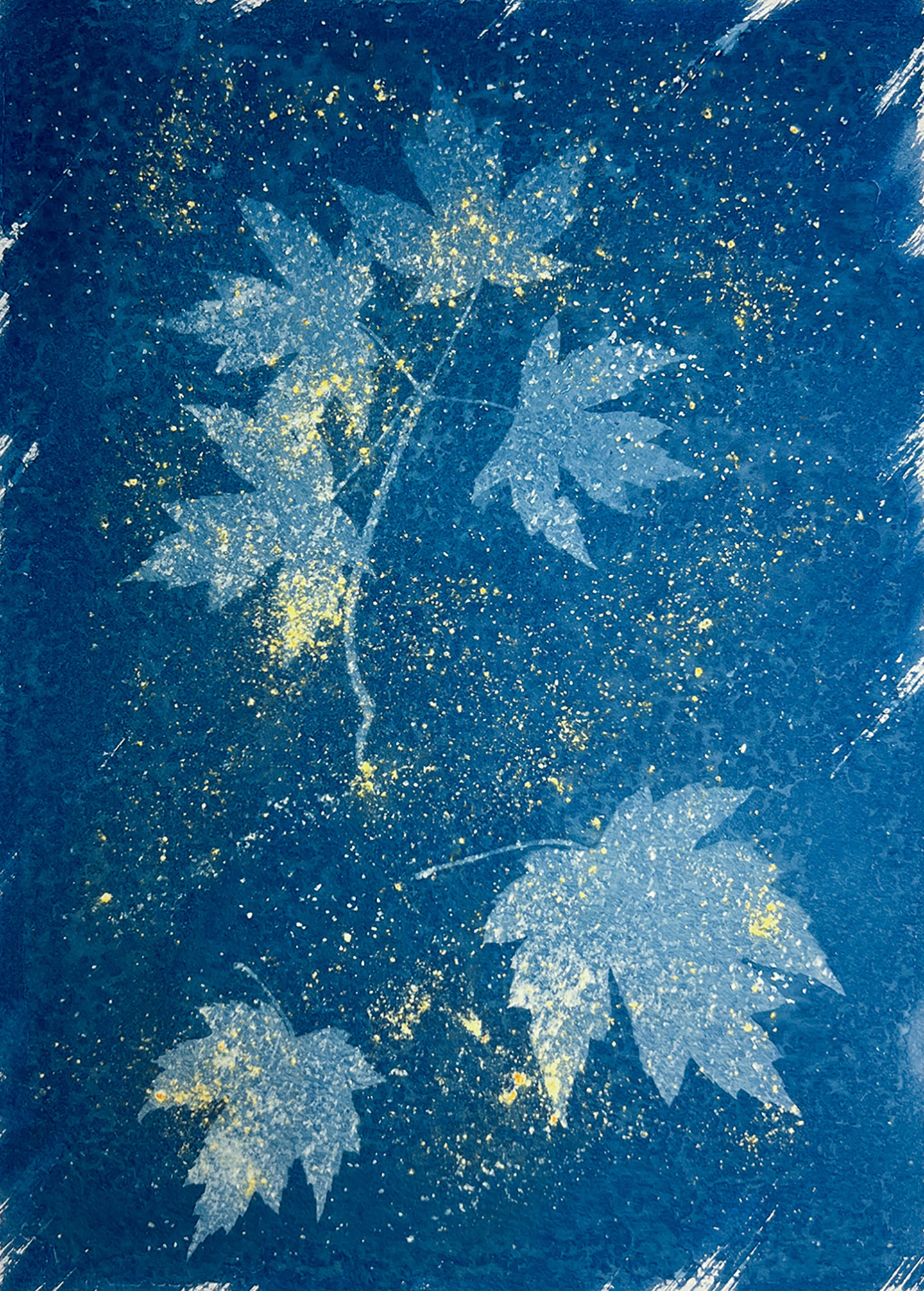
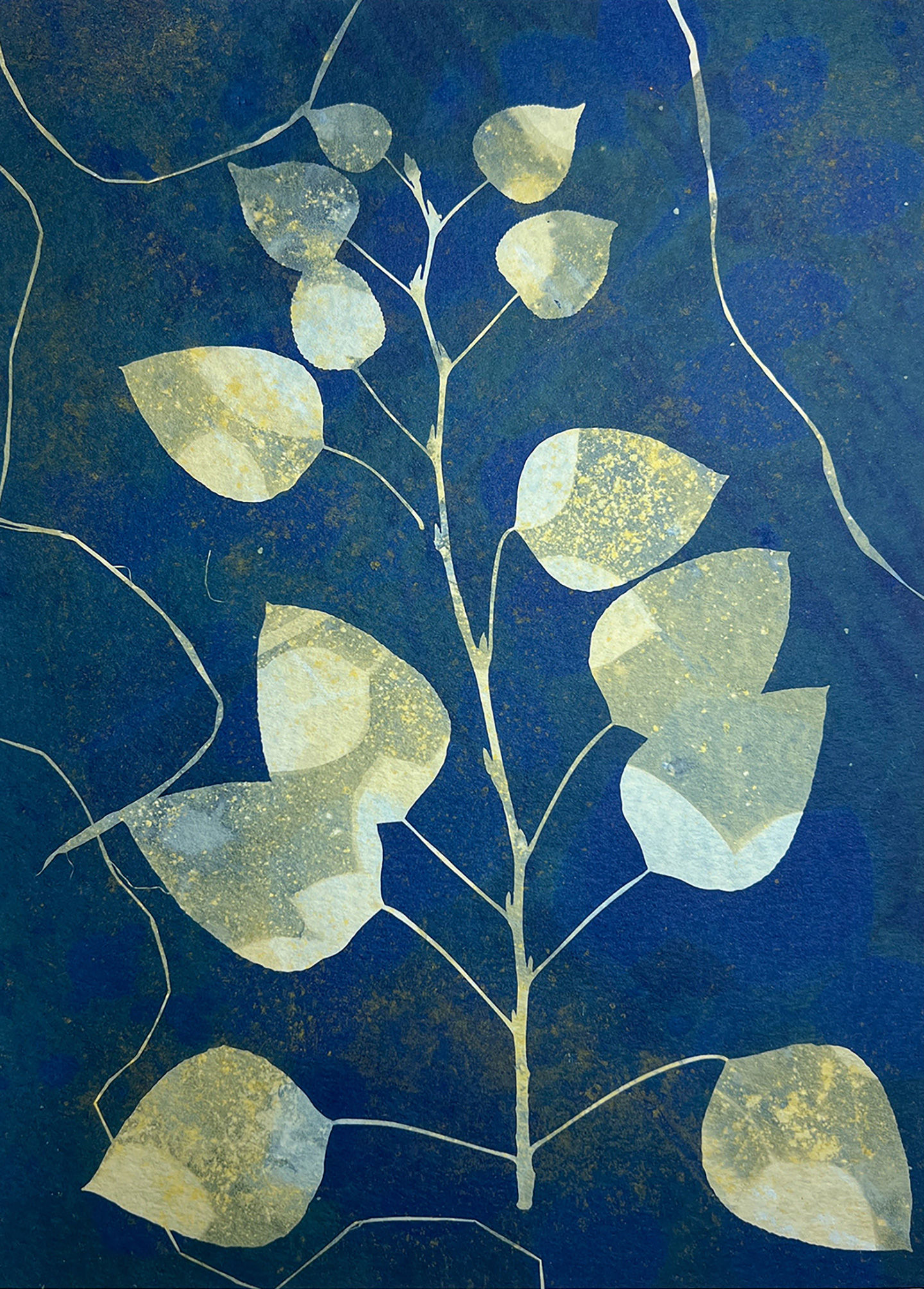
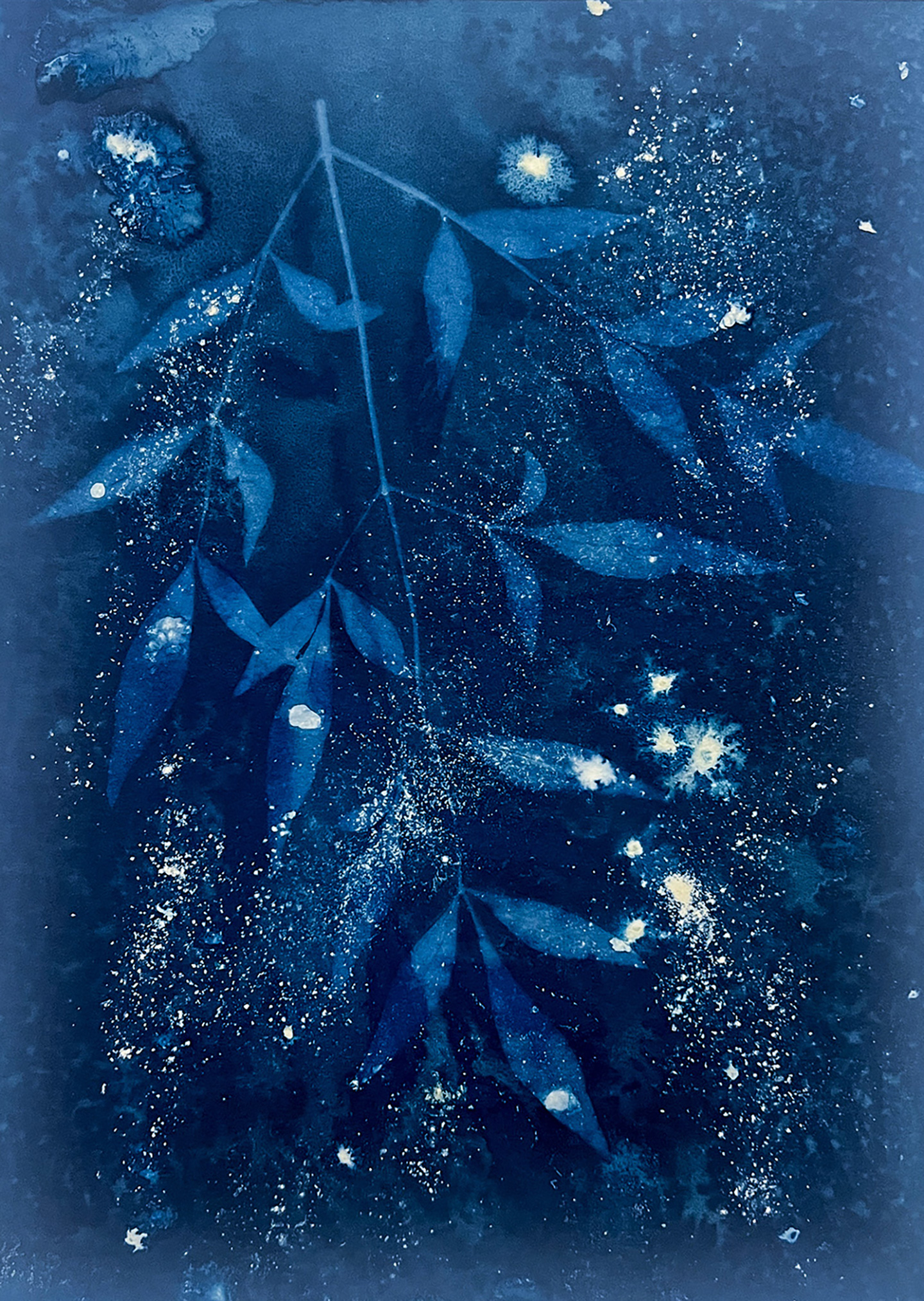
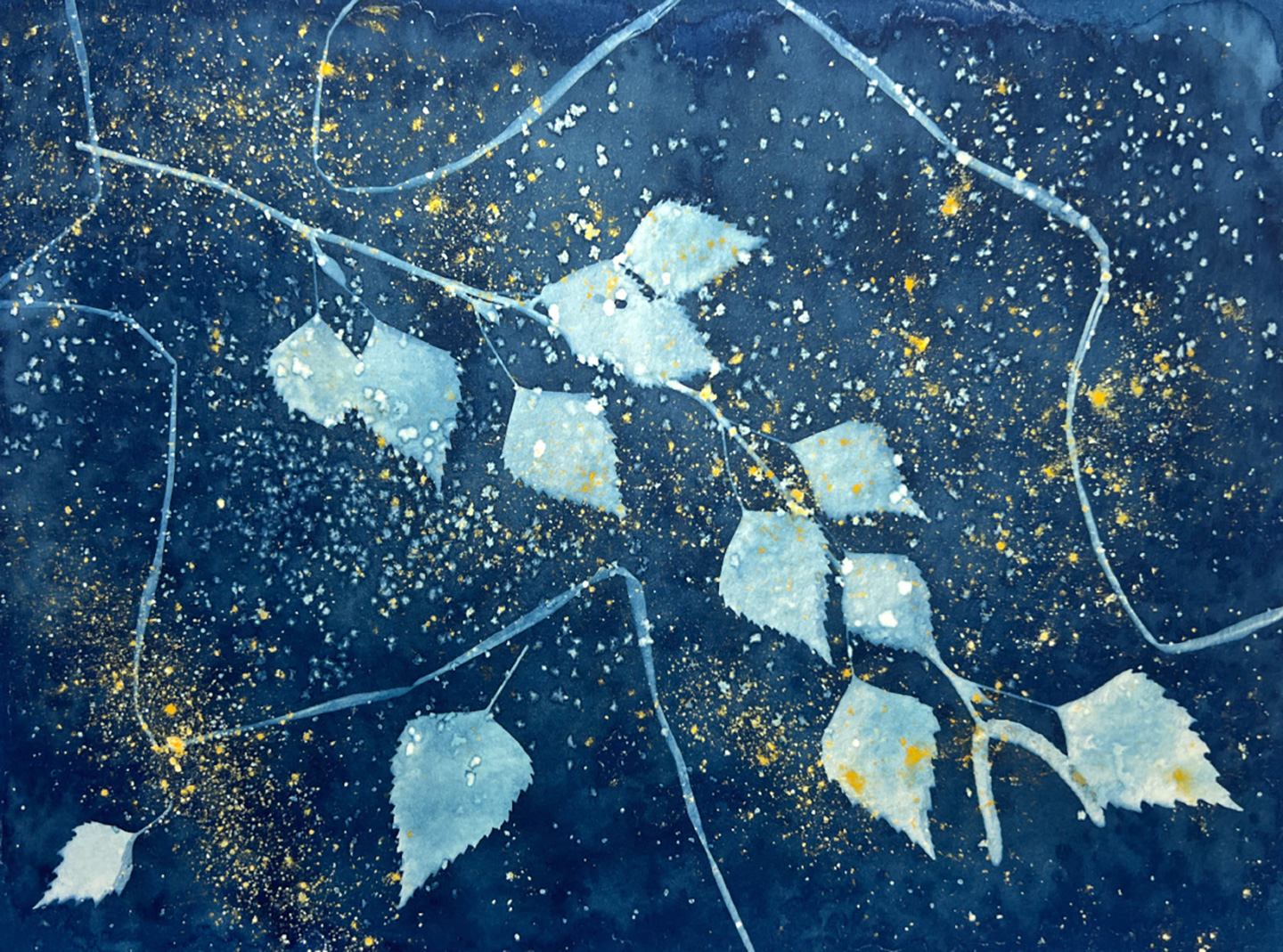
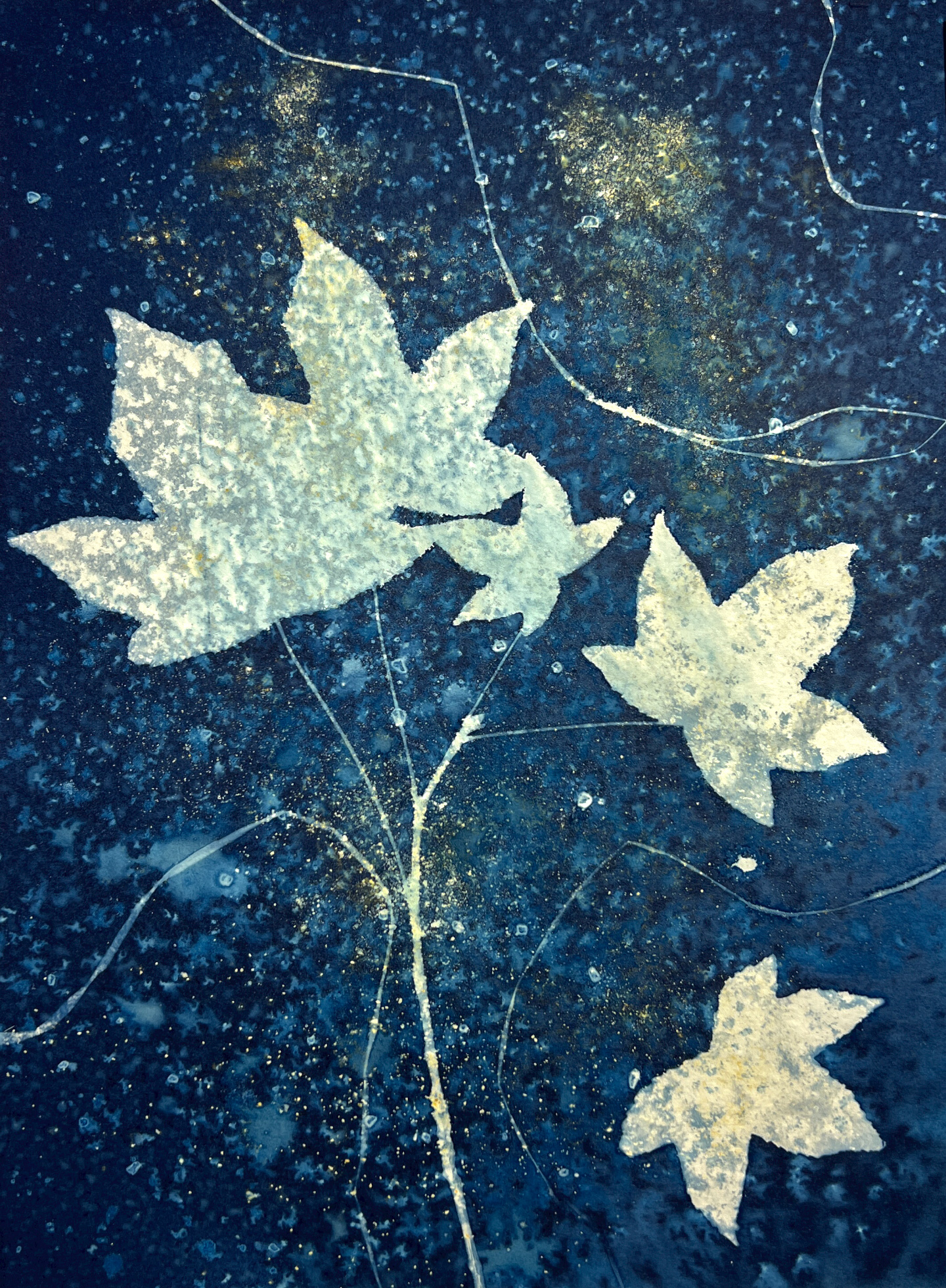
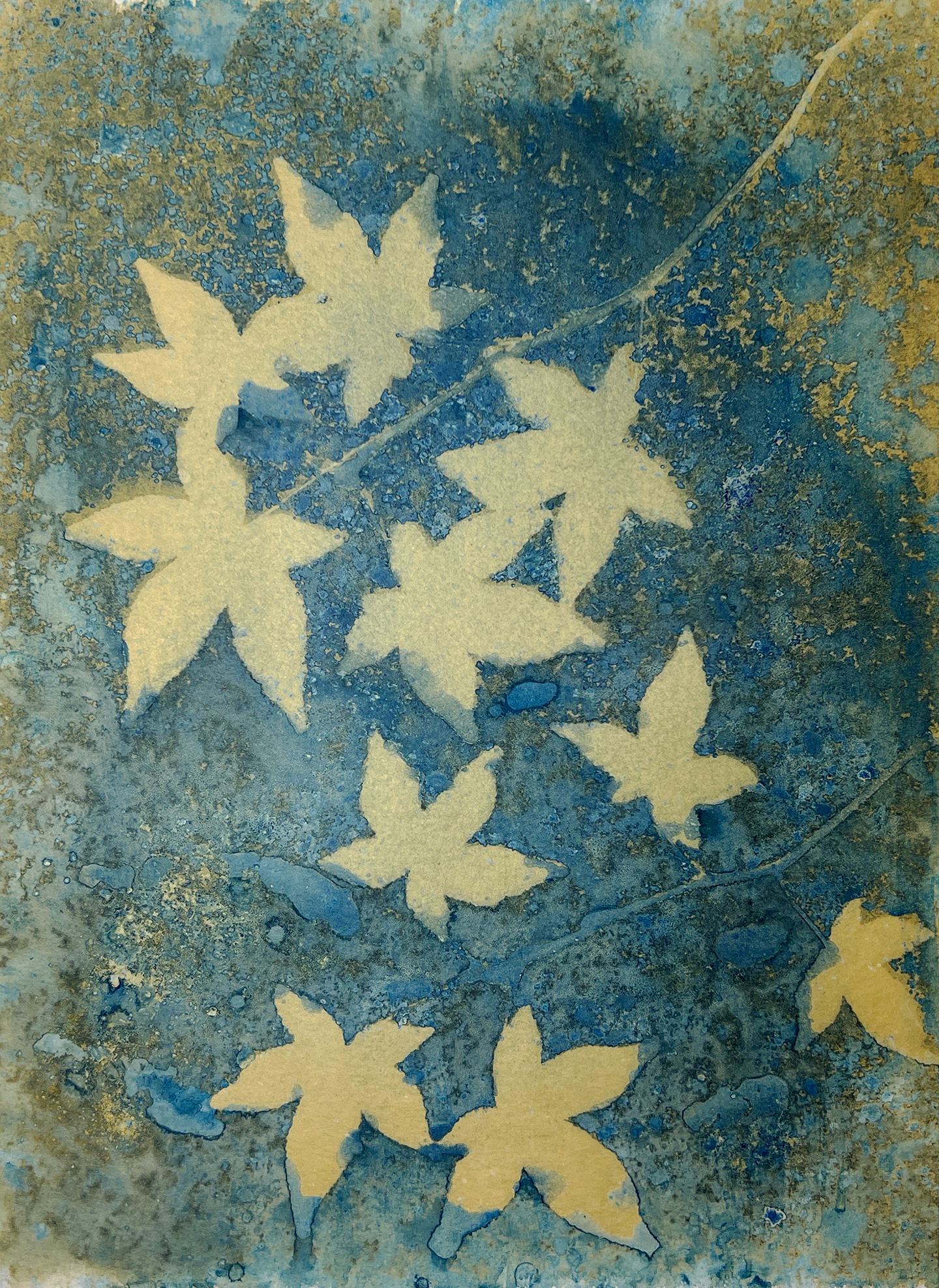
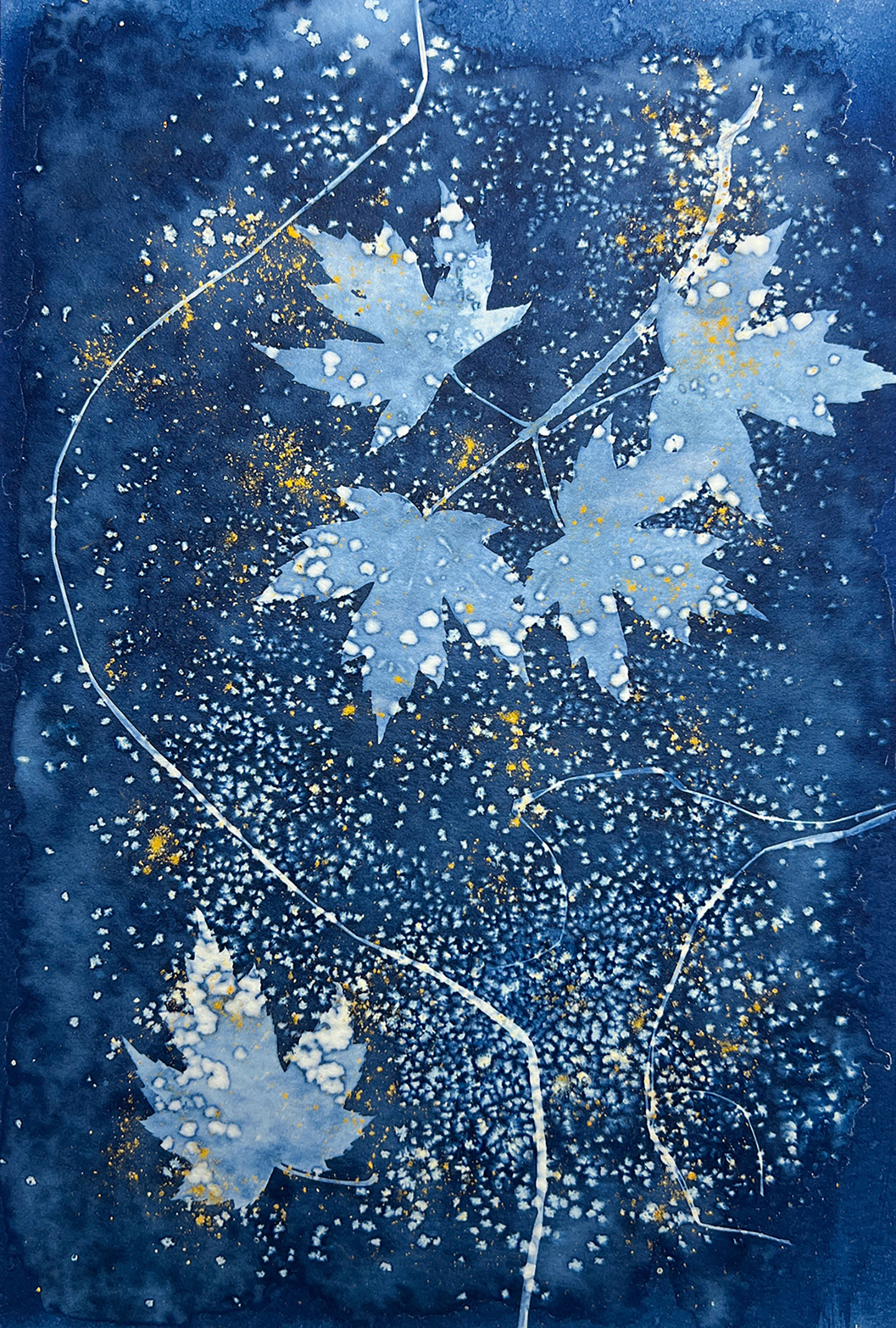
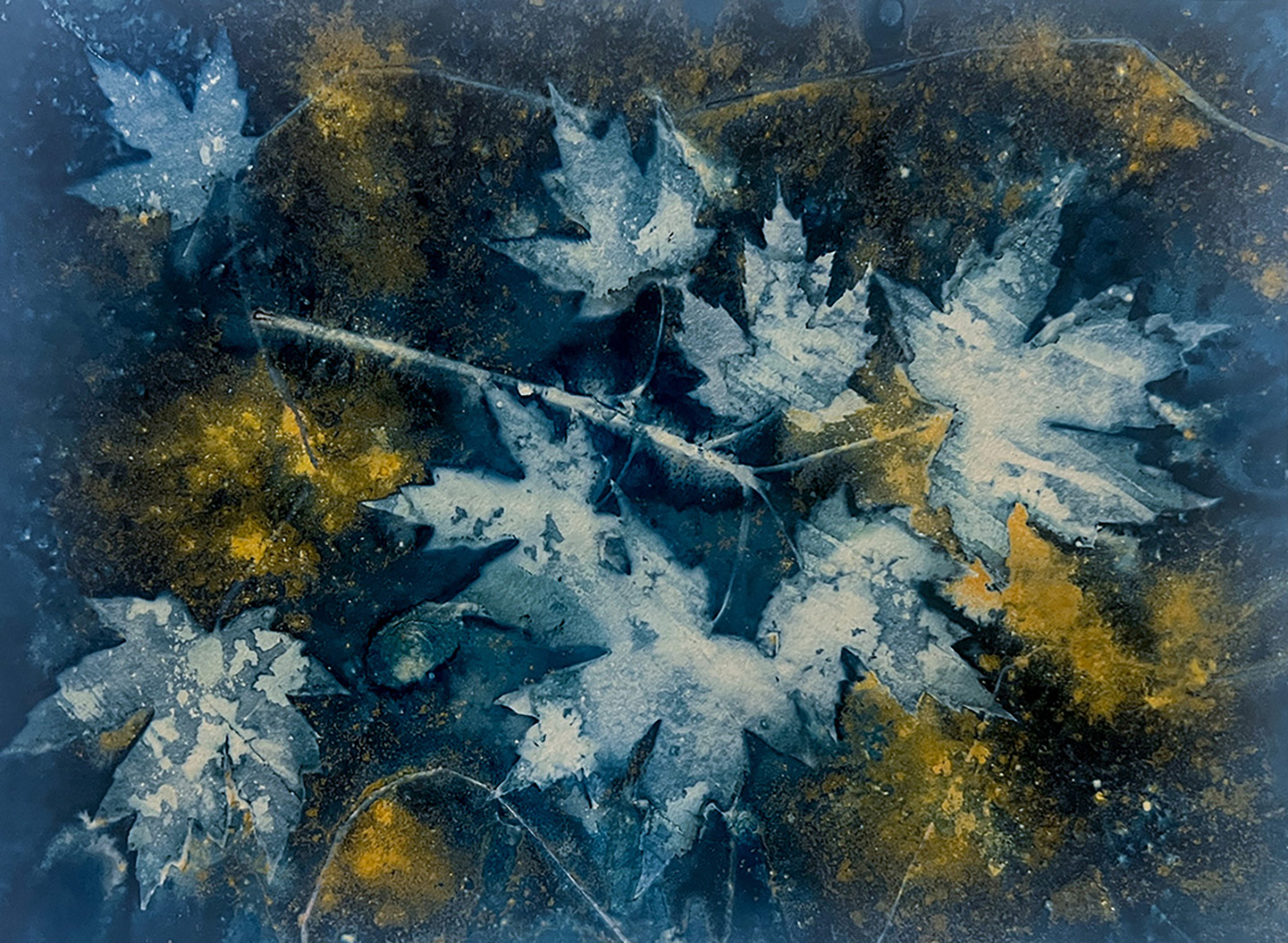
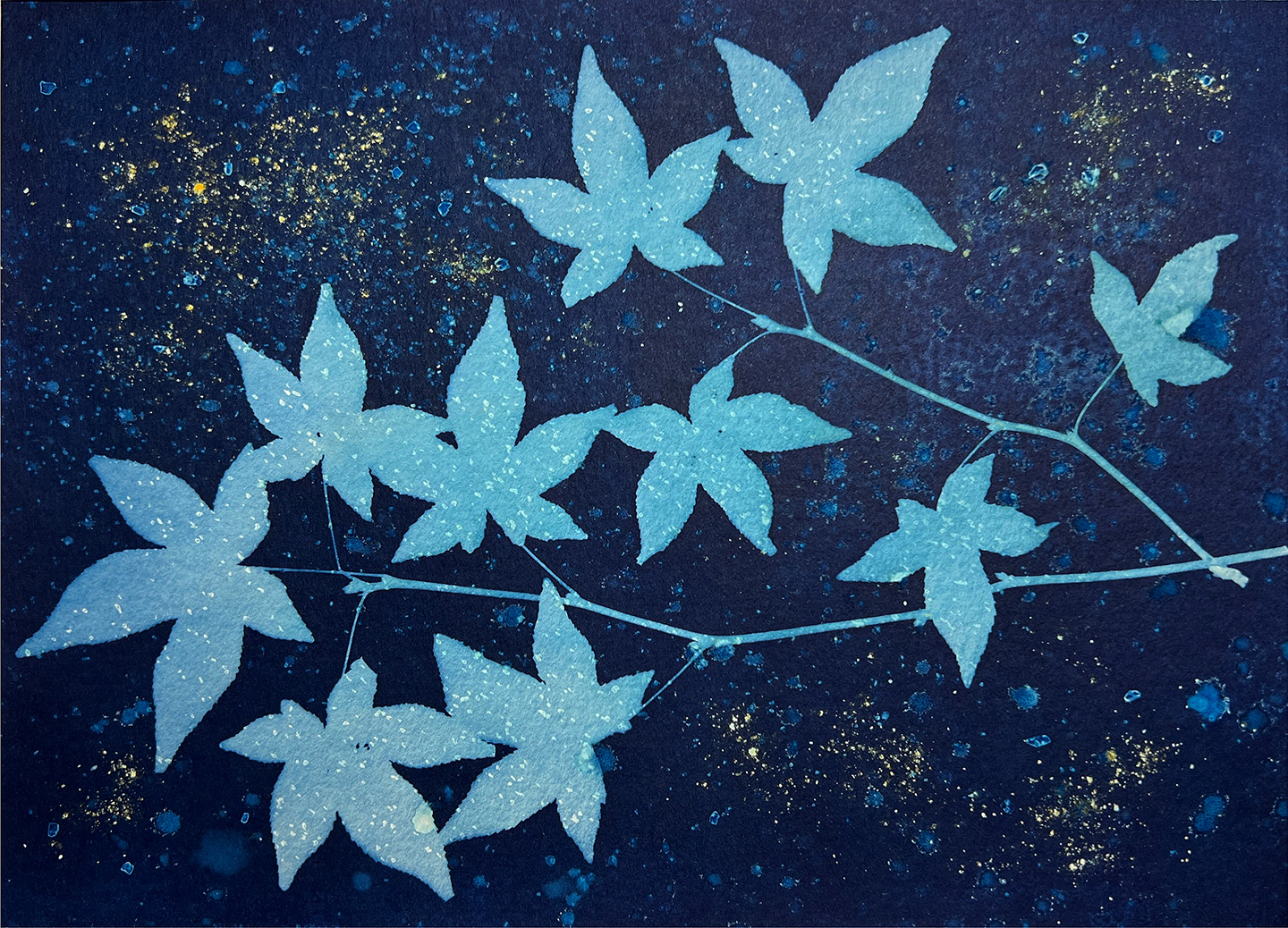
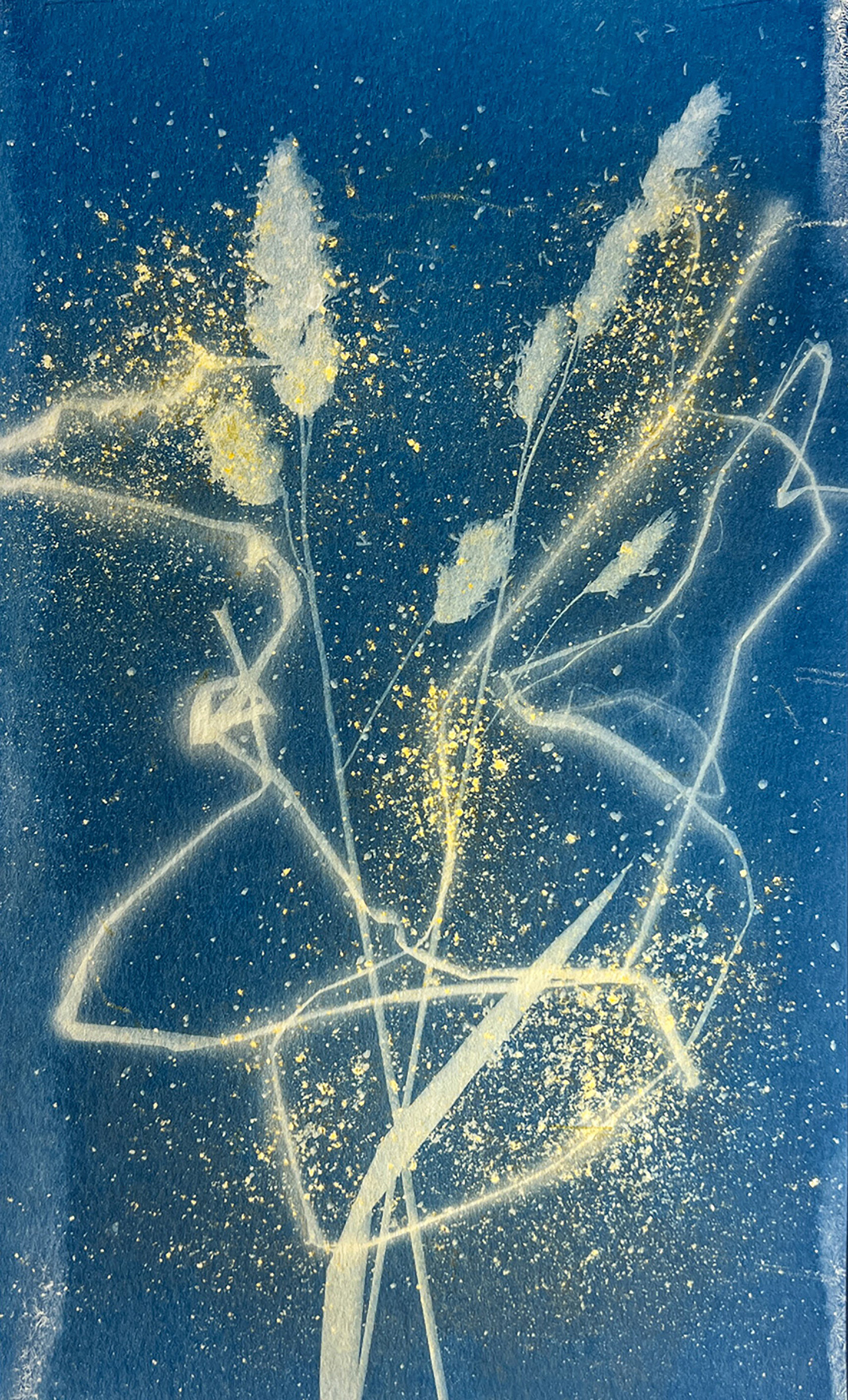
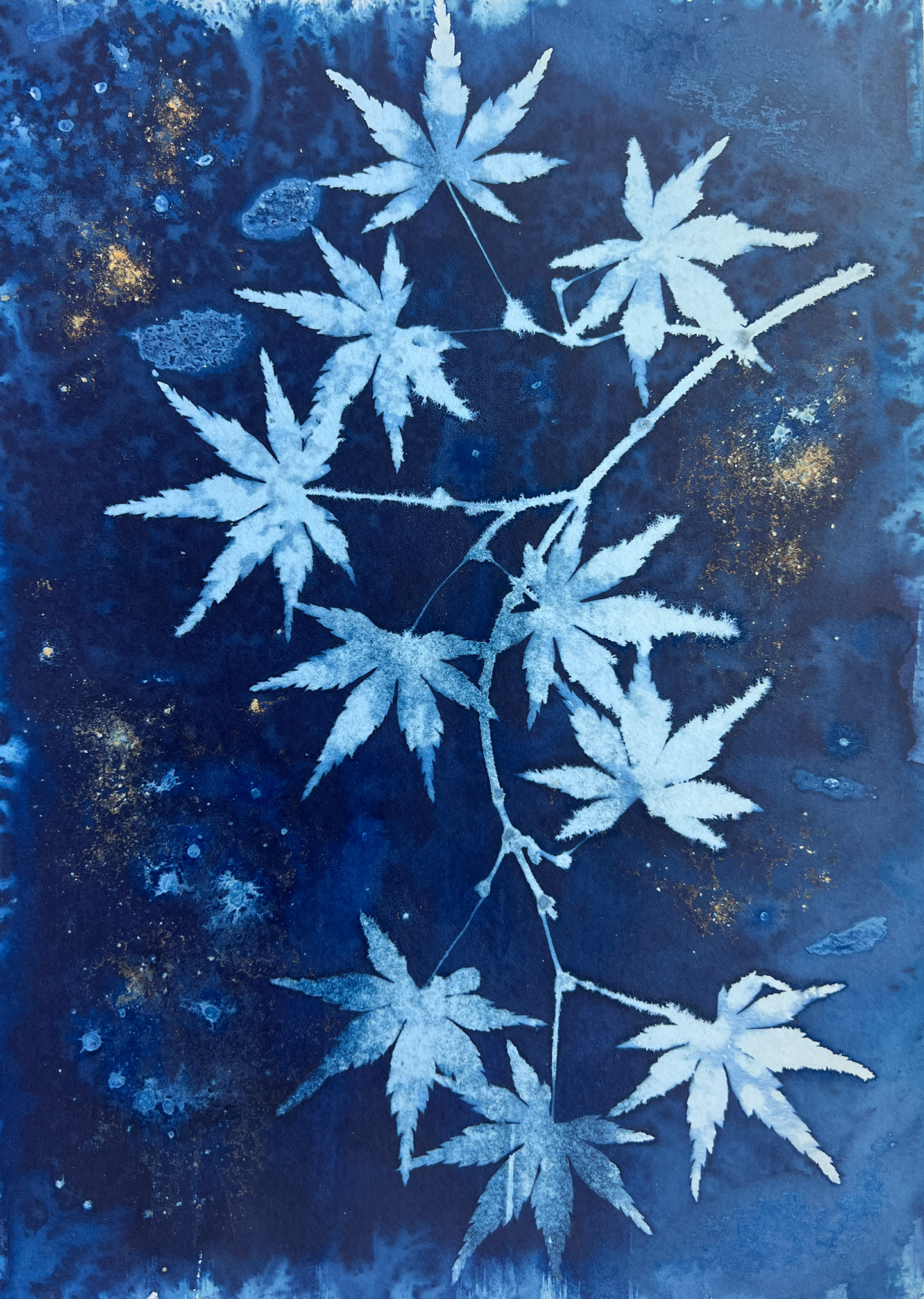
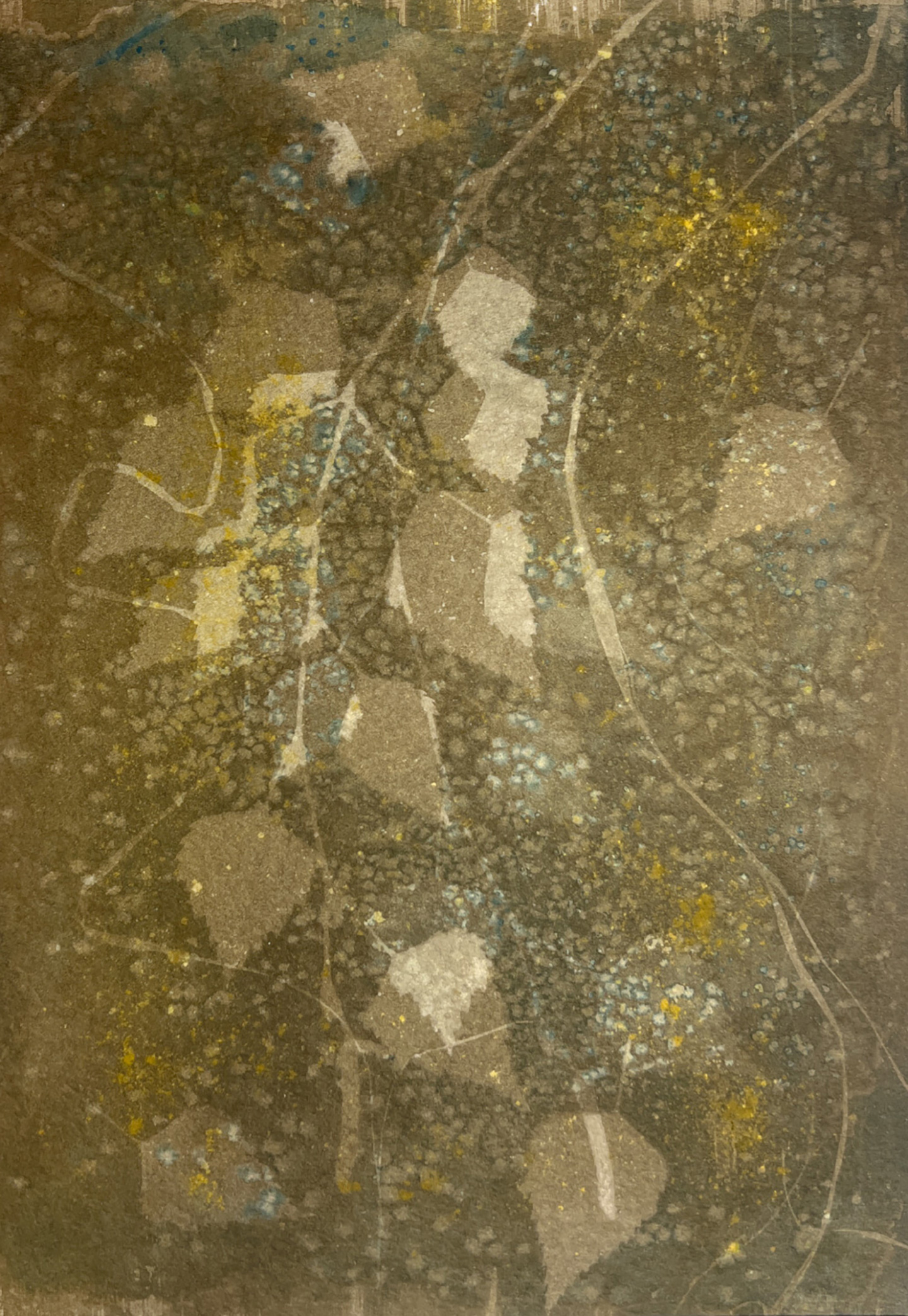
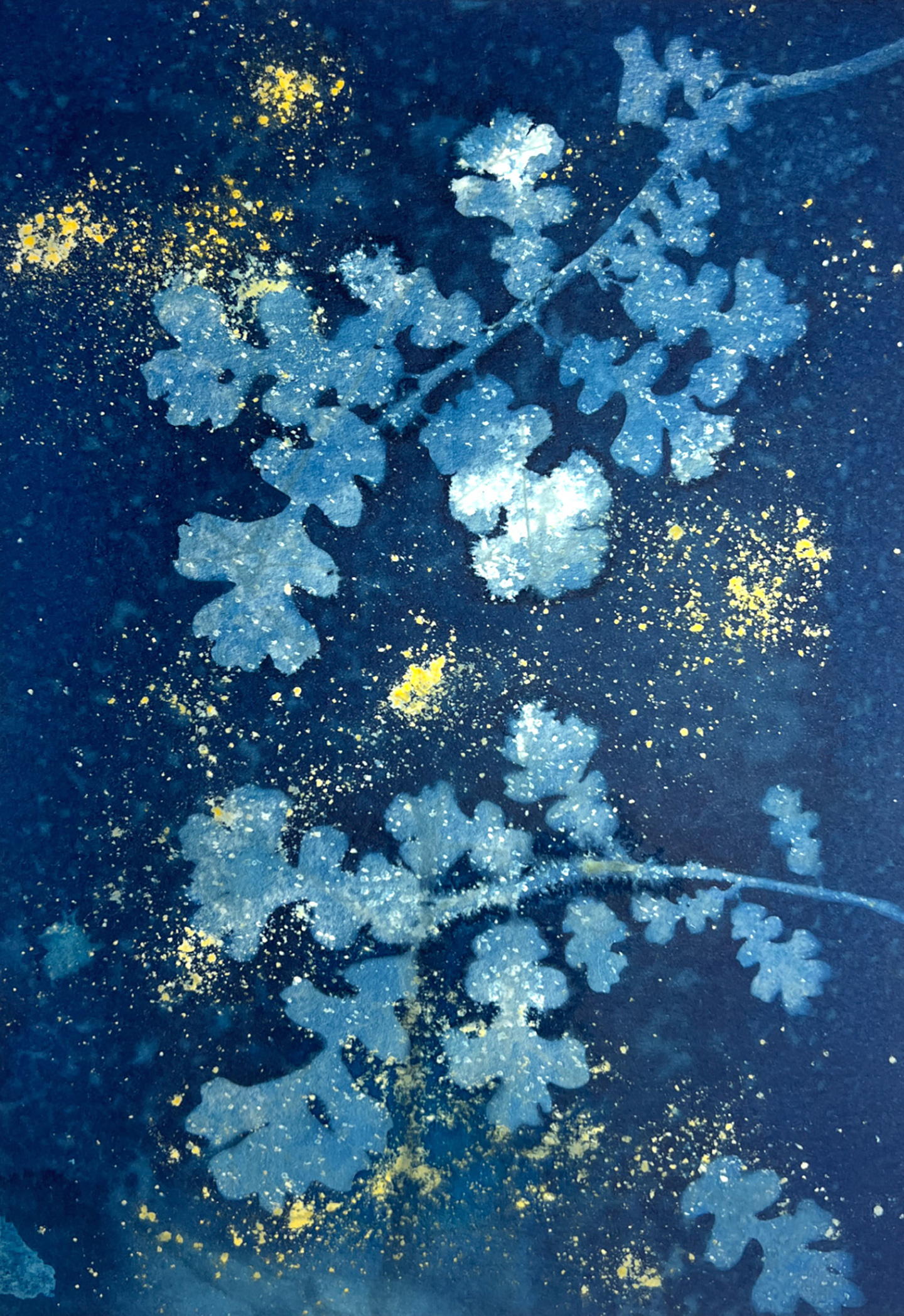
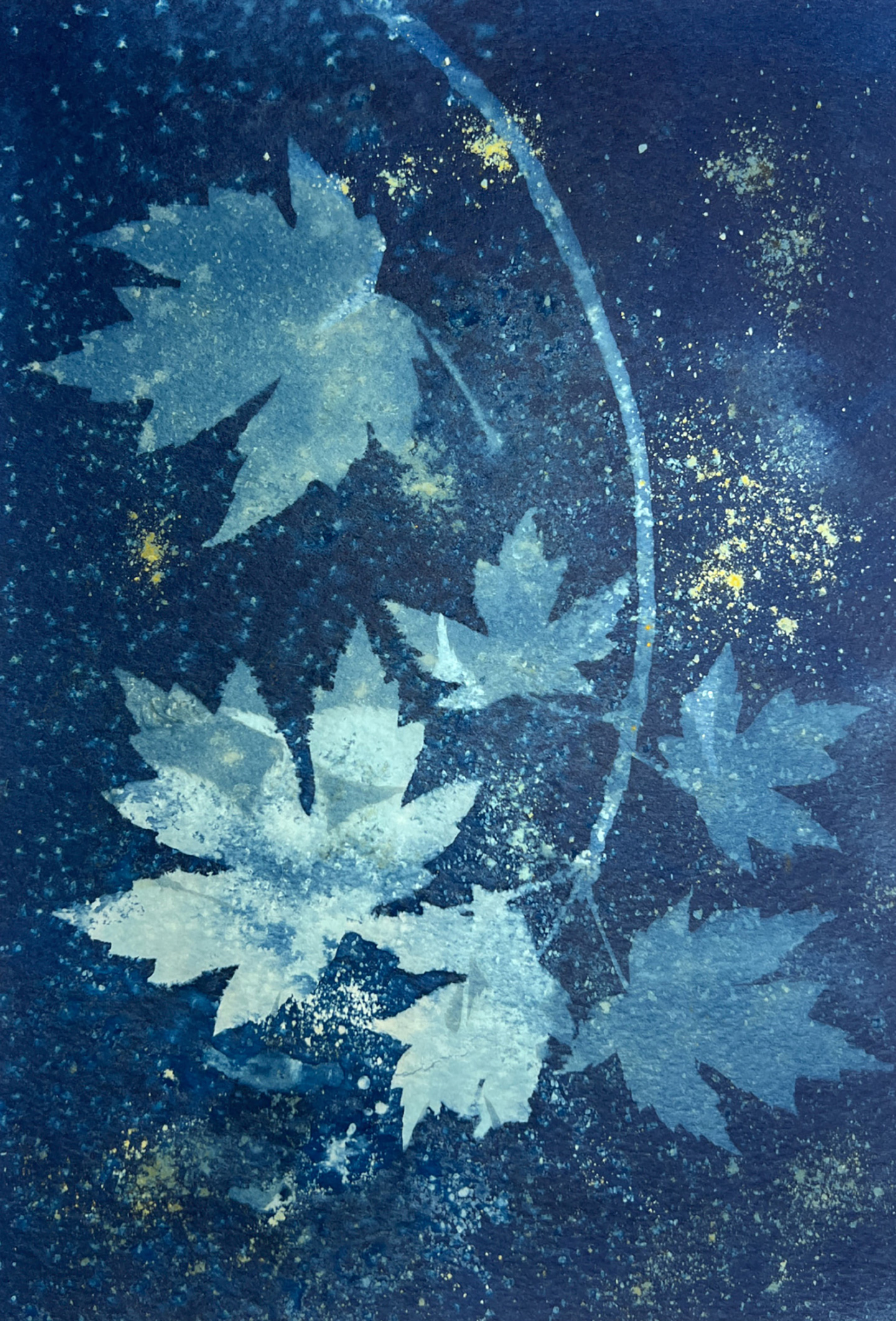
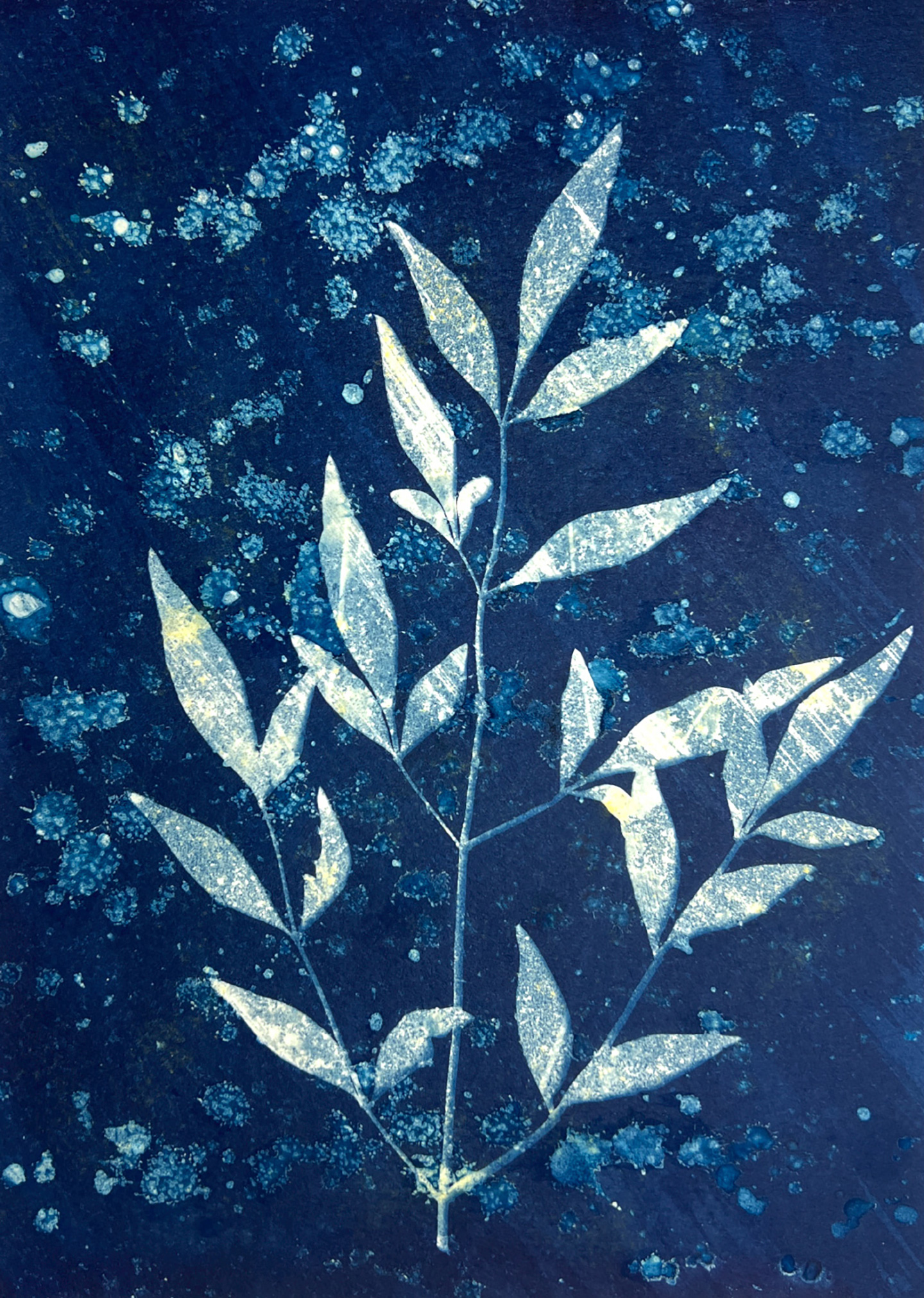
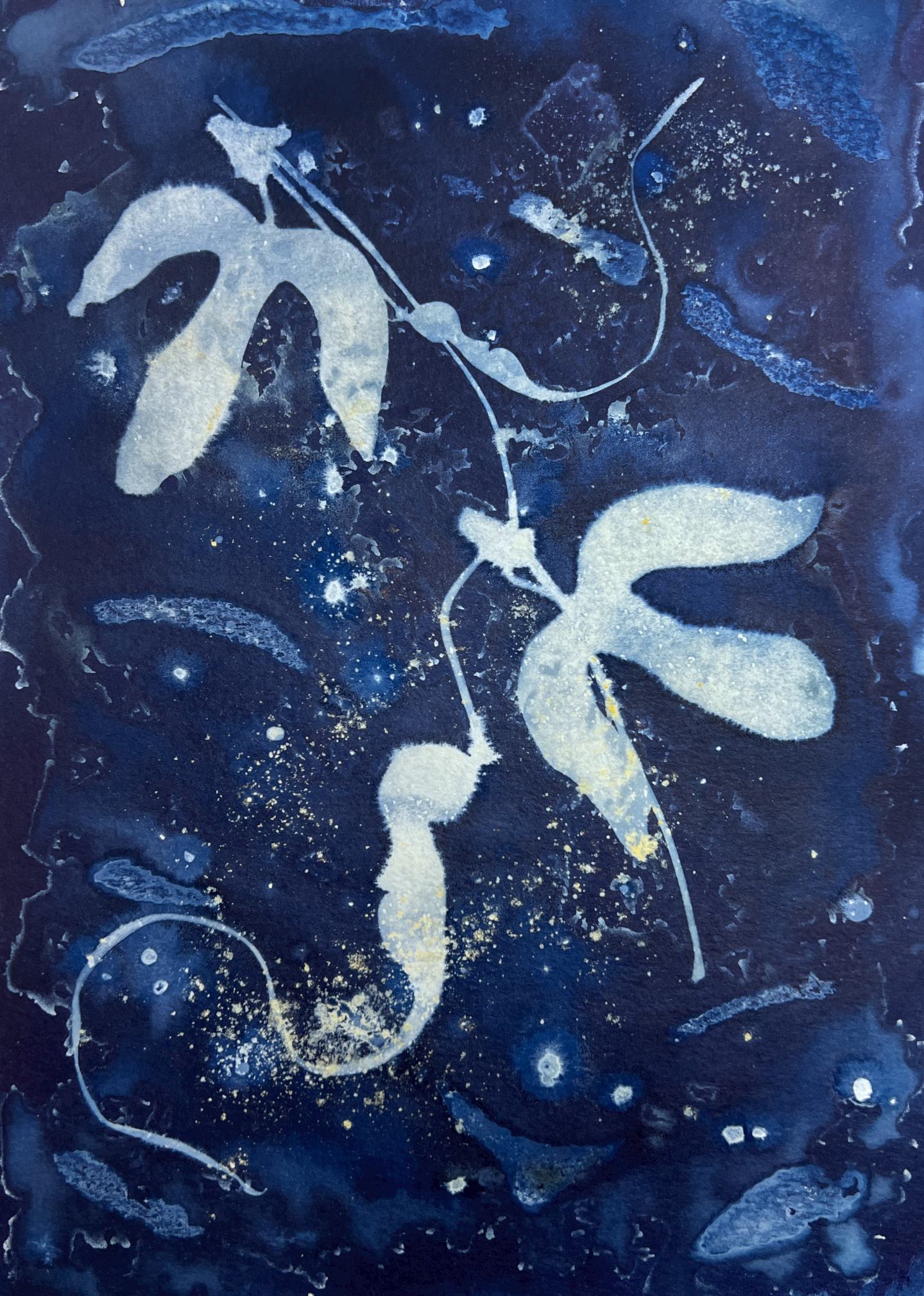
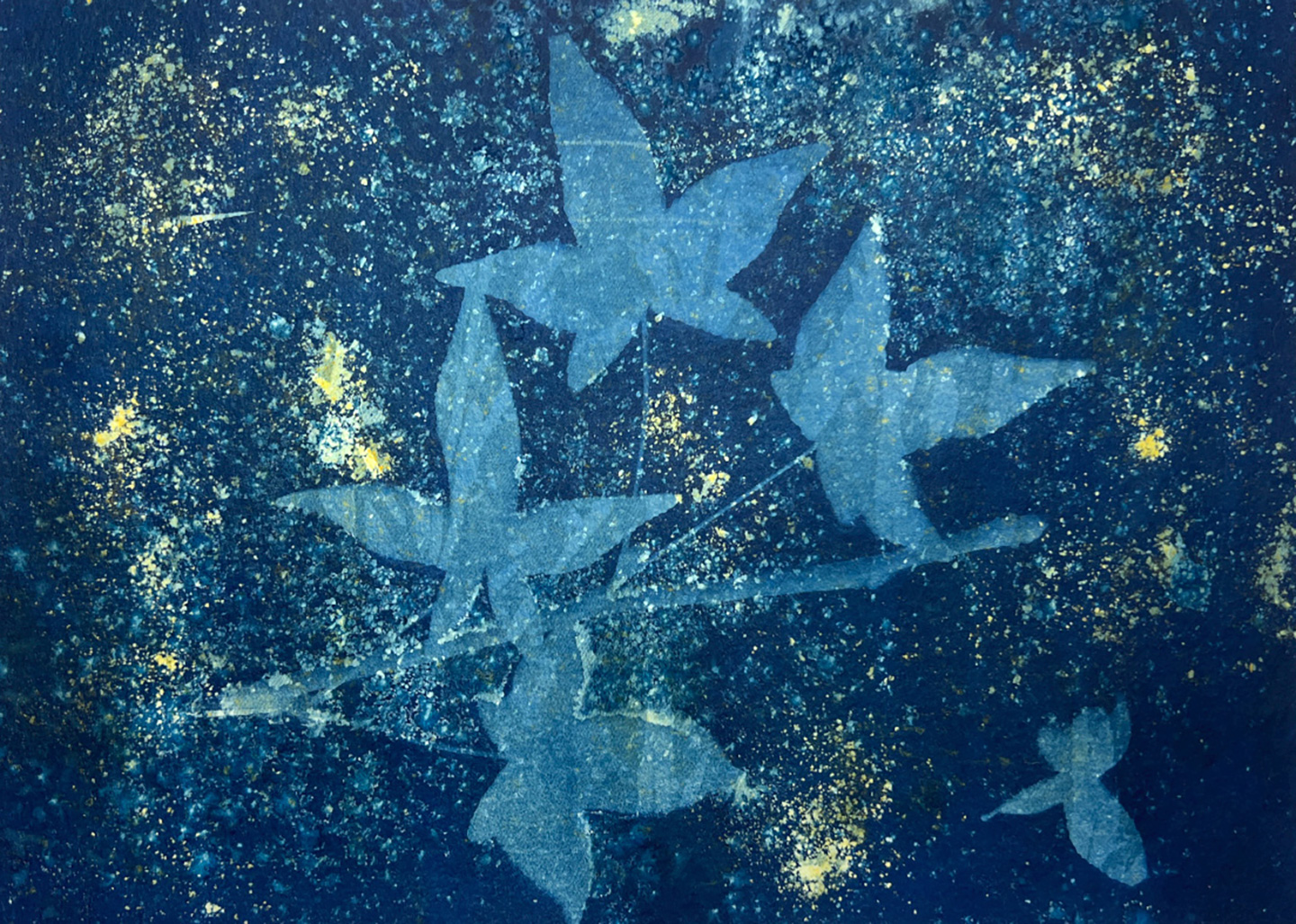
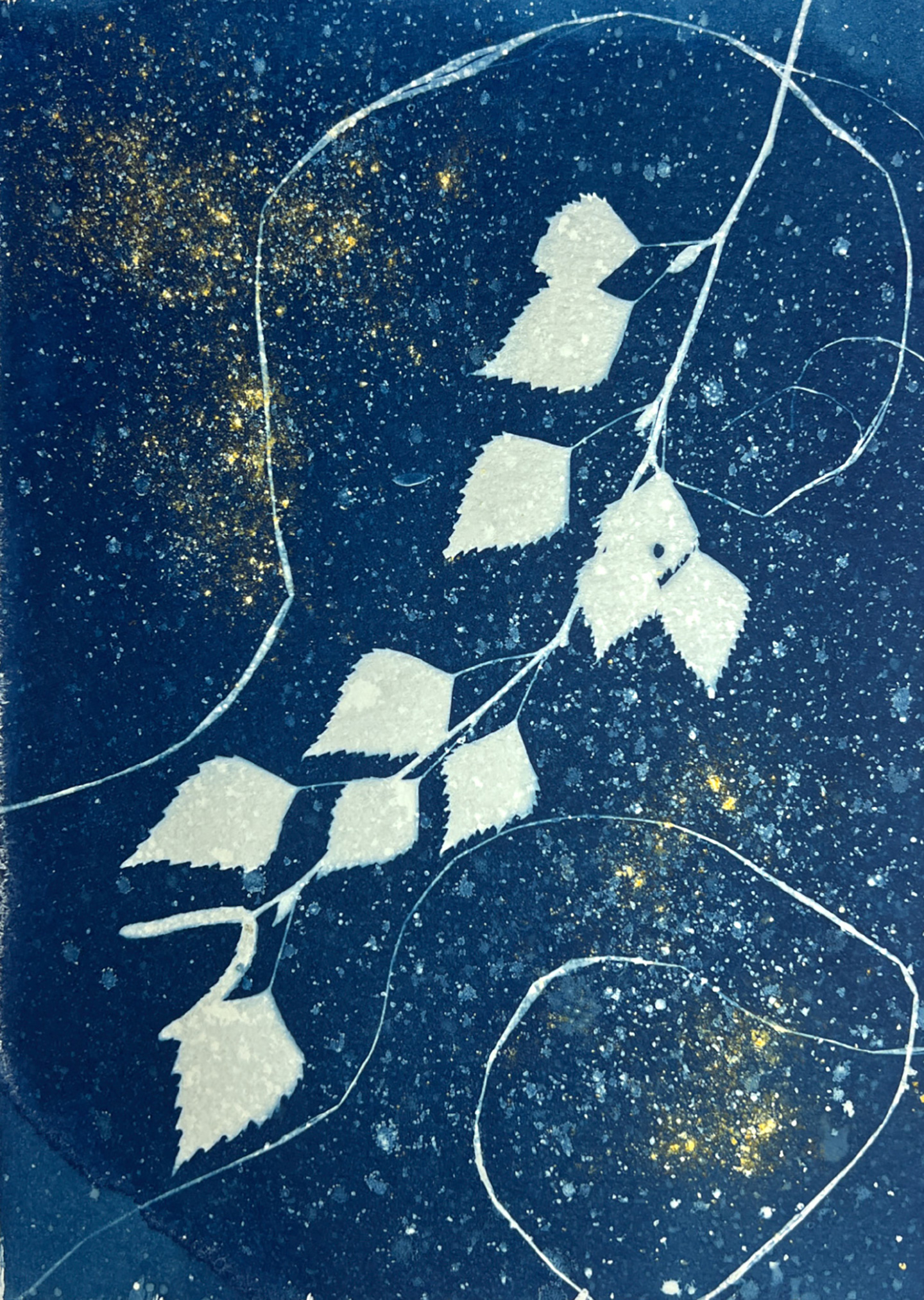
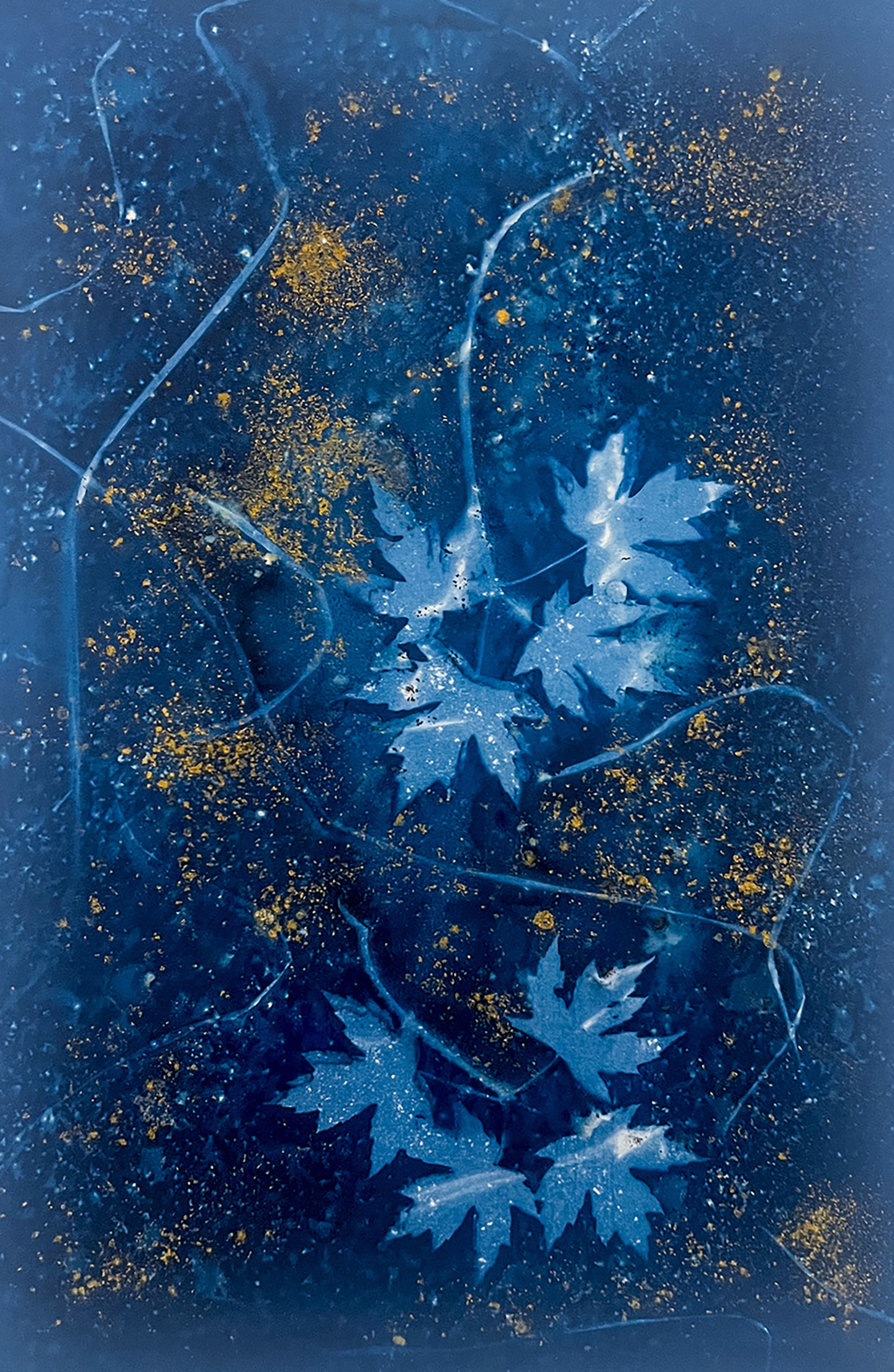
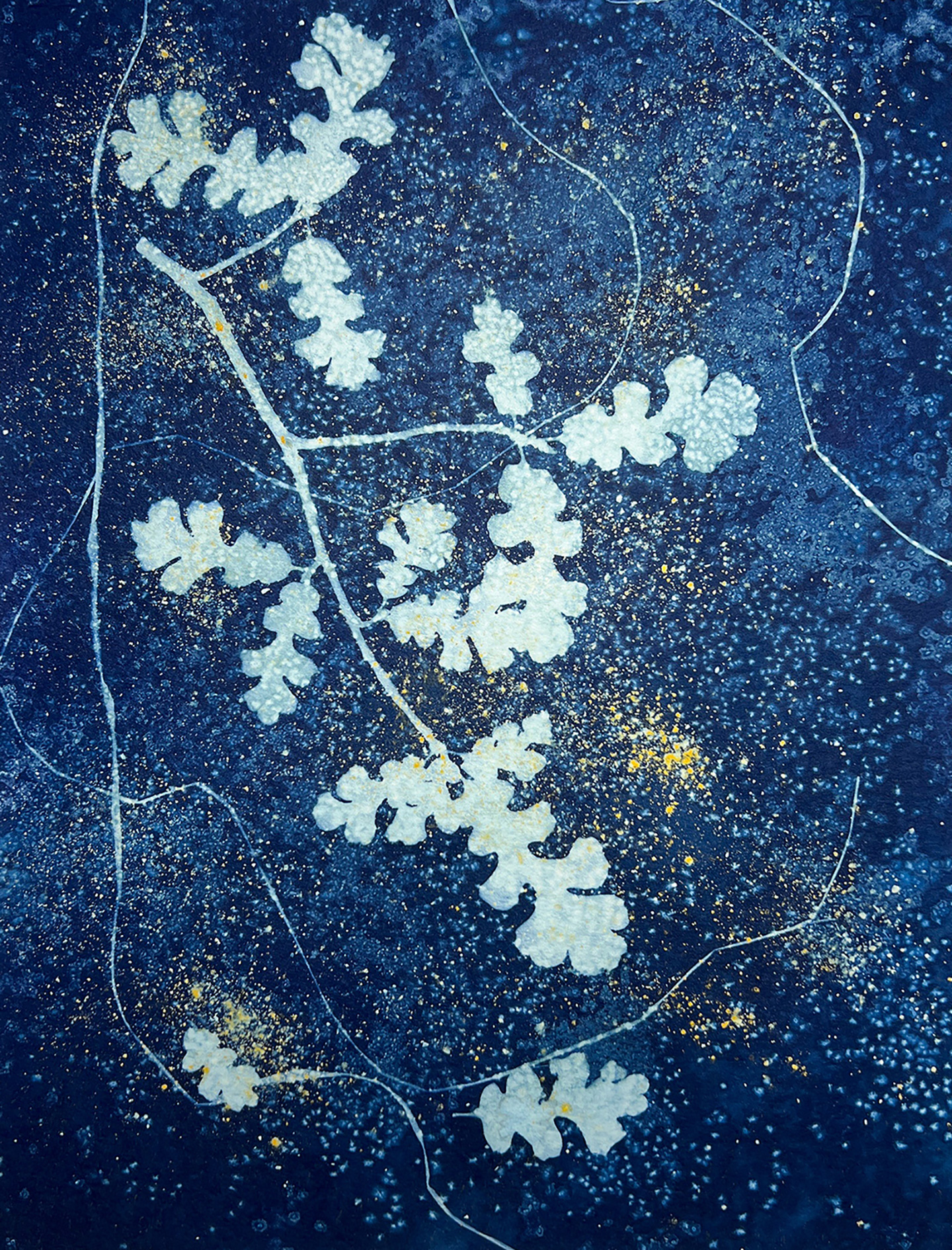
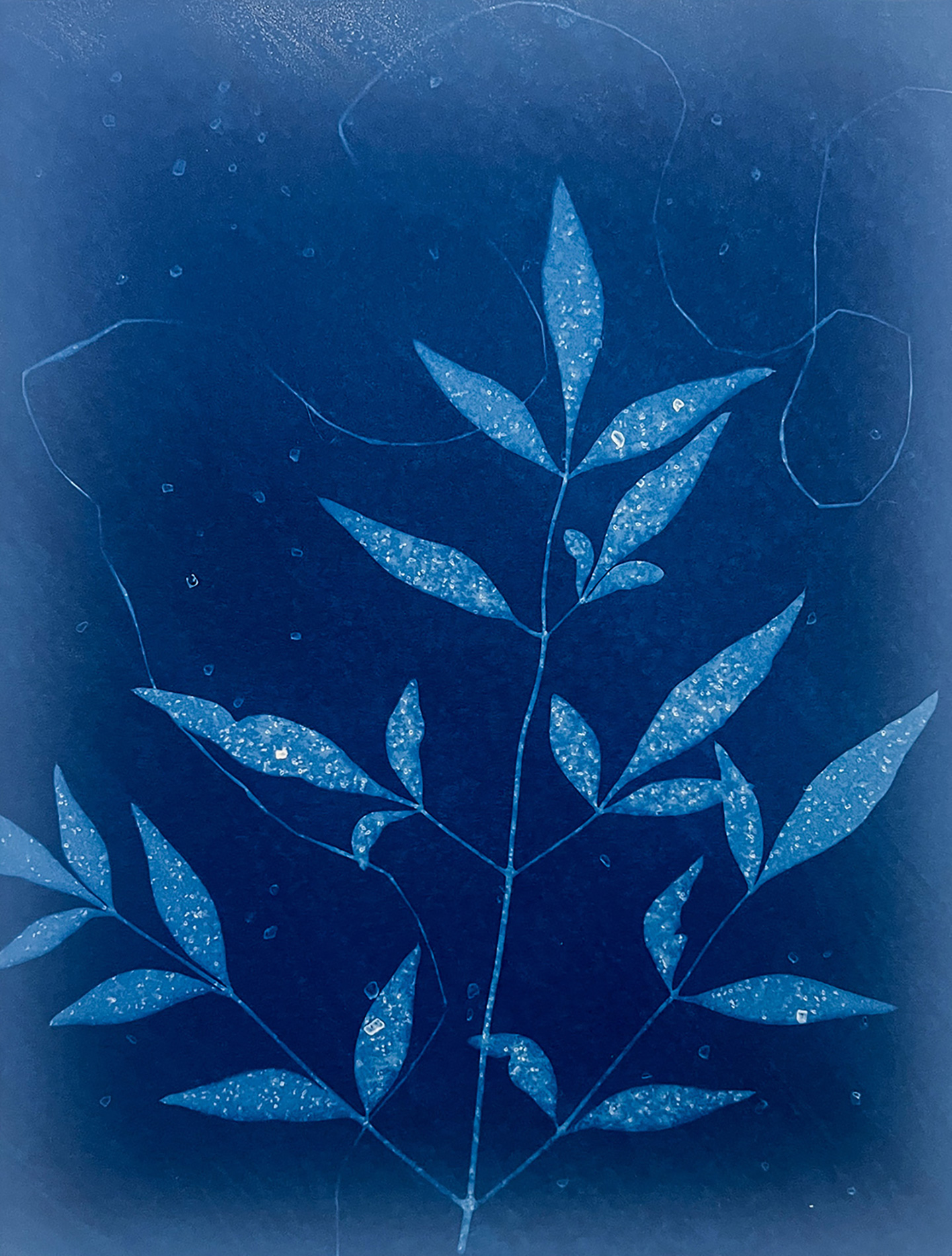
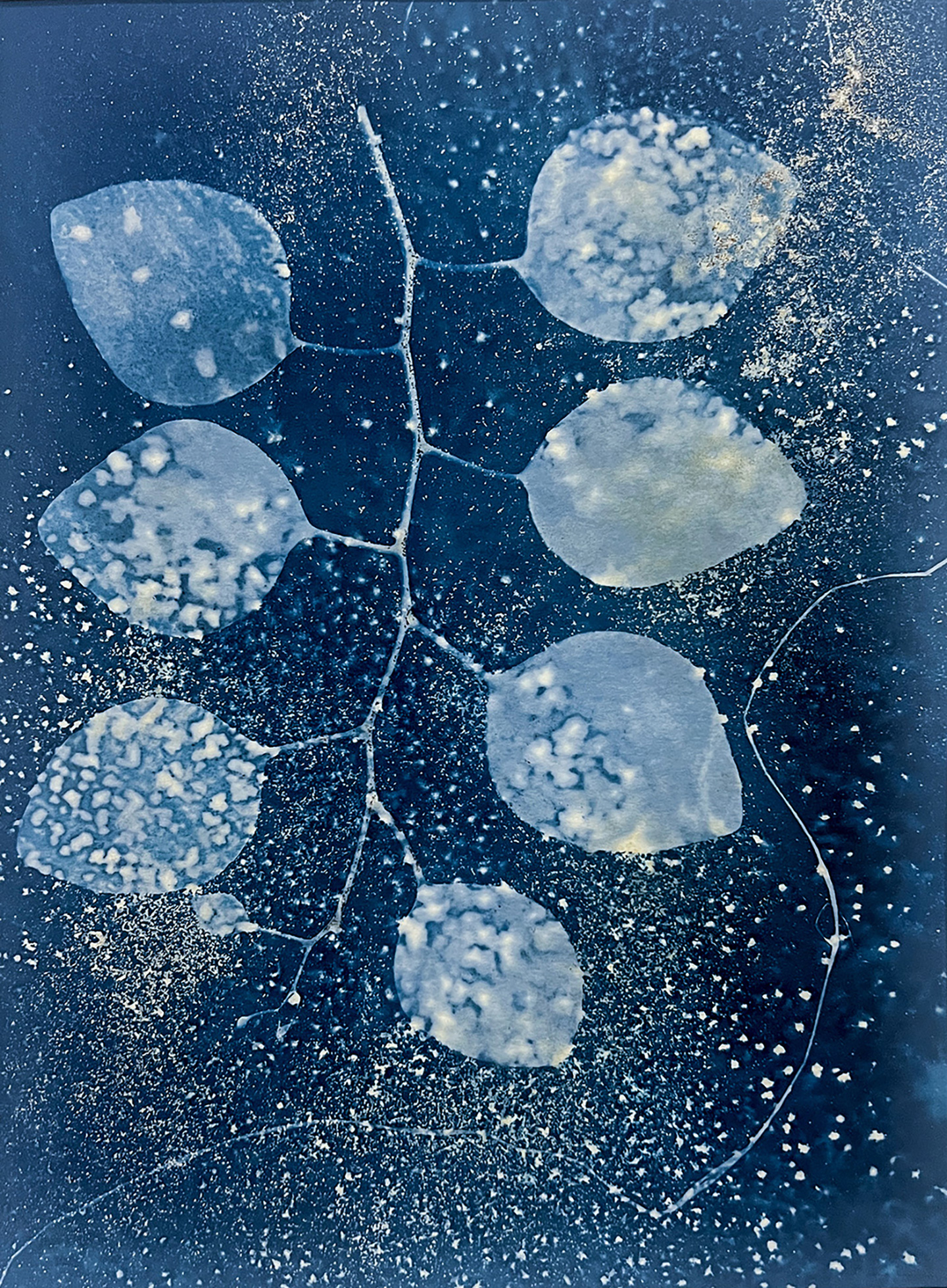
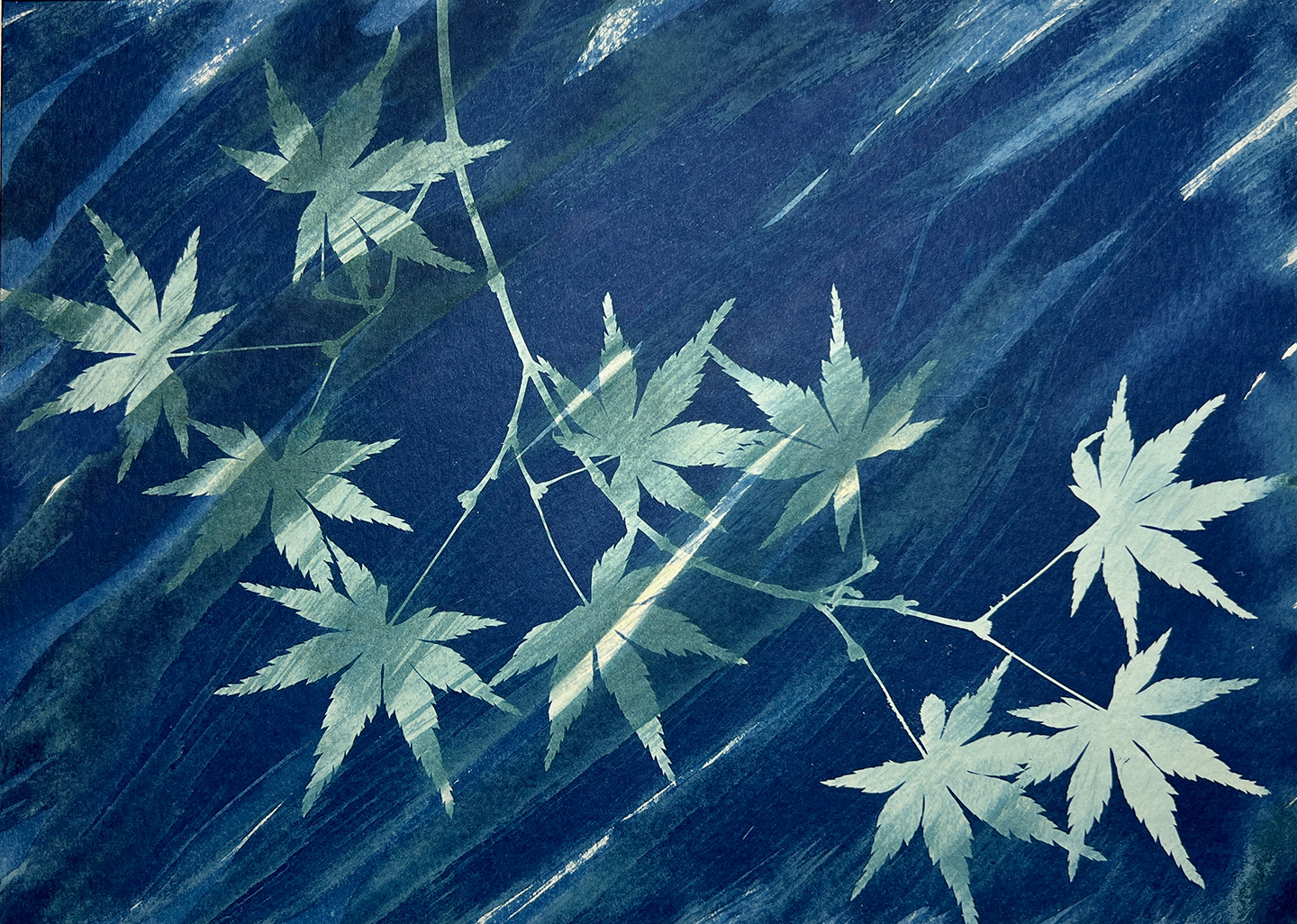
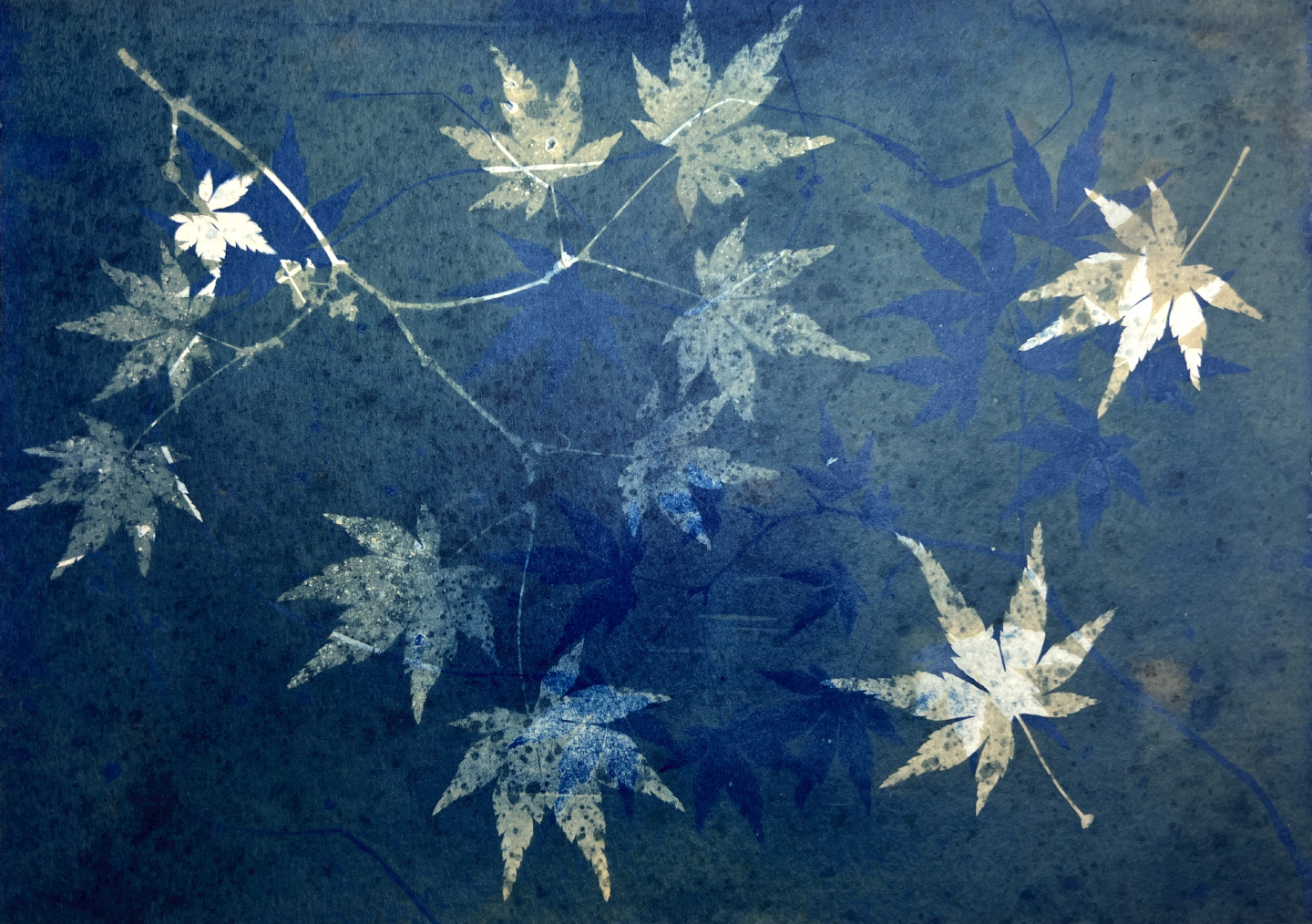
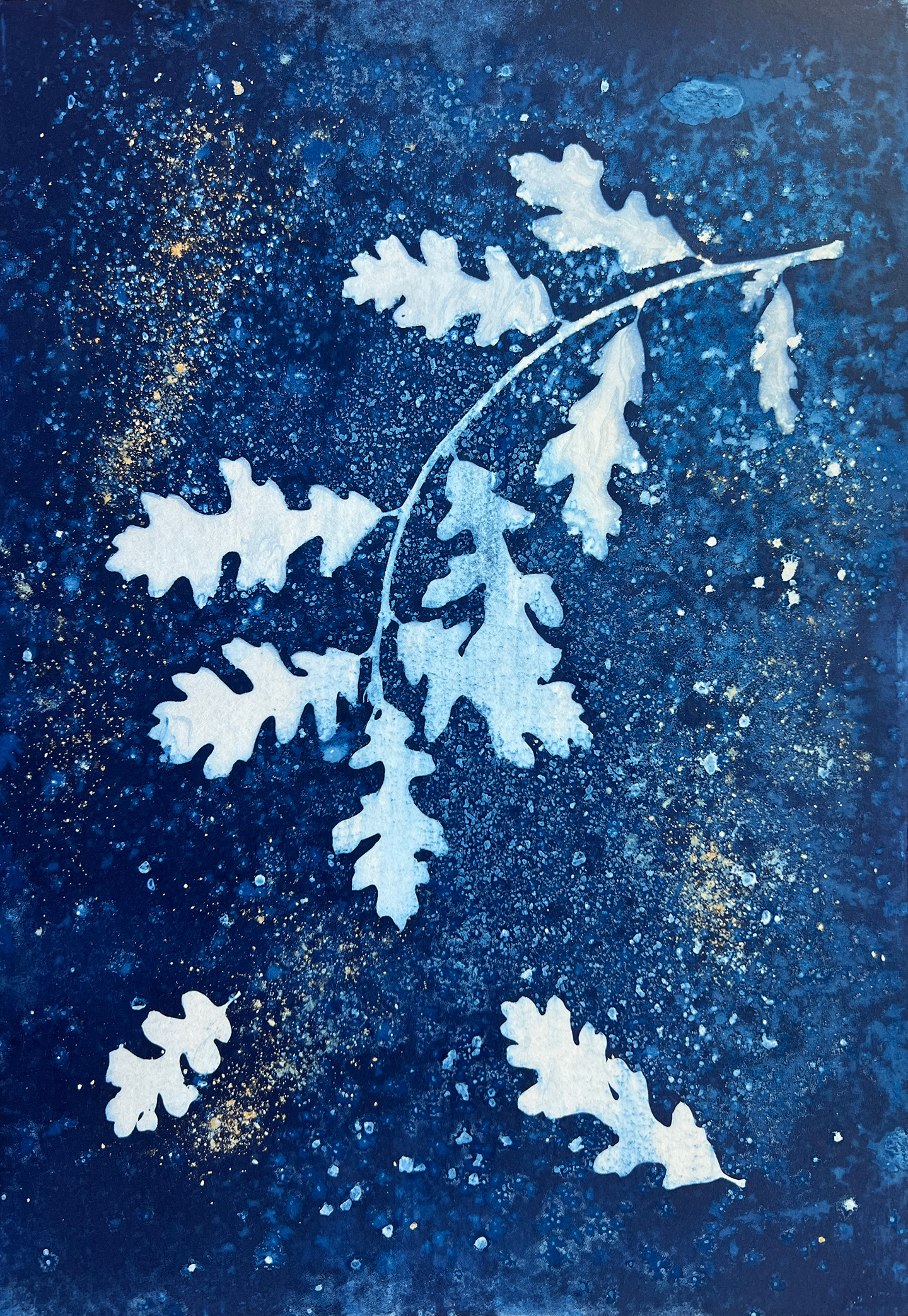
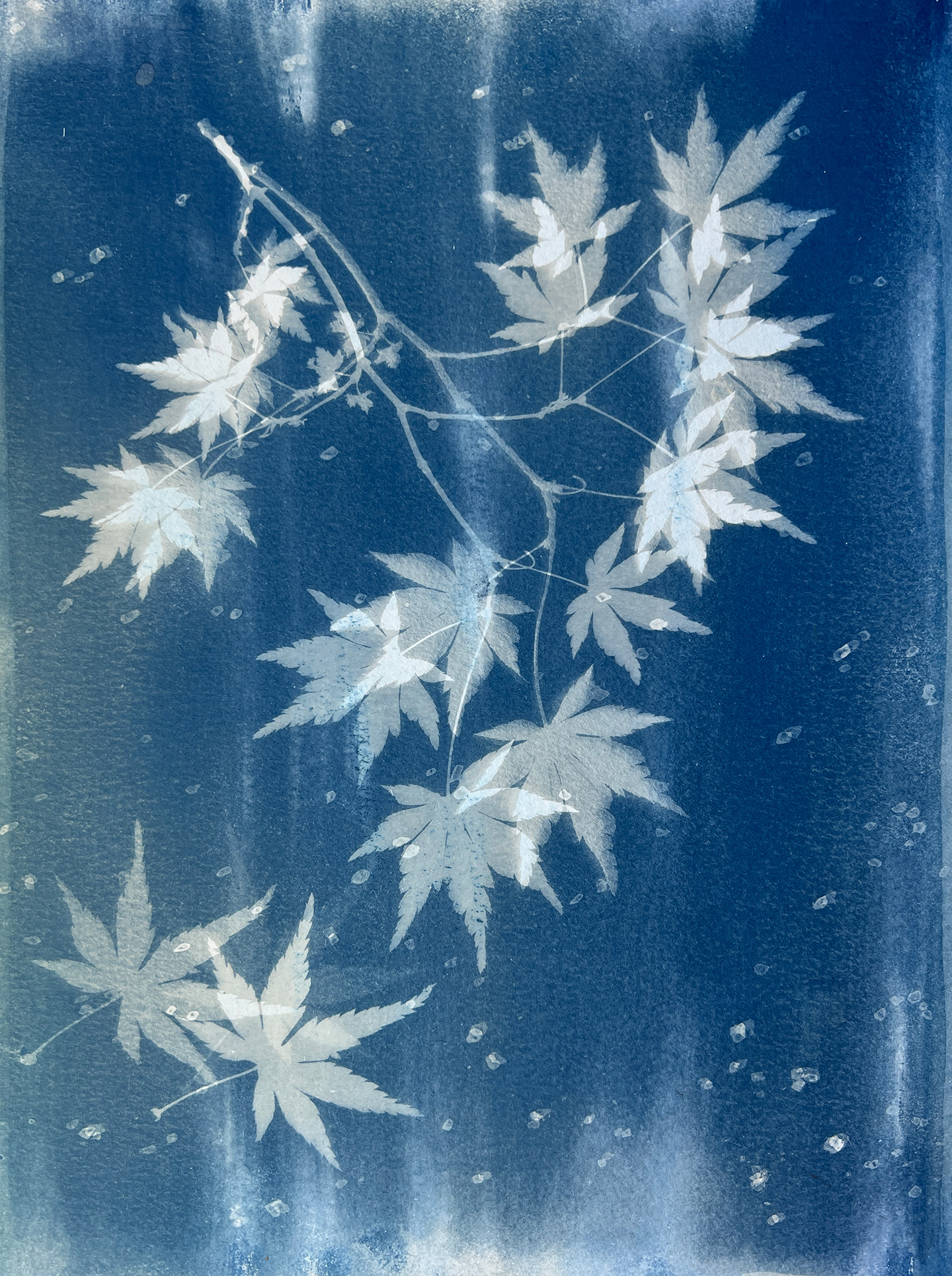
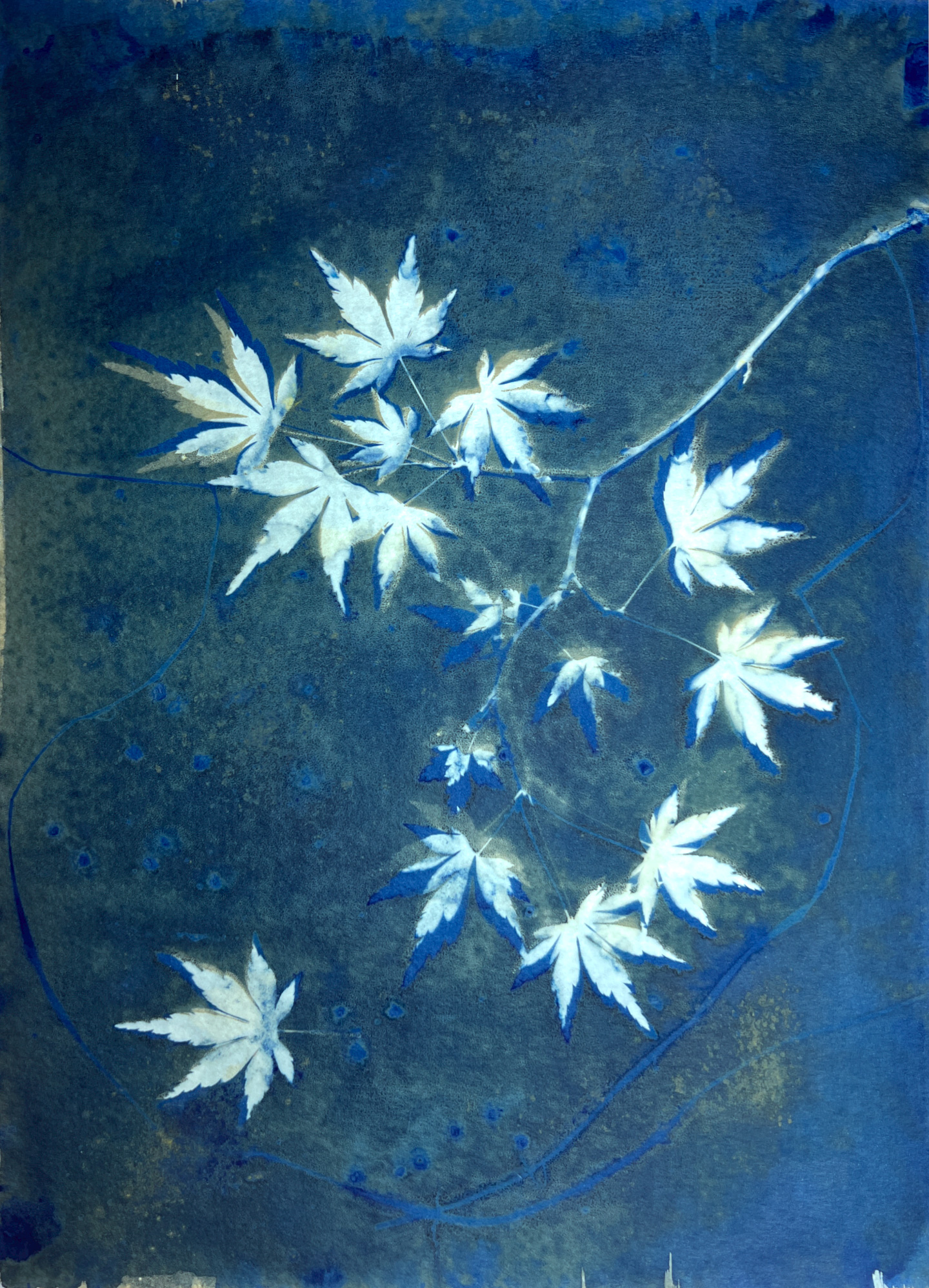
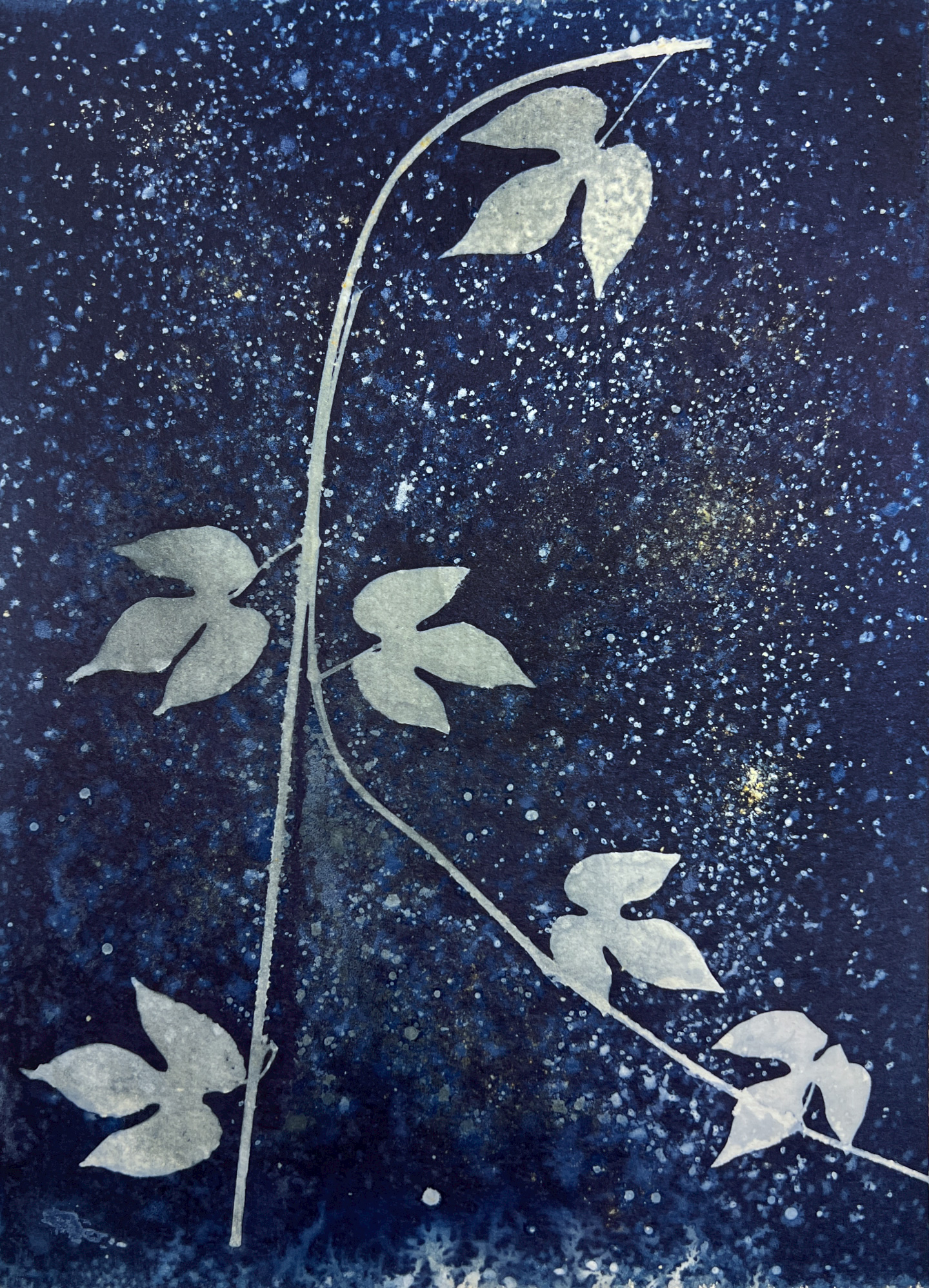
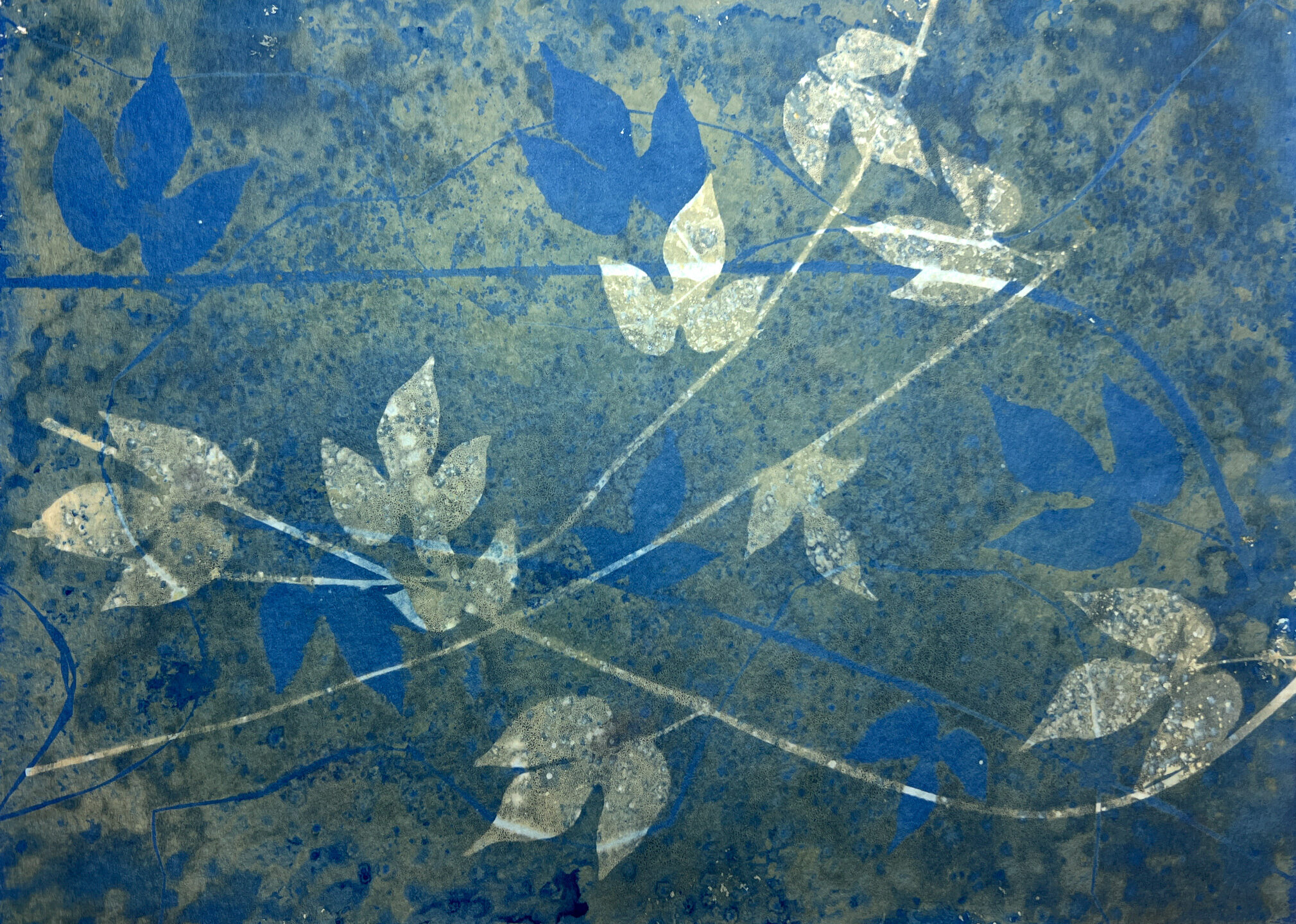
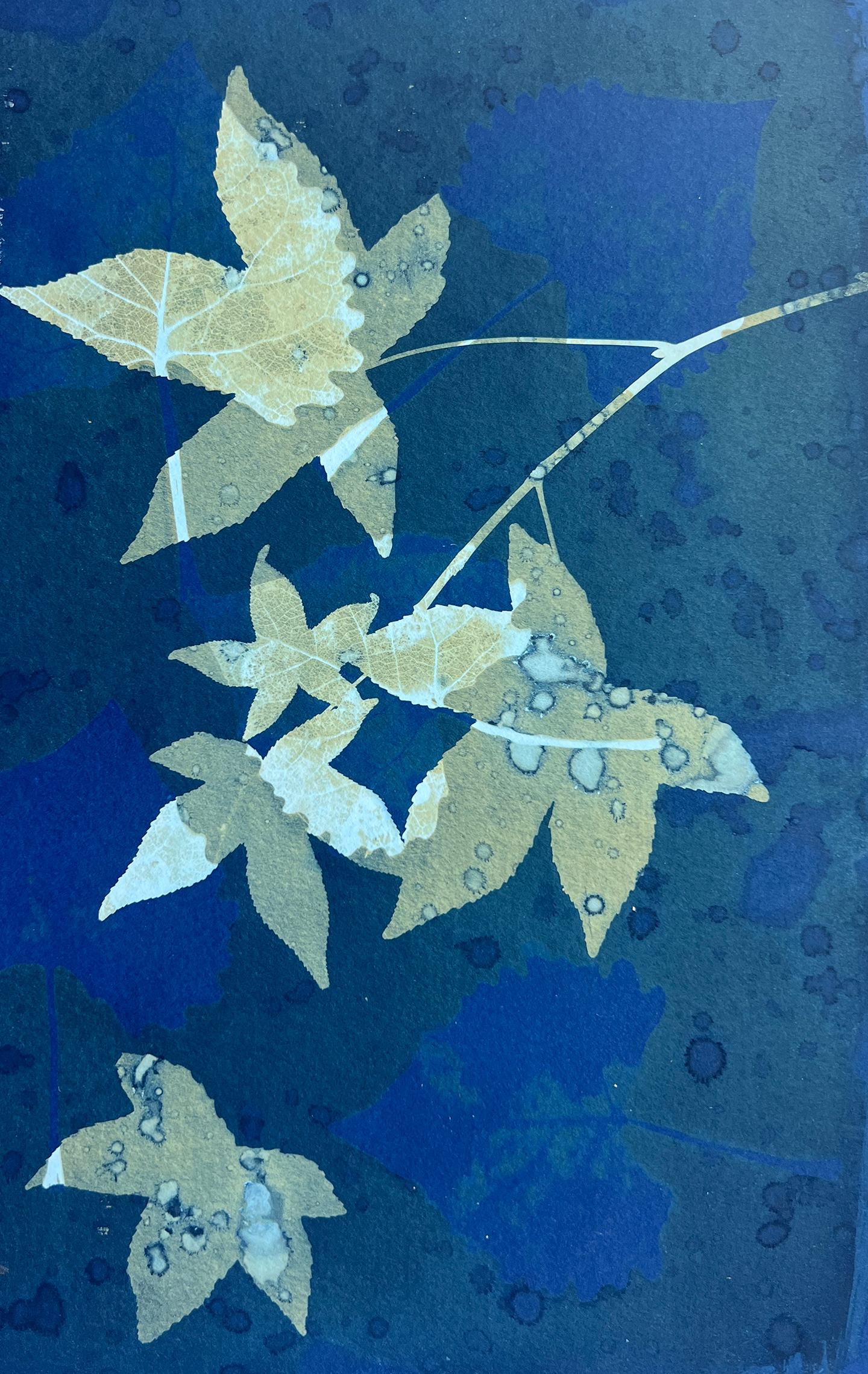
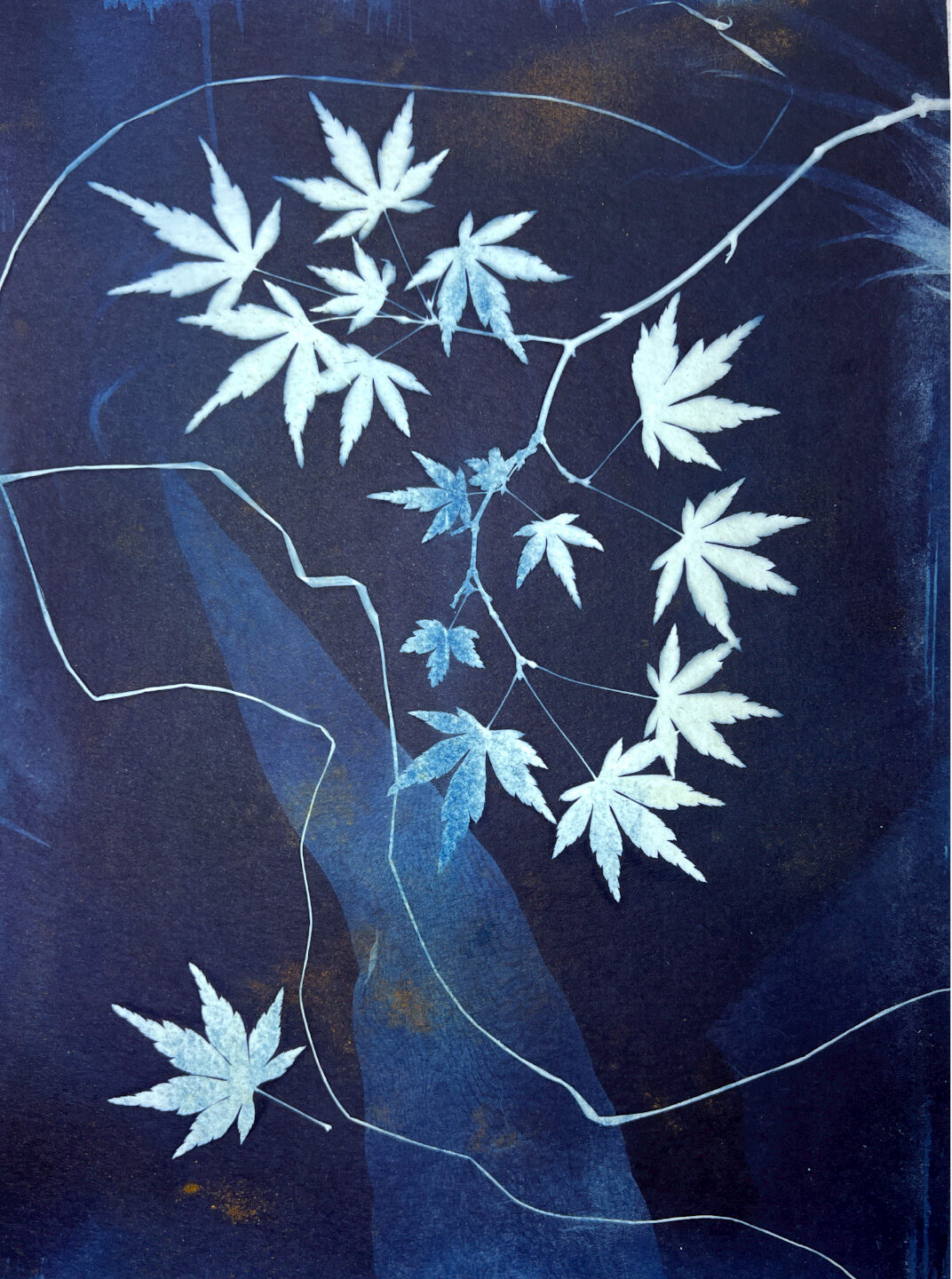
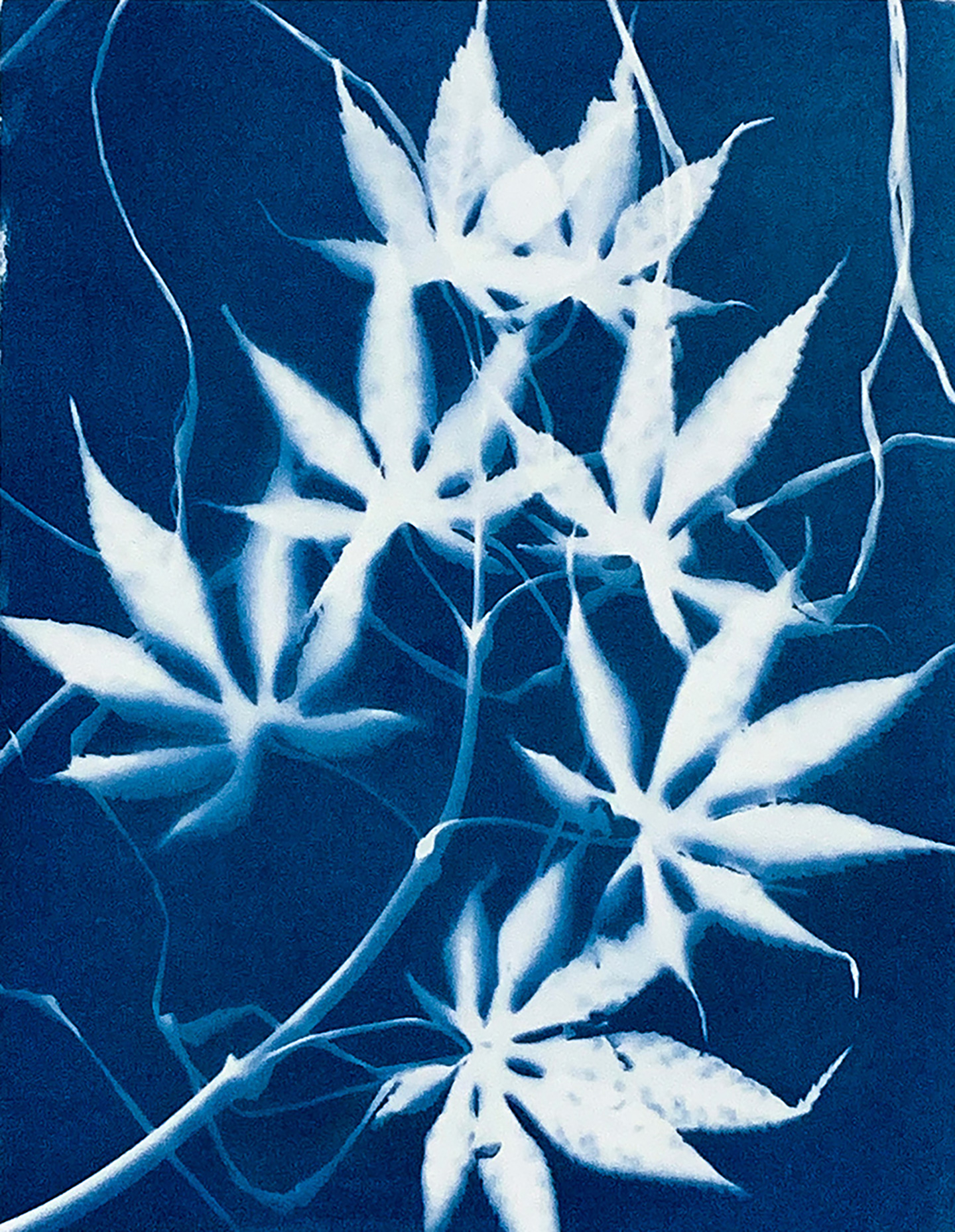
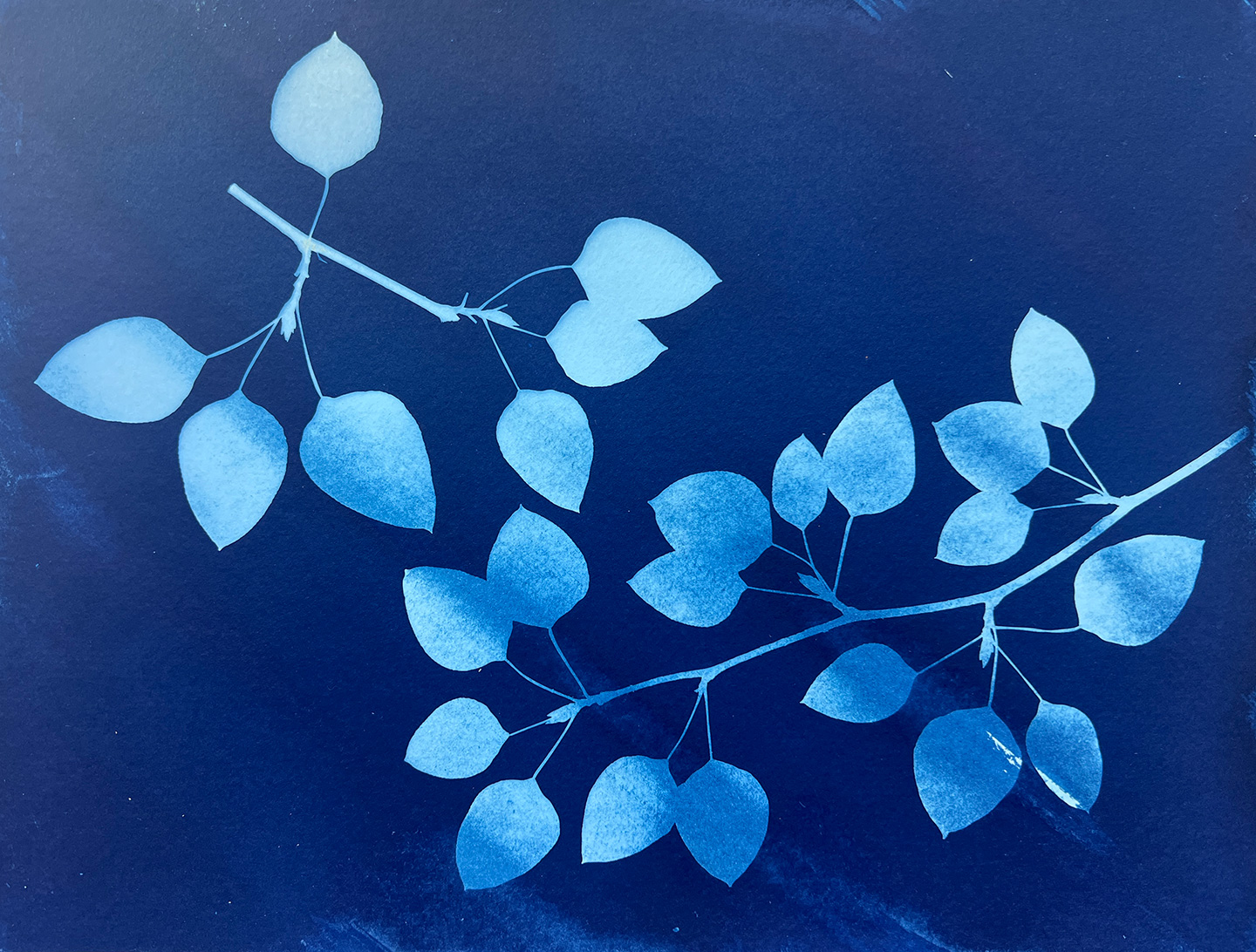
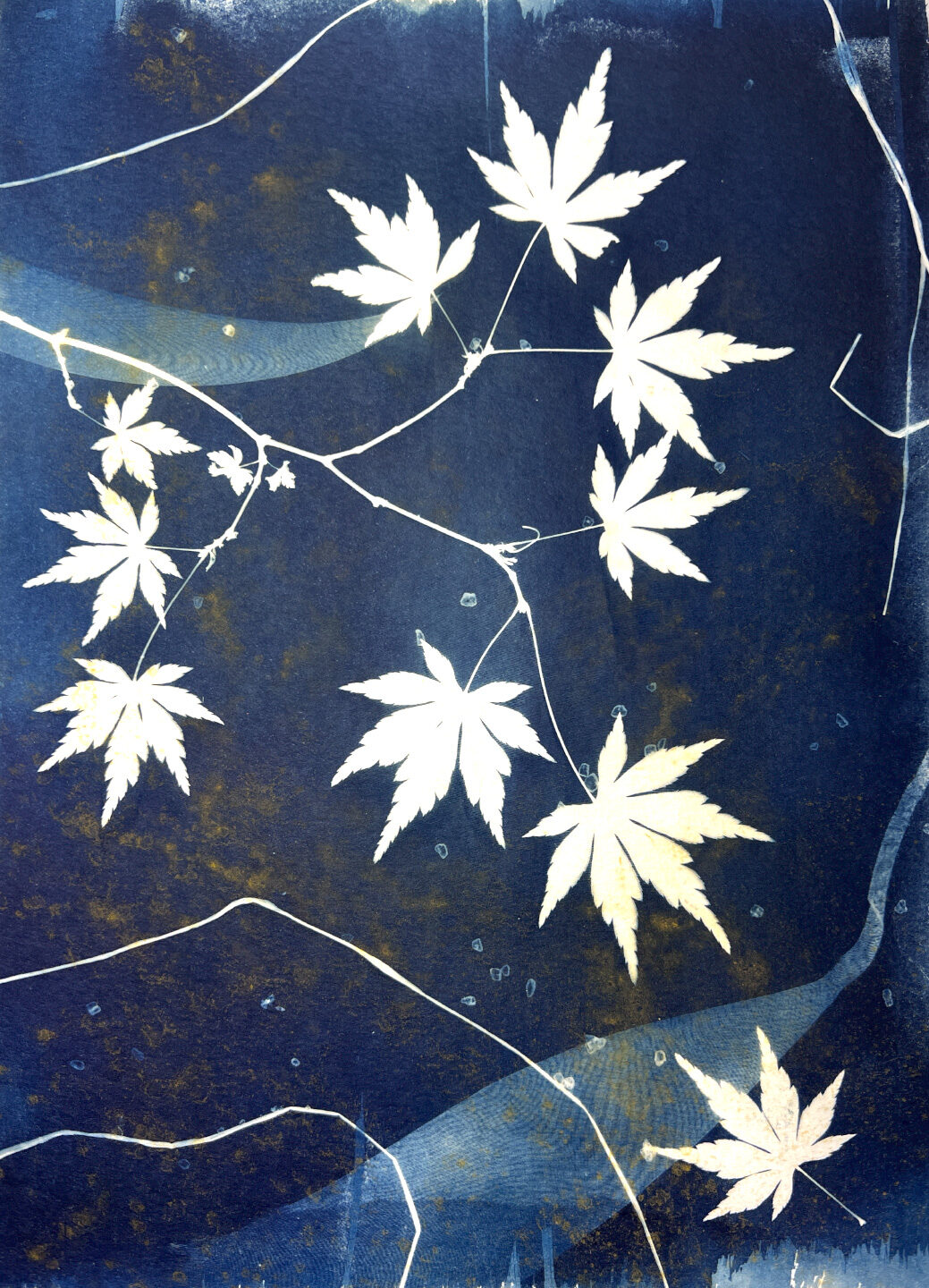
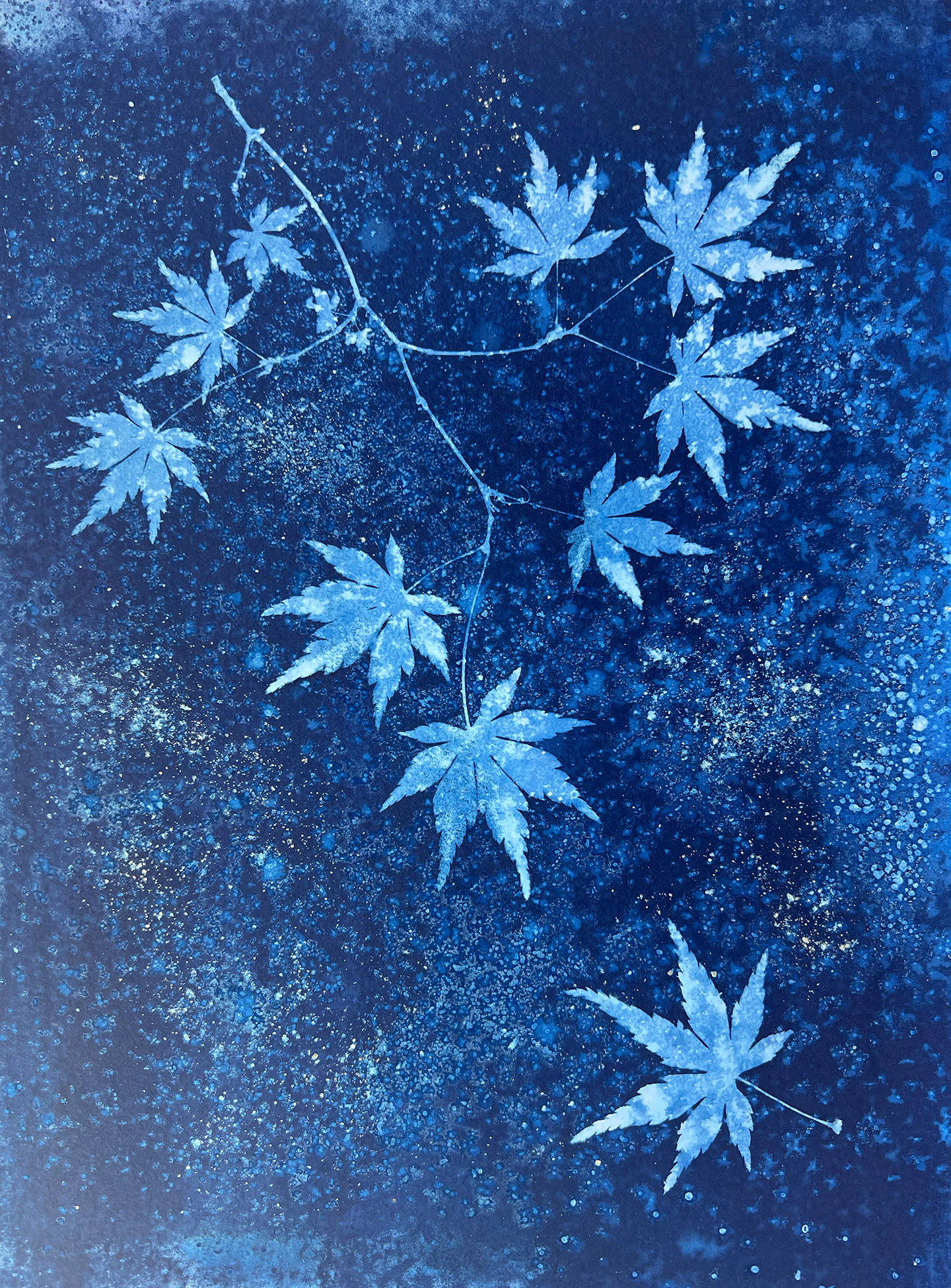
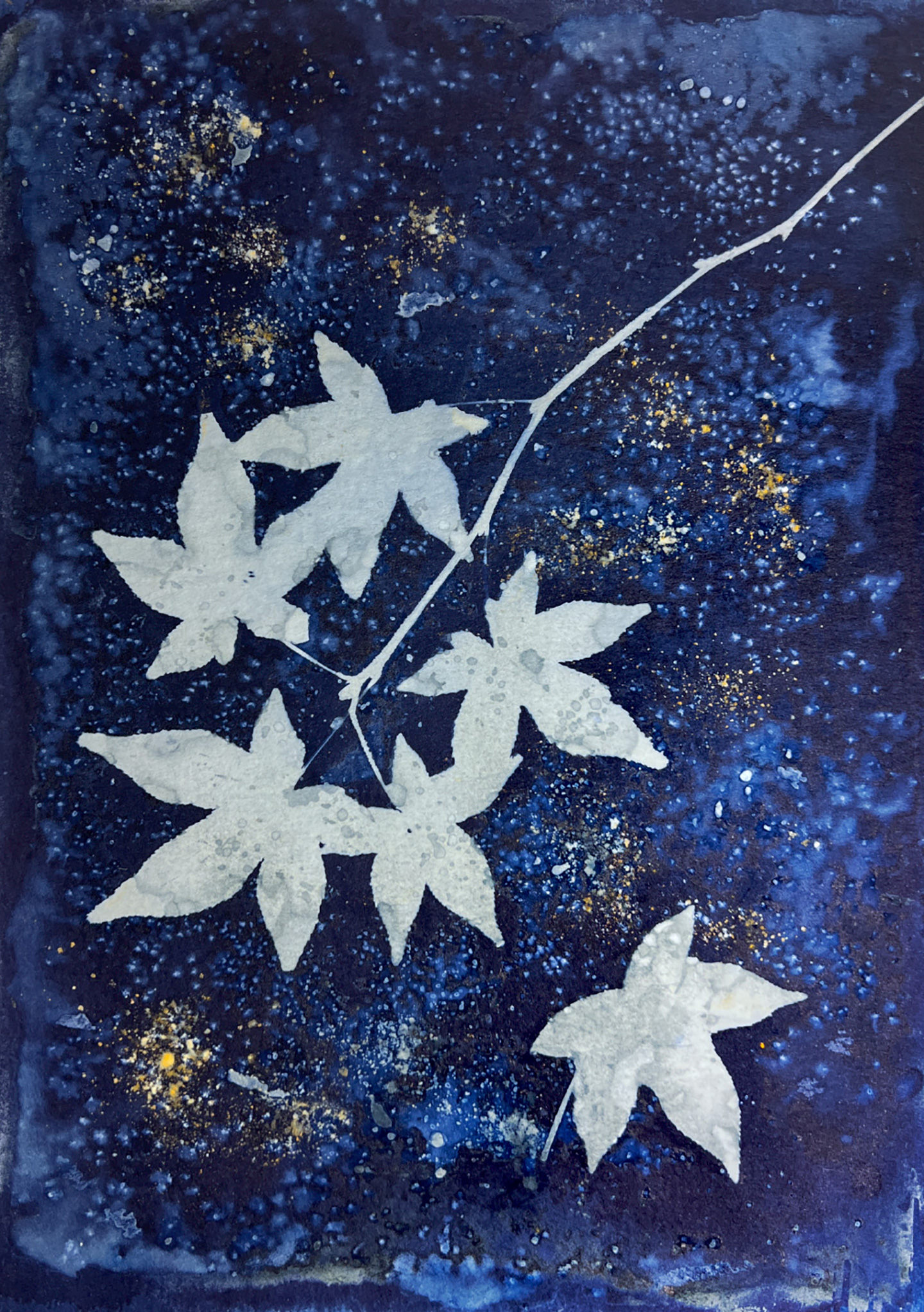
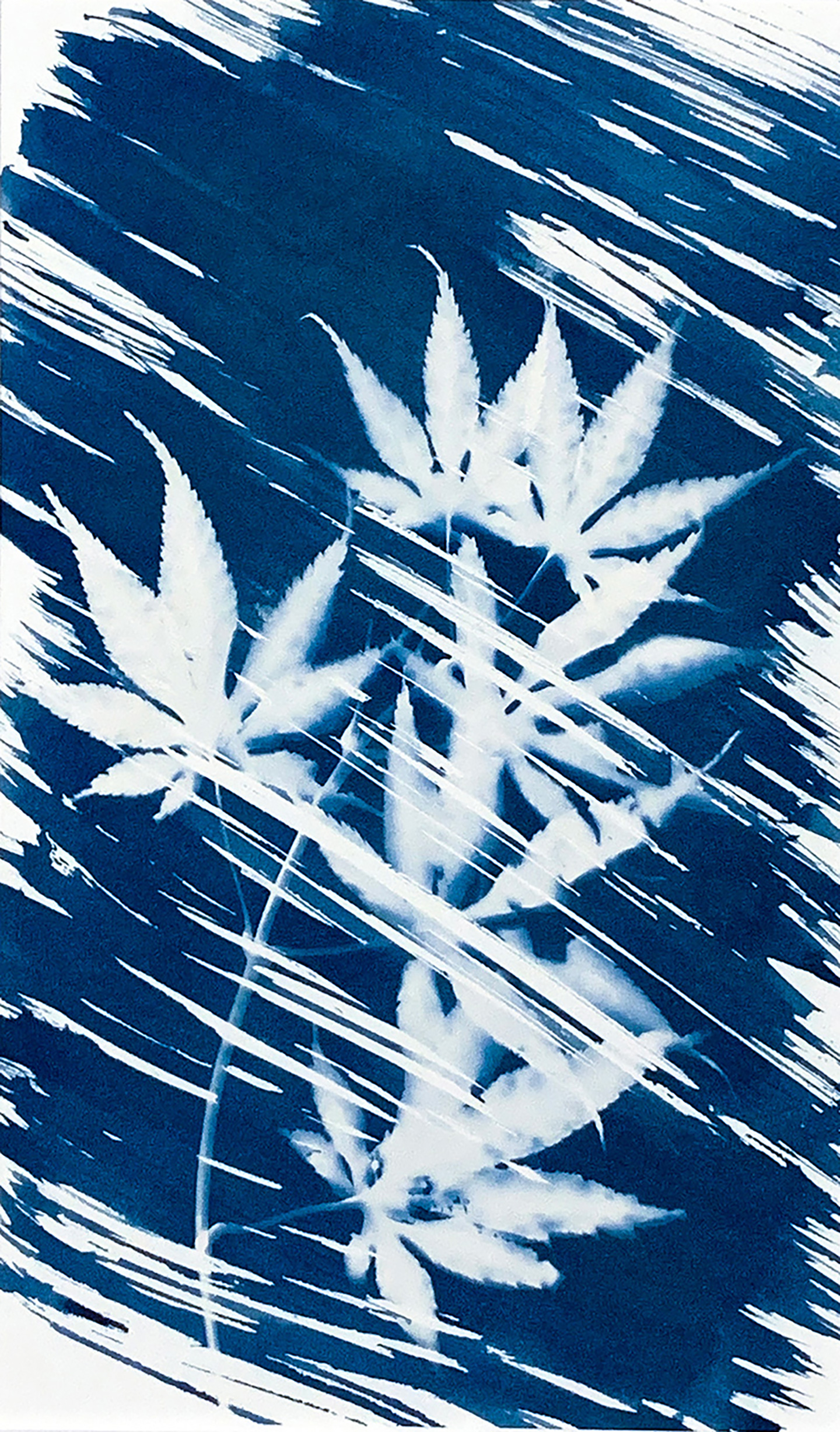
The cyanotype is an alternative photographic process dating back to 1842. The process includes hand-coating paper with light-sensitive iron salts (a mixture of ferric ammonium citrate and potassium ferricyanide) – a slow-reacting, photographic printing formulation sensitive to ultraviolet light.
Prints are made by placing a negative or a transparency, or various objects – such as plant material on the coated paper, and then exposing it to ultraviolet light or sunlight. Areas exposed to UV light react to form an insoluble Prussian blue dye, while unexposed areas remain unreacted. The image is then revealed by washing the print in plain water, which washes away the unreacted salts, leaving the blue image in positive relief against a white background. Cyanotype prints can also be tinted, bleached, or stained to create interesting effects and color variation.